As I listened to Troy Sultan in this week’s episode, one insight stopped me in my tracks: many job applications aren’t being rejected; they’re simply being ignored. Not by bots. By recruiters. Why? Because of sheer volume. Even at well-resourced companies, recruiters are overwhelmed. They’re often forced to prioritize referrals, internal candidates, or direct outreach, which means that many applications, no matter how strong, never get seen. That was a breakthrough moment for me. It reinforced something I’ve long believed: when the system gets noisier, we need to get sharper. It’s not enough to hit “apply.” You need to stand out before your resume ever hits the ATS. That means deeper research, targeted positioning, and thoughtful relationship-building. The bar has been raised, and so must our strategy.
That said, I still firmly believe there’s great value in submitting a high-quality job application. A well-positioned resume and cover letter, tailored to the role and aligned with the organization’s needs, can absolutely open doors. Not just for the immediate opportunity, but for future roles or collaborations with the recruiter or company. A strong application signals credibility and intent. However, it’s only one part of the equation. What amplifies its impact is what you do alongside it: reaching out to the right people, making strategic introductions, and demonstrating interest in ways that go beyond the job portal. I’ve been advocating for this holistic approach to job search for years, and after hearing Troy’s perspective, I’m doubling down. This is the strategy I will continue to refine and champion with my clients moving forward.

Story time: The Message She Almost Didn’t Send, and the Job It Helped Land
One of the most powerful strategies I’ve seen transform a job search is the combination of research, relationship-building, and precision in communication. A client of mine, a senior manager in financial services, came across a role that seemed like a great fit. Instead of rushing to apply, I advised her to pause. We spent time thoroughly researching the company’s structure, recent leadership announcements, strategic priorities, and the hiring manager’s background. We also reviewed the language in the job ad to identify what the role truly demanded beyond the generic list of responsibilities.
With that foundation, we crafted a short, tailored message to the internal recruiter listed on LinkedIn. We fine-tuned the tone: polite but confident, informed but curious. The result was a message that started a conversation. The recruiter replied positively, acknowledged the initiative, and offered insights into what the hiring manager was prioritizing for that role. This interaction not only validated the candidate’s approach but gave us an edge in preparing a highly targeted application that addressed both the formal selection criteria and the informal expectations uncovered during the exchange.
The result? She was shortlisted for a first interview within days and ultimately offered the position. This story isn’t unique. It’s a repeatable strategy that consistently works for professionals who take the time to slow down, gather intelligence, and make thoughtful contact before submitting an application. When you combine research, strategic outreach, and the guidance of a coach who understands how hiring really works, you shift from being just another applicant to being a serious contender. If you are unsure how to proceed with this strategy, consider booking a consultation with me.

Actionable Strategies for Job Seekers
1. Rethink the Role of Online Applications
My podcast guest, Troy Sultan, Co-founder and CEO of Guide Recruitment, emphasized a critical mindset shift: job applications should be your last resort, not your first. Candidates need to prioritize networking, building relationships, and seeking referrals before submitting cold applications.
Tip: Map out companies of interest, identify key stakeholders on LinkedIn, and reach out for informational chats before applying.
2. Quality Over Quantity in Applications
The myth of "apply to 100 jobs to get one interview" is deeply flawed. Troy and I both agree that applying to fewer jobs with tailored, thoughtful submissions is far more effective. A strong match, backed by relevant positioning, leads to better conversion rates.
Tip: Gamify your approach. Find patterns in your experience that match job descriptions and articulate them clearly in your resume and cover letter.
3. Craft Human-Readable Resumes
Contrary to popular belief, most ATSs read PDFs accurately. Troy recommended using clean, simple resume formatting that prioritizes human readability over design-heavy templates.
Tip: Avoid over-stylized templates like those commonly generated on Canva unless you are applying for creative roles. Stick to a clear, text-based layout.
4. Don’t Underestimate Referrals
A referral, even from someone you barely know at the company, significantly boosts your chances. Recruiters often prioritize referred candidates because of the perceived validation.
Tip: If you have already applied, you can still follow up with someone inside the organization to generate internal momentum. However, I prefer it to be done prior to the application.
5. Tailor, Then Apply
There's pressure to apply quickly, especially in the U.S., but Troy cautioned that speed should never come at the expense of strategy.
Tip: Have resume and cover letter templates ready, but always tailor your documents before submitting. Preload your work to maintain speed without sacrificing customization.
6. Cover Letters: A Divisive Topic
Troy noted that cover letters are rarely read in high-tech industries. However, I believe they are still valuable, especially outside of tech, and can be useful as storytelling exercises.
Tip: If the application portal doesn’t allow for cover letters, consider incorporating a tailored message in your email or recruiter outreach instead.
7. Build a Resilient Mindset
Rejection, ghosting, and a lack of feedback are common frustrations. Troy reminded us that hiring managers and recruiters are often overwhelmed, not disinterested. It's not personal, and it doesn't mean you aren't qualified.
Tip: Reframe rejections as opportunities for learning and refinement. Keep your energy focused on what you can control: outreach, positioning, and preparation.
Listen to this week's episode:
|
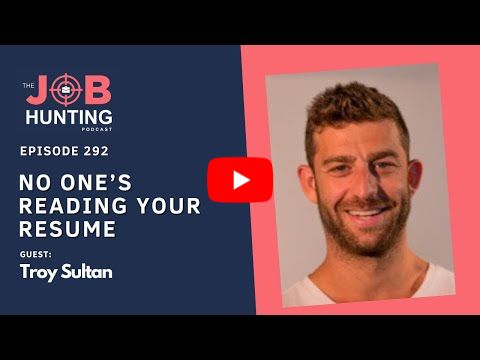
Troy Sultan is the co-founder and CEO of Guide, an AI-powered platform that helps companies streamline recruiting coordination and elevate the candidate experience. He's a former Google recruiter turned recruiting tech founder who has spent the last decade building tools that save hiring teams time and help candidates feel more human in the hiring process. In this episode, we unpack how outdated beliefs and poor job-search education are leading experienced professionals to waste time and miss opportunities.
Listen now:
- Listen to the full episode on the podcast website
- Listen on Apple Podcasts
- Listen on Spotify
- Listen on Audible
Give your career a reset and walk away with a standout LinkedIn and resume.
If you purchase my short course, Reset Your Career, between now and the end of June, I’ll gift you a free 30-minute chat with me. Once you’ve worked through the course and updated your LinkedIn and resume, we’ll meet to review your progress and fine-tune it together. If you need to do anything extra, just enroll in the course, and I’ll contact you to organise our session. It’s a great opportunity to get my personalized feedback and ensure that your career documents are working for you.

Time Out With Bach
- I caught up with my friend Genevieve Lacey last week, and it reignited my love for her music. I’ve been listening to Reinventions again—a stunning reimagining of works by J.S. Bach. You can listen here, and this will be your favourite music, trust me.
- Because we discussed Genevieve's work during a trip to the Mornington Peninsula on Sunday, we also enjoyed listening to Bachianas Brasileiras by Brazilian composer Heitor Villa-Lobos, as a comparison on how to reinterpret J.S. Bach. It’s such a unique and moving blend of Bach’s baroque style with Brazilian folk rhythms. Start with this beautiful version.
- The How to Take Over the World podcast did a fantastic episode on J.S. Bach recently. It’s part biography, part inspiration, and worth a listen if you’re curious about the man behind the music: How to Take Over the World – J.S. Bach.
If this newsletter helped you:
- Please help me raise awareness for the newsletter. You can forward it to other professionals who may benefit from it. I will be forever grateful to you. They can click here to subscribe.
- Visit my website for more information about my courses and coaching, which are designed to help you achieve your career goals.
To your career success
RBX
Renata Bernarde | Career Coach | Host, The Job Hunting Podcast