Executive presence is not about being “alpha.” It is about influence, credibility, belonging, and how others experience you.
A few days ago, I was talking with Andre about leadership styles and told him, quite casually, that I thought I was probably more of a beta leader.
He laughed. “You are absolutely not a beta,” he said. “You are definitely an alpha.”
I was genuinely surprised. That is not how I see myself at all, and the conversation sent me down a research rabbit hole. What I found was reassuring: the popular idea that people can be neatly divided into “alpha” and “beta” personalities has very little scientific basis. It is a catchy piece of pop psychology, but not a particularly useful way to understand leadership.
That matters because these labels influence how professionals think about executive presence. If we assume senior leaders need to be dominant, forceful, highly extroverted, or naturally commanding, we risk overlooking the many other ways people build authority and influence.
Influence matters more than the alpha label
There is much better research around the ways people gain status in groups. One useful distinction is between dominance and prestige.
Dominance relies more heavily on control, intimidation, or positional power. Prestige is granted because other people value your expertise, judgement, competence, or contribution. Both can create influence, but they are very different ways of getting there.
When I look back at my own career, this distinction makes much more sense to me than alpha or beta.
I have worked at very senior levels across corporate and government environments and have been in rooms with governors, premiers, prime ministers, diplomats, CEOs, and other senior leaders. Andre’s argument was that I could not possibly have navigated those environments without being “alpha.”
I disagree.
I do think I was comfortable in those rooms, but I do not believe that comfort came from wanting to dominate them.
Part of it came from my upbringing. I grew up seeing people around me navigate professional environments, career progression, setbacks, job losses, rebuilding, and leading. My parents were university-educated, so were both my grandfathers and all my uncles and aunts. Education and professional life were familiar territory in my family. I was fortunate to grow up with exposure to people operating in corporate settings, both in Brazil and internationally. While one of my grandfathers was a boat doctor on the Amazon River, the other was selling Embraer planes in Washington, D.C., where he lived for 13 years. Two very different professional paths, but still, an amazing repertoire for me to draw upon.
That gave me something I did not fully appreciate at the time: familiarity.
Senior environments did not feel completely foreign to me. I did not enter them believing I had accidentally found my way into a room where I did not belong.
That is a privilege, and I recognise it more clearly now than I did earlier in my career.
But familiarity alone was not enough. What allowed me to operate effectively with people who were much more senior than I was came down to being useful. I could understand what they were trying to achieve, contribute something of value, and build enough credibility that they wanted me involved.
That is influence.
And influence is available to introverts, extroverts, quiet leaders, charismatic leaders, and many people who would never describe themselves as “alpha.”
Belonging changes how you show up
This is where I think the conversation becomes particularly relevant for experienced professionals.
A surprising number of highly capable people reach a certain level in their careers and still feel that everybody else received a manual they somehow missed.
They sit around an executive table and become more cautious.
They edit themselves.
They over-prepare before speaking.
They assume the more senior person in the room must know more.
They interpret discomfort as evidence that they do not belong there.
I see versions of this frequently in coaching.
Sometimes people call it imposter syndrome. I am careful with that term because not every feeling of uncertainty needs to be diagnosed or labelled. Sometimes you are simply operating in a new environment and have not yet developed the familiarity that other people acquired earlier in life or through previous roles.
That can be worked on.
Executive presence is not a personality transplant. You do not need to become louder, harder, or more dominant. You need to understand what you contribute, learn how to communicate it, and become more comfortable occupying the space appropriate to your experience.
There is a difference between demanding status and feeling that you have permission to participate.
What are people granting you status for?
I think this is a better career question than asking whether you are alpha or beta.
Why do people listen to you?
Is it because of your job title?
Because you have information they need?
Because you are technically excellent?
Because you make complex things easier to understand?
Because you connect people?
Because you remain calm when things become difficult?
Because you have good judgement?
Because people trust you?
For senior professionals, understanding the source of your influence is incredibly useful. It helps you articulate your value in interviews, build stronger professional relationships, and develop an executive presence that feels genuine rather than performed.
It also helps when you move into a new organisation. Your title may travel with you, but much of your credibility does not. You have to rebuild it with a new group of people.
Knowing how you naturally create trust and influence gives you somewhere to start.
For you this Friday
If you sometimes feel uncomfortable around people who are more senior than you, I would not immediately conclude that you lack confidence or executive presence.
Instead, think about a professional environment where you already feel completely at ease. What makes you comfortable there? What do people rely on you for? Why do they seek your opinion?
Then ask yourself how you can carry more of that person into the rooms where you currently feel less certain.
You do not need to become somebody else to belong at a higher level. You may simply need more practice recognising the value you already bring.
How I help
One of the great joys of my work is helping experienced professionals see themselves differently.
Sometimes that means positioning someone for a more senior role. Sometimes it means preparing them to interview alongside people they perceive as more impressive. Sometimes it means helping them understand that the discomfort they feel does not mean they are underqualified.
A large part of career advancement is learning to operate at the next level before it feels completely natural.
If this resonates with you, and you feel that greater clarity around your positioning, influence, or executive presence would help you move forward, I would love to work with you.
Watch and listen

This week on YouTube: 5 Signs You're on the Shortlist for a Senior Role (Before It's Advertised)
In this video, career coach Renata Bernarde explains how senior candidates end up on shortlists before a role is advertised, and how to spot the early signs. I'll also tell you why I don't agree with the claim that 80% of jobs are never advertised. And if your phone has been quiet, I'll explain what that usually means at a senior level, and whether it's still worth applying online when shortlists form early.
Watch Now and Subscribe to My YouTube Channel
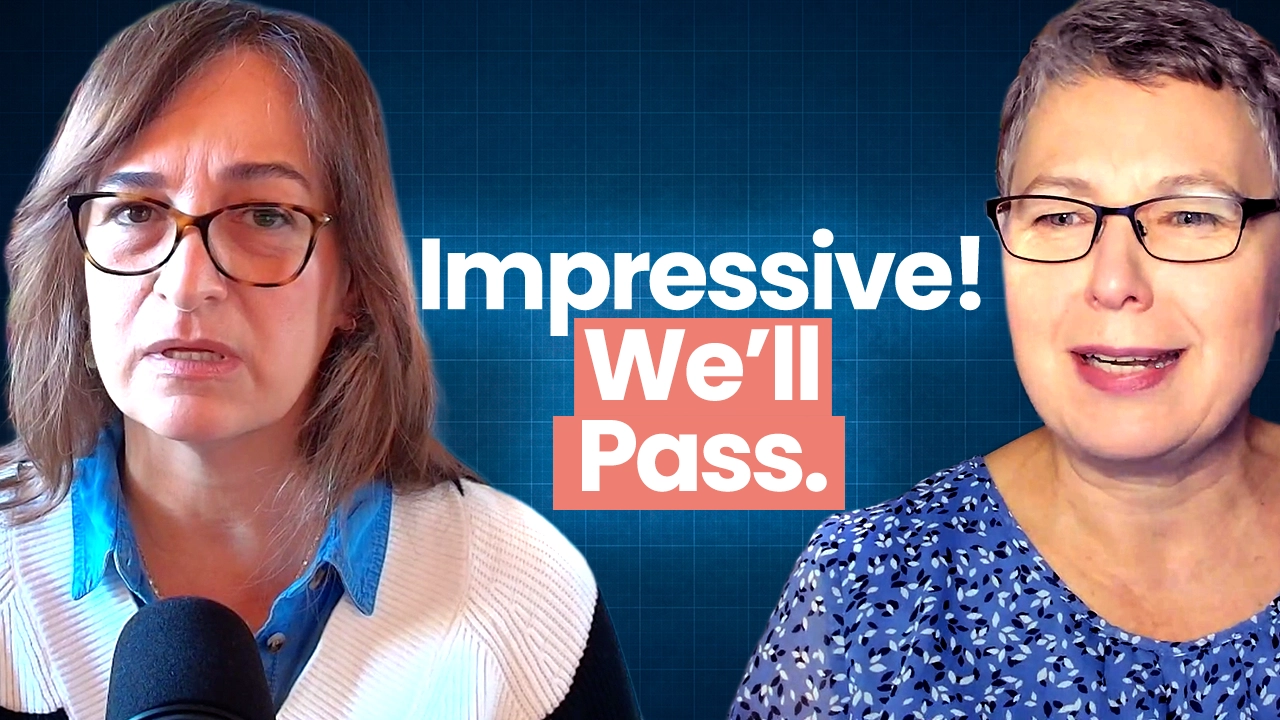
On The Job Hunting Podcast: Your Experience Is Not Your Value: The Career Mistake Experienced Professionals Keep Making
After decades of work, many experienced professionals can describe what they have done but struggle to explain why it matters now. This episode explores how understanding your value, rather than relying on titles, credentials, and experience alone, can change the way you approach job searches, career transitions, and the next stage of your working life.
Join Me On My Instagram and Facebook Stories This Sunday
This Sunday, October 11, I’ll be watching the 60 Minutes Australia investigation “Job Seekers Lookout,” which explores AI in recruitment and the challenges facing job seekers. Join me on Instagram from 8:40 p.m. AEDT as I share my reactions in Stories and consider what the coverage means for experienced professionals looking for work.

Time Out
- How I struggled with Yesteryear! I couldn't finish it, so I added it to the pile of books where every character is awful, and my very fragile nervous system can't cope with spending my precious free time reading about them. If you enjoy these books (they are incredibly well written!), then add The Slap and The Corrections to that list. My niece (we were reading it together) is enjoying it, and she will tell me the ending over Christmas.
- I'm reading Writers & Lovers and have downloaded Atmosphere.
- I watched Hamnet and cried my eyes out.
- We spent the weekend in the Mornington Peninsula (see photo above of our companions). It poured on Saturday, but it was glorious on Sunday. We ate slow-smoked brisket at Red Gum, then watched Formula 1, drinking beautiful wine and cheese at home.
I have Andre to thank for this week’s newsletter. He was wrong about the alpha label. But he was right to make me question the story I had been telling myself about how I lead.
And that turned out to be much more interesting.
See you next week
RBX