This week did not go according to plan.
I had two unexpected medical issues. One became an emergency.
For the first time since I started coaching, I had to cancel a session with a client who was interviewing the following day. I found that particularly difficult. I take the responsibility of supporting clients through important career moments very seriously, and cancelling at short notice felt awful, even though I had no other choice.
At the same time, I was dealing with problems behind the scenes with the podcast. A guest canceled. Other guest conversations became more complicated than usual. The editing of this week’s YouTube video did not go smoothly.
None of these things, individually, was catastrophic.
But when several difficult things happen at once, the mind has an extraordinary ability to collect them into one large, convincing story.
Nothing is working.
I am falling behind.
I am disappointing people.
Everything is becoming harder.
Perhaps you recognise this pattern.
I see it often with clients who are dealing with job loss, a difficult manager, an unsuccessful interview, health problems or challenges at home.
The problem is rarely one isolated event.
It is the way several events begin to merge in our minds until they feel like evidence that everything is going wrong.
What I noticed
My instinct was to keep going.
That instinct is often praised as resilience. Sometimes it is resilience.
At other times, it is simply momentum.
We continue working because stopping feels uncomfortable. We answer emails because the inbox gives us something concrete to control. We push through meetings because cancelling feels like failure. We make decisions while tired, frightened or frustrated because we want to prove that we can still function.
But continuing is not always the most responsible choice.
Sometimes the more professional response is to pause before our circumstances begin to affect the quality of our judgement.
I became particularly aware of this during a coaching session yesterday.
I told my client that I had experienced a difficult week and that I wanted to be careful not to project my own concerns onto her situation.
I did not want her to carry my problems. I wanted to name the context so that I could remain accountable for the advice I was giving.
That conversation reminded me that context matters.
We do not arrive at work, interviews, difficult conversations or career decisions as perfectly neutral people.
We bring the week with us.
What helped me redirect my energy
I haven't yet solved everything. I did, however, make a few decisions that stopped the week from becoming worse.
1. I forced a pause
I stopped treating every task as urgent.
I delayed emails that could wait. I took breaks during the day. I watched a new television series, partly because I needed my mind to pay attention to something that had nothing to do with work.
The pause did not remove the problems. It interrupted the spiral.
2. I reduced avoidable decisions
When we are emotionally overwhelmed, even small decisions can become unnecessarily difficult.
I focused on what had to be done and allowed some things to remain unfinished.
This is difficult for capable professionals. We are often used to being the person who resolves things.
But not every week needs to be productive in the same way.
Some weeks are about stabilising.
3. I communicated more openly
I cancelled what I genuinely could not do. I explained what needed to be explained. I allowed people to understand that my work was taking place within a wider personal context.
You do not need to disclose every detail of your life at work.
But there is a difference between privacy and pretending that nothing is happening.
A simple statement such as, “I am dealing with an unexpected personal situation and may need a little more time,” can prevent misunderstandings and reduce the pressure to perform normally during an abnormal week.
4. I questioned the story my mind was creating
A difficult week is not evidence of a failing career, business or life.
A cancelled appointment does not mean I am unreliable.
A video or podcast I am not entirely happy with does not mean I should stop making them.
A difficult podcast guest does not mean the podcast is failing.
The mind often takes a temporary experience and turns it into a permanent conclusion.
But that conclusion deserves to be challenged and reviewed.
5. I asked for support
I reached out to the people I trust.
I arranged lunch today with a friend to talk with someone who can relate to the work I do. I also messaged my closest friends and told them I needed to vent tonight when we meet. The WhatsApp group went nuts with support and just enough teasing about my first-world problems to help me regain some perspective.
And, of course, there is Andre. We talk through problems as they arise, test ideas together and help each other see situations more clearly. That support has been invaluable this week.
I also recognised a gap that I need to address.
Both of my coaches have recently retired, and this week reminded me that I need to find someone who can provide professional supervision and challenge my thinking.
Asking for support does not mean transferring our problems to someone else.
Sometimes we need another person to help us separate what is difficult from what our minds are making bigger.
Try this
When several things are going wrong at once, write down two separate lists.
The first list is called:
What has actually happened
The second is called:
What I am telling myself this means
The first list contains facts.
The second usually contains predictions, fears and assumptions.
The distinction will not make the week easy. It may help you see which problems need action and which ones need perspective.
A reminder for difficult career periods
Many of the professionals I work with are accustomed to being competent, dependable and in control.
That identity can make difficult periods harder.
Job loss, workplace conflict, illness and career uncertainty can temporarily remove the conditions that usually allow us to feel capable.
During those periods, resilience may look different.
It may look like postponing a decision.
It may look like asking for help.
It may look like cancelling something.
It may look like admitting that you do not currently have your usual level of capacity.
These are not signs that your career is falling apart.
They are ways of protecting your judgement until the situation settles.
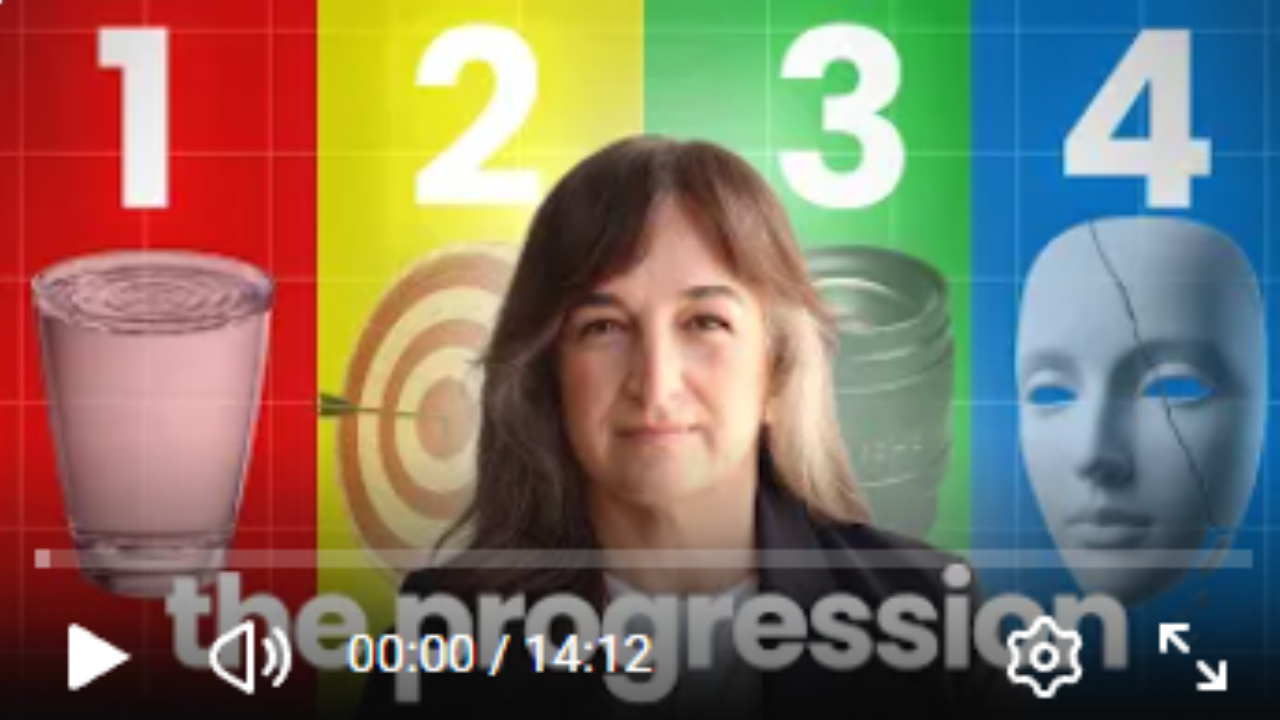
This week’s video: what interview panels are really reading
Most interview advice focuses on answers, preparation and confidence. But interviewers start forming an impression before you have finished your first response. In this week’s video, I explain the four things a panel is reading across the table:
- The state you bring into the room
- Where your attention goes under pressure
- Whether you are focused on yourself or the panel’s needs
- Whether your words, expression and body language are congruent

How I help
Career difficulties rarely happen in isolation.
A job search can be affected by health, confidence, workplace experiences, financial pressure, and responsibilities at home. Good career strategy needs to take that context into account.
This is part of the work I do with private coaching clients. We identify what needs immediate attention, what can wait, and how to move forward without allowing a difficult period to define the entire career.

Time Out
- Watching: This week, taking time out was less of a pleasant extra and more of a necessity. These were absolutely perfect mood lifters: The new Ted Lasso episode, and Elle (the prequel to Legally Blonde).
- Visited: In NSW last week while on holiday, we went again (fourth time, I think) to the Tweed Regional Gallery & Margaret Olley Art Centre. Andre and I love this place. It has the best view (see picture above), a great cafe, a permanent Margaret Olley exhibition with a replica of her house, and up-and-coming local artists. If you're ever between the Gold Coast and Byron Bay, it's totally worth a visit.
- Listening: Elle's playlist is perfect if you enjoy 90s music, from pop to grunge. It's available on Spotify.
Sometimes the most useful thing we can do is give the mind somewhere else to go for a while.
I hope this newsletter reaches you during a reasonably calm week.
And if it does not, I hope it reminds you that a difficult phase is still a phase.
Renata