The Longevity Paradox Is Showing Up in My Client Work Every Day
I’ve had the same conversation again and again.
Different people. Different industries. Different levels of seniority.
But the same underlying tension.
One client, a senior executive in her early 50s, said to me: “I feel like I’m at my best professionally. But the market doesn’t seem to see me that way.”
Another, in his late 40s, had been applying for roles for months. Strong track record. Clear results. Well-regarded in his previous organisation. And yet, very few interviews.
He asked me, quite directly: “Is this just what happens now?”
These are not isolated cases. This is a pattern.
And it’s deeply confusing for the people experiencing it.
Because at this stage of life, many professionals are not slowing down. If anything, they are clearer, sharper, and more intentional than they’ve ever been. They understand how organisations work. They know how to make decisions. They can see risks earlier. They’ve managed people, budgets, crises, and change.
They’re not trying to prove themselves anymore. They’re trying to contribute at a higher level.
And yet, something isn’t connecting.
Why You Should Listen to This Episode Now
This week's episode of The Job Hunting Podcast felt timely for a few reasons.
First, there was the recent announcement of the NASA Artemis II mission. The astronauts selected for that mission are all over 40, all born in the 70s. When the mission is complex, high-stakes, and requires judgment, organisations don’t default to youth. They choose experience.
Second, on a more personal note, I’ve just become a grandmother.
That moment shifts your perspective. It certainly has for me.
I’m thinking more carefully about how I want to work in the years ahead. Not less work, but different work. Work that is sustainable, meaningful, and aligned with my life.
And I know you may be asking similar questions.
This is why I invited Michele Lemmens and Rebecca Hall to the podcast. Both have spent decades working at the intersection of policy, business, and workforce strategy. And both are thinking deeply about what longer lives mean for how we work.
The Disconnect No One Is Naming Clearly
What’s striking is that this conversation is happening at the same time as organisations talk constantly about skills shortages.
- We hear about talent gaps.
- We hear about the need for leadership capability.
- We hear about how difficult it is to find people who can manage complexity.
And then you look at what’s happening to professionals over 45, and it doesn’t add up.
The issue isn’t that experienced professionals are unwilling to work. Most of my clients want to keep working for many more years.
The issue isn’t capability either. In many cases, they are operating at their peak.
The real problem is how the market is interpreting experience.
There’s a quiet shift that happens somewhere in mid-career, where experience stops being automatically seen as an asset and starts being treated as something that needs to be “managed.”
- Concerns about cost.
- Concerns about adaptability.
- Concerns about cultural fit.
These concerns are rarely stated directly. But they shape outcomes.
And over time, they start to erode confidence, even for very accomplished people.
What Happens Around Midlife
The period between 45 and 60 is far more complex than most career advice acknowledges.
Many of my clients are navigating multiple responsibilities at once.
- They may be supporting children through school or university.
- They may be caring for ageing parents.
- They are thinking more seriously about their health.
- They are often at the peak of their financial responsibilities.
And at the same time, they are rethinking what work means to them.
The ambition is still there, but it’s more nuanced.
- They want to contribute.
- They want to lead.
- But they also want flexibility, purpose, and sustainability.
The challenge is that most organisations are still structured around very rigid career paths.
You either keep climbing, or you step off.
There isn’t much room for redesign.
Experience Is Changing in Value, Not Declining
One of the most interesting parts of my conversation with Michele and Rebecca was how they framed experience in the context of technological change.
There’s a lot of discussion right now about AI and what it means for jobs.
But what often gets missed is what AI can’t do well.
- It can process information.
- It can analyse patterns.
- It can automate tasks.
But it struggles with context.
- It struggles with judgment.
- It struggles with navigating ambiguity.
- It struggles with understanding people.
These are not small gaps.
These are the core skills that experienced professionals develop over time.
So instead of experience becoming less relevant, it may actually become more important.
But only if it’s positioned correctly.
Where I See Clients Getting Stuck
One of the most common challenges I see is not a lack of capability. It’s communication.
Many professionals assume that their experience will speak for itself.
But in today’s market, it doesn’t.
If anything, the more experience you have, the more intentional you need to be in how you present it.
I often see CVs and LinkedIn profiles that read like a historical record.
- Roles.
- Responsibilities.
- Years of service.
Yes, those are indeed important. What’s missing is a clear connection between that experience and the problems organisations are trying to solve today.
Hiring managers are not looking for a summary of your past. They are trying to understand your relevance now.
This is where many strong candidates lose momentum.
What Needs to Shift for You
If you’re in this stage of your career, there are a few shifts that make a real difference.
1.
The first is moving from a retrospective mindset to a forward-looking one.
Instead of asking, “What have I done?” Start asking, “What problems am I best positioned to solve now?”
2.
The second is being more deliberate about how you talk about adaptability.
You don’t need to prove that you can work hard. You need to show that you can work differently.
That might mean highlighting how you’ve navigated change, worked across industries, or adopted new ways of working.
3.
The third is being open to redesigning what your career looks like.
The next role may not look like the previous one.
- It might be more flexible.
- It might be cross-functional.
- It might even be in a different sector.
That’s not a step backwards.
In many cases, it’s a more sustainable way forward.
But This Isn’t Just on You
At the same time, I want to be clear about something.
This is not just an individual problem to solve.
There are structural issues here that go beyond personal branding or job search strategy.
Organisations need to rethink how they define roles, assess talent, and support career progression beyond midlife.
Governments need to consider how policy, taxation, and retirement systems align with longer working lives.
And as a society, we need to challenge the assumptions we hold about age and work.
Because right now, we are underutilising a significant portion of the workforce.
And that has consequences, not just for individuals, but for the economy as a whole.
The Question Worth Asking
When I think about all of this, I keep coming back to one question:
What would your career look like if it were designed for the life you’re actually living now?
Not the life you had at 30.
Not the expectations you once held.
But the reality of who you are today, and the decades you still have ahead of you.
For many of my clients, this question opens up new possibilities.
It shifts the focus from trying to fit into existing structures to thinking more creatively about what’s possible.
And that’s where the most interesting conversations start.
If You’re Navigating This Right Now
If this resonates with you, and you’re finding this stage of your career more complex than expected, you don’t have to figure it out on your own.
This is exactly the work I do with my clients.
We look at how to position your experience in a way that is relevant and compelling. We rethink your career strategy so it aligns with where you are now. And we build a plan that helps you move forward with clarity and confidence.
If you’d like to explore working together, you can find more information on my website. The link is in the show notes, or you can go directly to renatabernarde.com.
Book a 1h Consultation with Renata AUD400 (Approx. US290)
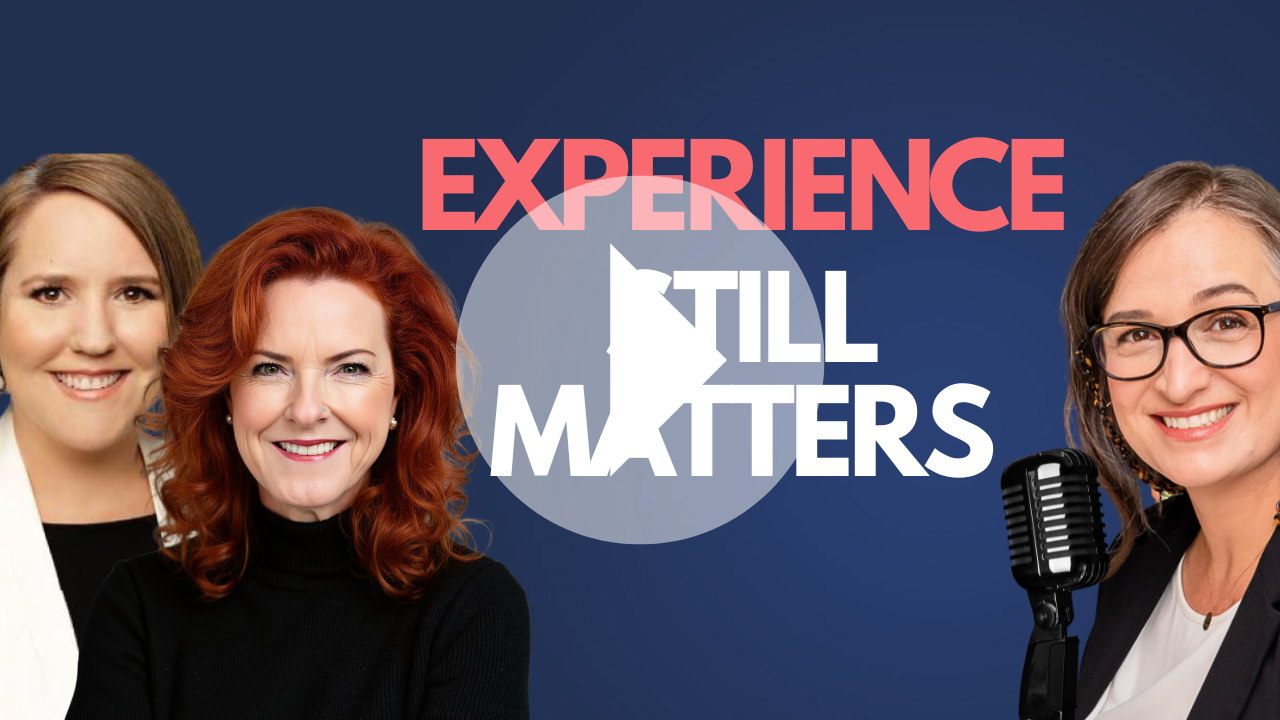
Episode 333: Why Workers Over 45 Are Being Left Behind
And if you haven’t yet listened to the full conversation with Michele Lemmens and Rebecca Hall, I encourage you to do so.
It’s one of those discussions that stays with you, because it doesn’t just describe the problem. It helps you start to see what the future of work could look like, and where you might fit within it.

Time Out:
- As you read this newsletter, Andre and I are visiting Cambridge, a two-hour drive from where we're staying in the UK. I've been here before and can't wait to show him around. One of my favorite movies filmed here is The Man Who Knew Infinity, with Dev Patel. Other famous movies filmed in Cambridge are The Theory of Everything and Chariots of Fire.
- Who would have thought that at 54 I would discover Alice Cooper and like his songs! Andre decided to introduce me to his ballads, and I am absolutely in love with "How You Gonna See Me Now." I had no idea he was such a softy; I always saw him as a shock rock performer. "I Never Cry" is also beautiful.
- You can follow along by following my Stories on Instagram :)
I hope you enjoyed this newsletter! If you want to recommend it to others, they can sign up here: Tell them to click here to subscribe.
See you next week
RB