I saw this quote on LinkedIn this week:
"Human connection is the new luxury."
I agree. And I would take it further.
The analog world is becoming a luxury too.
Reading a physical book without checking your phone.
Going to the cinema and sitting through an entire three-hour-long film.
Listening to an album from beginning to end.
Having lunch with someone without a laptop open.
Taking a walk without trying to turn it into content, exercise data or productive thinking.
None of these things is new.
What has changed is their scarcity.
And it's scarcity that makes them feel chic and luxurious.
We have access to more information, entertainment and advice than at any point in our lives. AI has accelerated that dramatically. Almost anything I want to know can now be explained, summarised or generated for me within seconds.
And yet I find myself placing more value on the things technology cannot quite replicate.
Time.
Attention.
Conversation.
Being with another person who is actually listening.
I see this happening in careers too
Something similar is happening with the professionals I coach.
People come to me with access to extraordinary amounts of career advice.
They can find resume templates, interview questions, LinkedIn tutorials, salary data, and AI tools for free.
Often, they already know a great deal.
What they are missing is not another piece of information.
They need somewhere to think.
They need another person to look at the whole picture with them.
They need someone to ask the question they have been avoiding.
Sometimes they need permission to reconsider an ambition that made sense ten years ago but no longer does.
And sometimes they simply need an hour in which nobody is asking them to produce anything.
That has made me think differently about what coaching, mentoring and even friendship provide in an age of abundant information.
Perhaps the value is increasingly in attention and discernment. Not mass amounts of information.
Career transitions can create a strange opportunity
Redundancy, burnout and career change can be frightening.
But for professionals who have the financial ability to create some space, they can also produce something that is usually very difficult to find during a busy career:
time to think.
Not time to optimise LinkedIn, or send 40 applications, or (heavens forbid!) complete another qualification.
Just time to ask:
What do I actually want now?
What am I prepared to give up?
What do I want more of?
Has my definition of success changed?
And believe me, the answers will not come easily. Most of the time, they come in waves, and it can take a long time for them to mature.
I have watched clients arrive at answers during these periods that they probably could not have reached while running from meeting to meeting.
Of course, taking significant time away from work is not available to everyone.
But reflection does not necessarily require a sabbatical.
Sometimes it is about understanding that you need to allocate time. And it could be that long walk, unplugged, every week, to start the juices pumping.
Sometimes it's about learning to open up and have meaningful conversations. Finding the right people to talk to, that person who knows what you're going through and knows how to listen.
Technology can support connection without replacing it
I am not anti-technology. Quite the opposite.
Some of my most important relationships depend on it.
My son lives in the UK. My parents in Brazil, and I have friends everywhere. I would happily rearrange my day for half an hour talking to them.
I play Scrabble online with people I care about.
I have shared meals and drinks with friends and family over FaceTime.
Technology makes those moments possible.
But the technology is not the thing I value.
The person on the other side is.
The same is true in my work.
AI can help someone prepare for an interview, analyse a job description, and improve a resume.
But there are moments in a career when what you need is another human being saying:
“I think you are solving the wrong problem.”
Or:
“Listen to what you just said. I think that matters.”
That is difficult to commoditise.
For you this Friday
Perhaps think about where scarcity has shifted in your own life.
What have you been treating as ordinary that has actually become valuable?
Time with someone?
Silence?
Unstructured thinking?
A morning without meetings?
Reading?
Being outside?
A conversation that does not need to produce anything?
And if you are in a career transition, consider one more question:
"Do I need more information right now, or do I need some space to make sense of the information I already have?"
The answer may change what you do next.
How I help
This is increasingly how I think about my work with clients.
You can find endless career advice online. My role is to help you decide which advice matters for your career, your circumstances, your stage of life, and the future you want to build.
Sometimes we work on resumes, LinkedIn, interviews, and job-search strategy.
Sometimes the most important work happens before any of that.
If you are at that point in your career, you can learn more about working with me here:
Book a 30-min introductory meeting to learn about private coaching

On YouTube this week
This week’s YouTube video explains why a faster senior job search is driven by conversion, not application volume. I share the diagnostic I use with clients to identify where a search is breaking down, whether that is the application, the conversation, or the interview itself, and how to focus your effort on fixing the real bottleneck rather than simply doing more.
Time Out
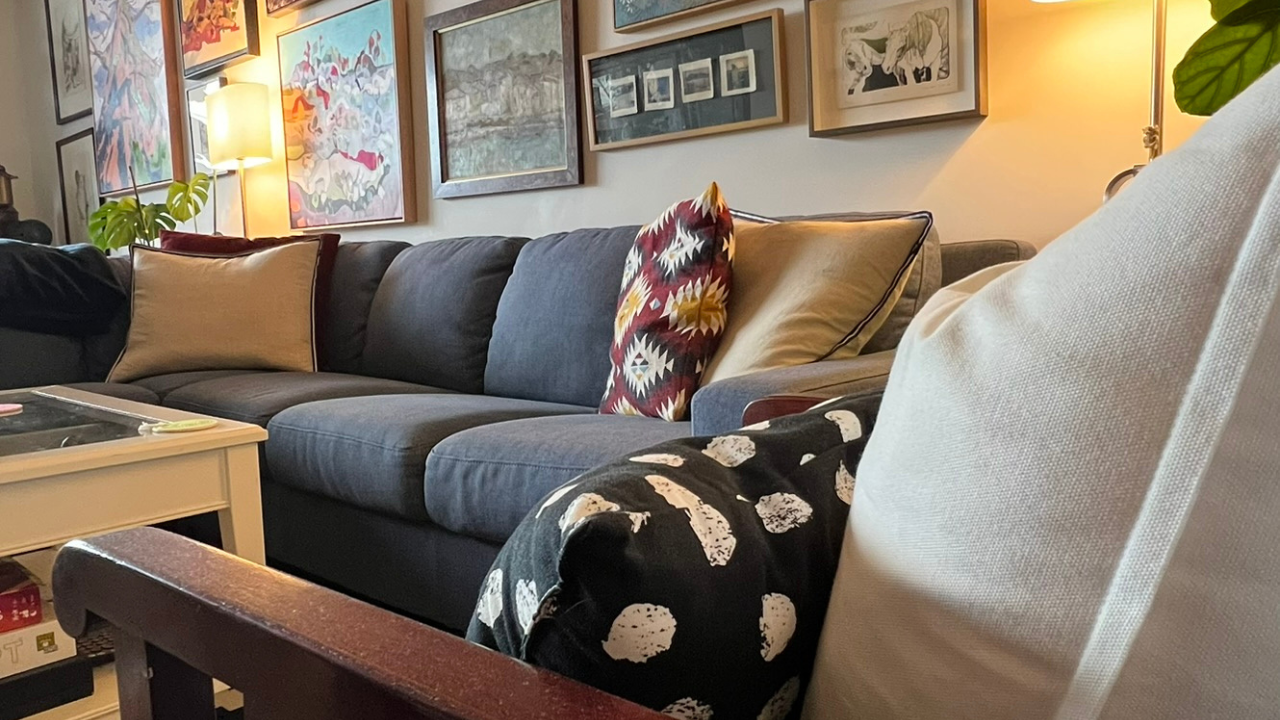
- Following a hip procedure, I had to lie on the couch for 24 hours, so I watched My Brilliant Career on Netflix. Mixed thoughts, as I loved the story, cinematography, and the fact there was no makeup (it's set in 1900 Australia). But the soundtrack killed the vibe for me. It was modern, and twice I almost stopped watching. Glad I persisted, though.
- I'm reading Onix Storm, by Rebecca Yarros. If you read Game of Thrones (most people only watched the TV series), you may enjoy this series too. This is book 3, and although it's the worst rated of them on Goodreads (4.2/5) it's actually my favorite. It expands the series universe, which is the most important aspect of fantasy writing and why The Lord of the Rings is still the benchmark. And the characters are more mature, older, and better understand their purpose, leadership style, and power - which is also why I like the last book of the Harry Potter series.
- And perhaps my favorite luxury of all at the moment: very cold dips in Melbourne's bayside with my husband. Not particularly sophisticated. But increasingly precious.
Until next week
RB