This week, I want to name a problem I see all the time with experienced professionals:
They prepare their resume. They prepare their answers. They prepare their examples.
But they often forget (or don't know how to control) their mindset and don't prepare for how they show up. And in interviews, that can cost them the job.
In Episode 331 of The Job Hunting Podcast, I spoke with body language expert Linda Clemons about the nonverbal patterns that can quietly undermine even the most qualified candidate. She explained that our body often reveals what our words are trying to hide, especially under pressure. As she put it, if something is not truthful and authentic, it will not show up in the proof.
If you are looking for work, this matters especially in a very tight job market.
You may have the experience.
You may have the track record.
You may even have the perfect answer.
But if your energy reads as tense, flat, defensive, defeated, or overly rehearsed, the interview can go off course before you have had the chance to show what you can really do.
That is what this newsletter is about: How to make sure your presence supports your message, instead of weakening it.
Your body is talking before you do
One of the most useful ideas from my conversation with Linda is that body language is not just hand gestures or eye contact.
It is about congruence.
Your words, tone, posture, facial expression, and energy need to work together.
That is especially important in interviews, where the first few moments shape the entire conversation.
Linda described what confidence looks like physically in a way that I think many of you will remember: sit upright, shoulders back, head level, both feet grounded, and sit “seat ready” at the edge of the chair so you can move from your core with intention. She also warned against letting desperation show, because it does show.
This is important because many experienced professionals are not actually underprepared. They are overburdened.
After months of rejection, redundancy, uncertainty, or career disappointment, the body starts carrying the story.
And that story can leak into the room.
What that can look like in practice:
- You walk in looking exhausted instead of engaged.
- You answer carefully, but your tone comes across as restrained or flat.
- You try to appear calm, but your body reads as guarded.
- You overcompensate and come across as too intense, too eager, or too rehearsed.
None of this means you are not good enough. But it does mean your interview performance may not reflect your true capability.
The hidden problem is not your answer. It is your state.
Linda introduced three patterns that are especially relevant for job seekers: frozen, flooding, and flat.
I immediately thought of clients I have coached over the years.
- Frozen is when your energy shuts down. You become still, stiff, overly controlled, disconnected. There is no warmth, no movement, no spark.
- Flooding is when too much emotion spills out. A question touches a nerve, and suddenly the answer becomes disjointed, emotional, hard to contain. This often happens when the pain of redundancy or career loss is still very raw.
- Flat is when there is no variation in tone, no animation, no visible engagement. And this one is very common among experienced professionals who have spent years in internal corporate roles, where restraint was seen as a sign of professionalism.
What really struck me is this: all three can exist in highly competent people.
In fact, that is why they are so dangerous.
Inside an organisation, people may know your baseline.
They know you are brilliant.
They know that your flat tone or low energy is just “how you are.”
But in an interview, nobody knows your baseline.
They only know what they see in the room. Linda made this point clearly when she explained that habits that are tolerated internally often become a liability once you leave and enter the market.
Why this matters more when you have been in one organisation for a long time
This is the part I really want you to think about.
When you have been employed in the same company for 10, 15, or 20 years, your nonverbal habits may never have been challenged.
People adapt to you. They interpret you generously and fill in the gaps because they already trust your competence.
Then you enter the external market and expect strangers to do the same.
They will not. They do not know your track record yet, or your intentions. And they don't know that your subdued demeanor is a sign of loyalty, caution, grief, or introversion.
They are making fast judgments with very little context.
This is why interview prep for experienced professionals has to go beyond answers.
You need to prepare your nervous system, your delivery, your posture, your energy, and your ability to stay connected in the room.
A better reframe for your next interview
You do not need to become charismatic overnight.
You do not need to become someone else.
You do need to make sure your body is not undermining your message.
A more useful reframe is this:
Interviewing is not just answering questions. Please stop putting all your energy into STAR-format answers!
The interview is designed to help the other person feel your steadiness, credibility, and readiness. That is why body language matters.
And that is why this episode is so relevant to experienced professionals, especially those returning to the market after a long time with a single employer.
If this is your challenge, here is where to start
If you know you are strong on paper but not always strong in the room, start here this week:
- Record yourself answering “Tell me about yourself.” Practice what is most likely going to be your opening answer. Mimic an interview environment as closely as possible. Say the answers out loud.
- Watch your posture, pace, tone, and facial expression
- Notice whether you look frozen, flooding, or flat
- Adjust one thing at a time.
This is also the perfect kind of work to do in a coaching session, because it is very hard to see yourself clearly without feedback.
Worried your interview style is not landing the way you want it to?
- Book a 1-hour session with me, bring your interview answers, concerns, and examples, and we can work on both your message and your delivery together.
- Need more structured support as you rebuild your confidence and career strategy? Not used to investing in coaching? Start here: Reset Your Career is designed to help you with your job search with practical guidance, recordings, and examples you can use straight away.
- And if LinkedIn visibility is part of the problem (believe me, 90% of the time it truly is!!), my private LinkedIn group is a monthly membership, offering weekly support and advice from me in a format that is sustainable and practical. Opt in when you're ready to activate the power of LinkedIn. Opt out whenever you want to.
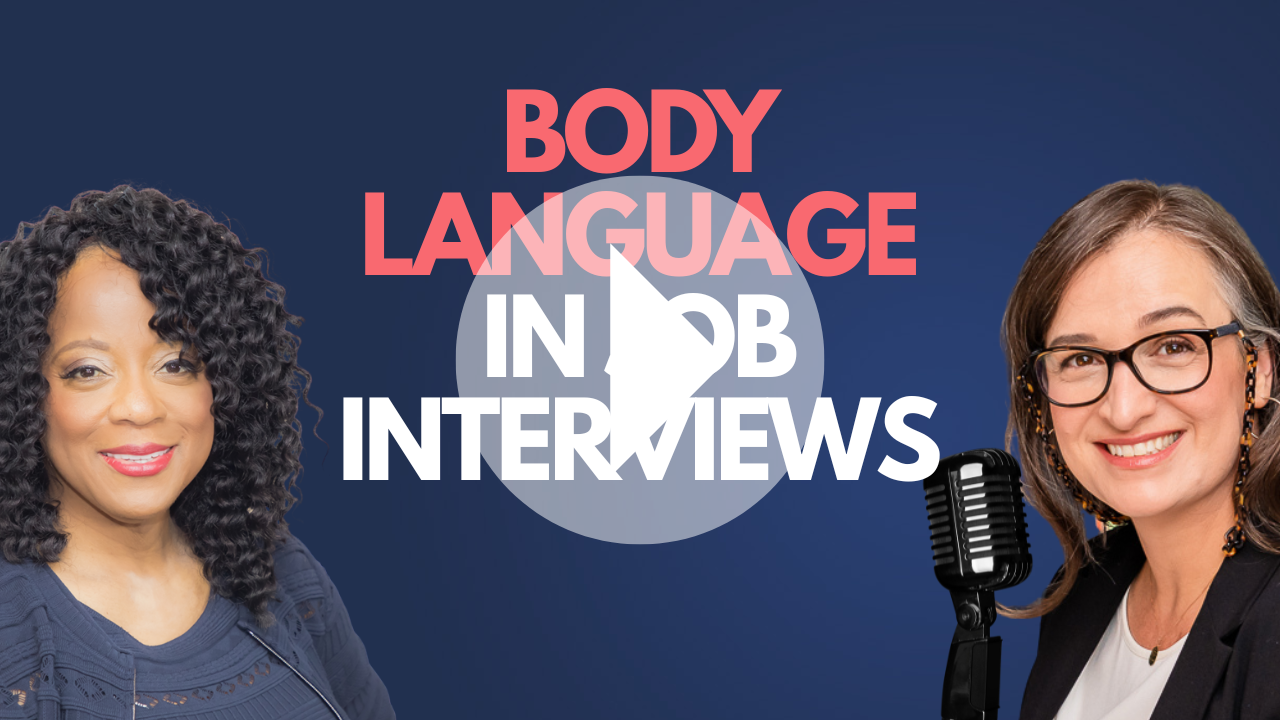
Linda Clemons is my guest on this week's episode, exploring the importance of nonverbal communication in professional settings. We discuss the significance of body language in interviews and the emotional barriers that can affect job seekers. Linda shares her expertise on how to present oneself confidently and authentically during interviews, emphasizing the role of emotional intelligence and the impact of nonverbal cues. Watch this if you have reached the interview stage in your job search but haven't yet received a job offer.
Time Out
- Andre and I watched The Madison in one sitting. We love the scenery, and it's good to see Michelle Pfeiffer back on screen (she's an excellent actress), but the script is very predictable. You've been warned!
- I'm listening to Oscar-winning Uruguayan musician Jorge Drexler's new album, Taraca. So good. Also and old favorite from Brazilian musicians and best friends, Almir Sater and Renato Teixeira Assim os Dias Passarao. Very Pink Floyd, I always loved Sater - used to have a little crush on him :) And also the new song, So Many Ways, by my favorite nepo baby, Scout Willis. The most beautiful voice, and it sounds like an 80s song, which is her vibe (and mine).
- You can follow my work-from-abroad trip to the UK and be a fly on my wall by following me on Instagram.
Next week, I want to look at another area that experienced professionals often neglect: How to step back from the anxiety of job search (or the daily grind of your busy workload) to set long-term goals for your career.
Until then, wishing you all the best
RB