I live with chronic illness. Most people would not know that by looking at me.
Last week during a client session, she gently asked: "So all these years I've worked with you, you've had this?" And I said, "Yep." Mind you, we are now doing executive coaching, but twice before she engaged me to change jobs.
So it's been on and off, a 4-year partnership. Not once has my condition impacted the work we do together. She has always managed to land great roles and has become a thought leader in her field, protecting her from any future job loss.
And yes, I deal with chronic pain every day, alongside other health issues that I have learned to manage while raising a family, building a corporate career, and now running my coaching business.
For a long time, I thought the goal was to get back to normal. Then I started to think differently, once I realized I may never be completely free of these health issues.
And once I accepted that, I started working better, understanding myself better, and being clearer about what I need in order to perform well.
That distinction matters.
Because many of the professionals I work with are managing something that is not immediately visible.
Sometimes it is a chronic illness. Sometimes it is neurodiversity. Sometimes it is recovery from surgery, an accident, grief, caring responsibilities, divorce, or a difficult period at home.
And one of the hardest questions is often:
"How much do I tell people at work?"
Know when to share, and when not to
Not everything needs to be disclosed. And not everyone will respond with empathy. Once something is shared, you cannot always control how people interpret it.
When clients are deciding whether to disclose a health condition, neurodiversity or another personal circumstance, I encourage them to make that decision carefully.
I often suggest they speak not only with me, but also with the people who know the broader situation well, such as family members, counsellors or health professionals.
The decision should be considered, not reactive.
If it is visible, stop spending energy trying to hide it
Sometimes the condition, limitation or circumstance is difficult to conceal.
In that case, trying to hide it can become a job in itself.
There may be more value in naming what is happening and being clear about what support or adjustment would help you perform well.
Many organisations already have policies designed to support employees in these situations.
The problem is that policies are only useful when people remember to use them.
Sometimes employees need to remind managers and HR teams that those provisions exist.
Needing an adjustment does not make you less capable.
It may simply be the thing that allows you to do your best work.
Representation matters, if you have the capacity for it
I understand why many people do not want to become the spokesperson for a condition, disability, or difference.
You may already have enough on your plate to manage.
But if you are senior enough, secure enough, or simply willing, being more open can make a remarkable difference to someone else.
When one person says, “This is part of my life, and I am still doing excellent work,” other people often feel safer doing the same.
You do not have to fight every fight.
But sometimes visibility creates permission.
Redefine what high performance looks like
This has probably been the biggest lesson for me.
For years, many of us were taught that commitment looked like long hours.
Nine to five. In my case, more like seven to seven, or 24/7 when I was a CEO! Always available. Always on.
That model does not work particularly well for me anymore.
Yesterday morning, I stayed in bed until 10 a.m. And it was so good. I will never apologize for giving myself permission to run my day as I see fit.
I can do that now because I work for myself.
But what mattered was what happened afterward.
I had the energy to support clients, record content, make decisions, and do some of my best work of the week.
Overall, this week, a week where I was gentle and kind to myself, has also been one of my strongest weeks of the year in terms of new clients and positive outcomes for existing clients.
The adjustment did not reduce my performance.
It made the performance possible.
When I worked for employers, this was something I had to negotiate much more carefully. But I have always done it.
As soon as I had control over meetings, I booked them on days I knew I was at my best.
I used all the opportunities to make my workplace safer for me, and used all the flexibility and tools available in my employment to support me in doing my best work.
And if I couldn't get support from my employer, I wasn't afraid to switch jobs, seeking managers and teams that were absolutely brilliant to work with.
And as much as I could, I also paid it forward, hiring people I knew had chronic conditions and supporting those who were going through a rough patch, only to see them flourish.
And I think that is the broader point.
The question should not always be:
"Can this person work in the standard way?"
A better question is:
"What conditions allow this person to perform at their best?"
For you this Friday
If you are managing something difficult, temporary or permanent, ask yourself:
"What am I currently forcing myself to do in the 'normal' way that could be done differently without reducing the quality of my work?"
It might be your hours, where you work, when you schedule demanding meetings, how much recovery time you need, or simply allowing yourself to ask for help.
There is a difference between lowering the standard and changing the conditions required to meet it.
And if you manage people
Please do not assume.
Someone leaving at 5 p.m. on the dot may not be disengaged.
Someone who does not turn their camera on this week may not be uninterested.
Someone asking for flexibility may not lack ambition.
You may be seeing five per cent of what that person is managing.
Good leadership sometimes begins with curiosity:
“Is there anything you need from me that would help you do your best work?”
That question can change someone’s experience of work.

How I help
Career decisions become more complicated when health, family responsibilities, or other personal circumstances are part of the equation.
There is rarely one correct answer about what to disclose, what to ask for, or what kind of role will work best.
This is part of the work I do with private coaching clients: helping them think through those decisions carefully, protect what matters to them, and build a career strategy around the reality of their lives.
Learn more about private coaching

This week on YouTube: Just made redundant at a senior level? Start here
This week’s YouTube video is about what senior professionals should do in the first few weeks after redundancy, before sending a single application. I explain why taking a break can actually strengthen an executive job search, what to avoid doing in week one following a layoff, and how to use that time to reset and rebuild, and why a carefully written LinkedIn farewell post is often the only thing worth publishing while everything is still fresh.
The central message is simple: senior searches take time, so rushing into applications while you are still angry, grieving, or exhausted can do more harm than taking a few weeks to recover and return to the market ready.
On The Job Hunting Podcast:
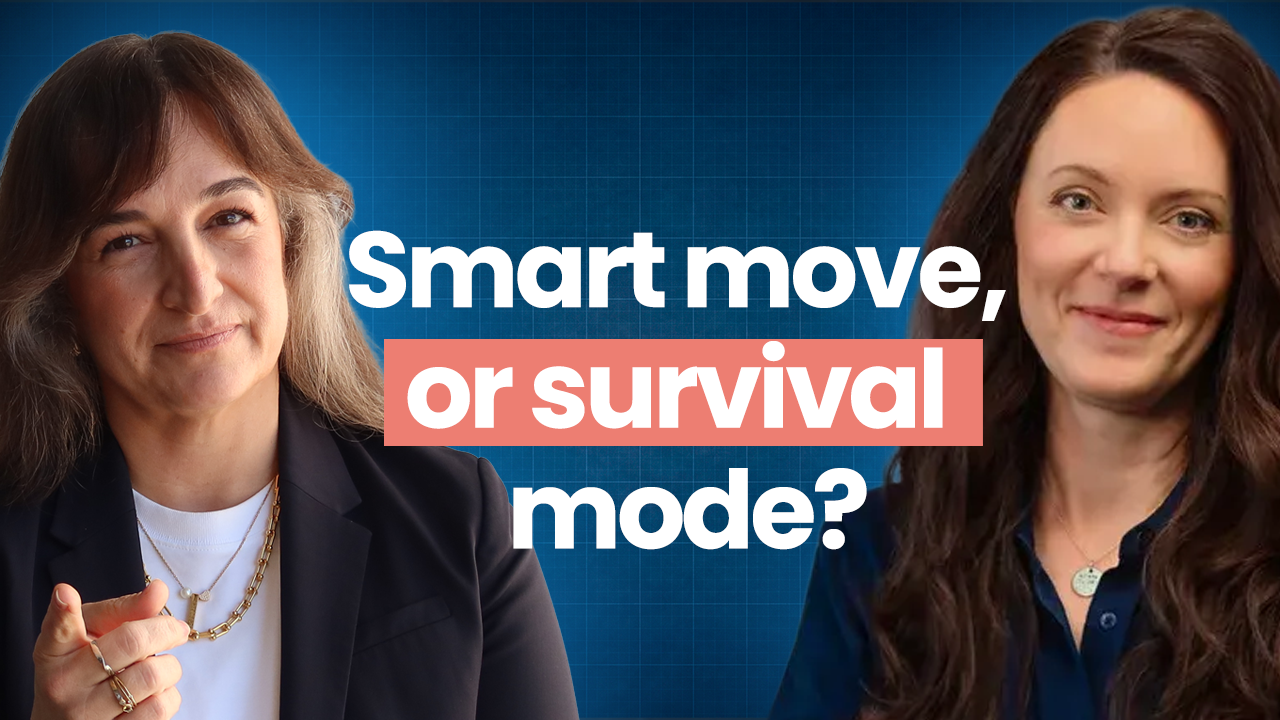
How Financial Stress Shapes Your Career Decisions
This week’s podcast episode is about how financial stress can distort career decisions. My guest, Carrie Joy Grimes (CEO of WorkMoney), and I discuss why knowing your financial runway matters, how money anxiety can push experienced professionals into accepting the wrong role or underselling themselves, and why understanding your “minimum viable lifestyle” can create more time, negotiating power, and better career choices. We also explore the idea that financial runway is a form of career capital because it gives you space to respond thoughtfully rather than react from fear.
It pairs very naturally with the YouTube video. The video focuses on what to do immediately after a senior redundancy and why you should resist rushing into applications, while the podcast explains one of the biggest pressures that makes people rush in the first place: financial anxiety. Together, they make the same broader argument from two different angles: give yourself enough space, emotionally and financially, to make a considered next move rather than turning redundancy into an emergency.

Time Out
I've been collating some of my favorite Instagram accounts to share with you. Here they are:
- He's the best son in the world. I keep telling my boys this is how I want to greet me every time we're going out and I dress up. Always brings a smile to my mouth.
- How can I explain @kim.chi.fried.rice? I watch a new video every time they come out. It's a very well put-together collage of videos, with a perfect soundtrack, perfectly edited. Each video has a theme, a vibe, a different energy. Watch it here.
- These Brazilian musicians play classical music, and sometimes pop as well, as if it were Brazilian music, like samba or bossa nova. So good. Worth listening to here.
I have spent a lot of my career working really hard, despite my health.
These days, I am much more interested in learning how to work with it.
That has made me a better coach, a better business owner, and, I think, a better leader.
See you next week
RBX