Many professionals set their sights on board appointments as a future career goal. A seat at the board table represents not only influence and impact but also an opportunity to transition into a portfolio career that blends governance, strategic oversight, and thought leadership. For experienced professionals who often bring decades of operational expertise, the question is no longer “Should I consider a board career?” but rather “How do I make myself board-ready?”
In this episode of The Job Hunting Podcast, I share my insights as a career strategist and coach for senior professionals. Drawing on years of experience working with executives, boards, and learning from governance experts, I explore what boards truly value, how appointments happen, and what it takes to position yourself for a paid board role within the next five years.
What Boards Value
The first blocker many professionals encounter is uncertainty about what boards look for in prospective members. From my perspective, the essential attributes fall into four categories:
- Governance Capability, Judgment, and Perspective: Boards do not operate like executive teams. Directors are expected to advise, oversee, and challenge rather than execute. This shift from hands-on operations to strategic oversight requires strong governance knowledge, sound judgment, and the ability to ask the right questions at the right time. Many executives underestimate the adjustment needed to step back from decision-making and step into advisory mode.
- Strategic Insight: Boards value members who can identify long-term opportunities and risks. Directors must demonstrate the ability to look beyond day-to-day performance and evaluate how macroeconomic shifts, technological changes, or industry disruptions may impact the organization.
- Financial Literacy: Understanding profit and loss statements, balance sheets, and cash flows is non-negotiable. Even directors without a finance background must upskill in this area. Strong board members are not only literate in financials but also capable of interpreting them in the context of governance and risk.
- Risk and Compliance Expertise: Legal, regulatory, and reputational risks are at the heart of board responsibilities. Training programs such as those offered by Harvard Kennedy School, the Australian Institute of Company Directors (AICD), and Governance Australia provide frameworks for developing this knowledge.
- Diversity of Perspective: Boards are increasingly seeking members who bring diverse experiences, backgrounds, and ways of thinking. Gender diversity remains a priority, but so too does diversity in age, cultural background, professional expertise, and lived experience. A well-rounded board reflects the community it serves and avoids the dangers of groupthink.
How Board Appointments Happen
The second blocker is not knowing how board appointments occur. While some positions are publicly advertised, most appointments happen through networks and sponsorship.
- The Role of Networking: Genuine relationships with current board members and governance professionals are critical. When vacancies arise, candidates are often approached by someone who knows their capabilities. Declaring your ambition and expressing interest in future board roles is the first step toward being considered.
- Sponsorship: Beyond networking, sponsorship plays an equally important role. A senior leader or board member who has seen you in action and can advocate for your candidacy is often the differentiating factor when competing for limited positions.
- Advisory and Nonprofit Boards as Stepping Stones: Advisory committees and nonprofit boards offer opportunities to gain governance experience, demonstrate expertise, and build relationships with directors who may also sit on paid boards. While nonprofit roles may be unpaid, they provide visibility and credibility in governance circles, which can eventually lead to appointments on corporate boards.

Becoming Board Ready
The third blocker many professionals face is the belief that their profile is not board-ready. The truth is that few people are instantly ready. It typically takes five to ten years of deliberate preparation.
- Build the Right Experiences: Operational leadership roles with profit and loss responsibility, exposure to risk management, and strategic oversight are critical stepping stones. Seek roles that offer governance interaction or exposure to board-level decision-making.
- Develop a Board-Focused Resume: A board resume differs significantly from an executive resume. It should emphasize advisory skills, governance experience, and strategic contributions rather than operational achievements. Tailor it to highlight the expertise that aligns with a specific board’s needs.
- Position Yourself Publicly: Visibility is half the battle. Demonstrating thought leadership on LinkedIn, contributing op-eds to newspapers, speaking at conferences, or participating in industry panels all help establish you as an authority in your field. Boards notice candidates who are visible, credible, and articulate about their sector knowledge.
- Invest in Continuous Learning: While governance courses are valuable, it is important not to overinvest too soon. Begin by testing the waters—shadowing board members, attending governance events, and engaging mentors—before committing to expensive programs. Formal training becomes more beneficial once you are certain about pursuing a board path.
A Five-Year Plan for Board Readiness
Years 1–2:
-
Declare your board ambition to your network.
-
Audit your skills and identify gaps, especially in finance and compliance.
-
Build visibility on LinkedIn through thought leadership posts and commentary.
-
Explore governance training options without overcommitting financially.
Years 2–3:
-
Join a nonprofit board, advisory board, or committee aligned with your interests.
-
Actively network in governance circles, attending AICD or industry-specific events.
-
Begin crafting and refining your board resume.
Years 3–4:
-
Seek out mentors and sponsors already serving on boards.
-
Demonstrate governance skills in action, building a track record of impact.
-
Target government boards or mid-tier organizations to gain more substantial experience.
Years 4–5:
-
Position yourself for paid board roles by leveraging your nonprofit or advisory experience.
-
Strengthen relationships with sponsors and headhunters.
-
Continue building a professional brand that signals readiness for governance responsibilities.
The Reality of Board Careers
Board appointments are not always glamorous or highly paid. Top-paying roles are rare and fiercely competitive. Most directors begin with modestly paid or unpaid roles, particularly in the nonprofit or government sectors. Time commitments extend beyond scheduled meetings, with significant preparation required to review documents and participate in subcommittees.
The motivation to pursue board roles should therefore be rooted in impact and contribution rather than financial reward. Those who thrive in governance careers are motivated by shaping strategy, supporting organizations, and providing oversight during critical moments.
Future Outlook
The demand for board diversity, digital literacy, and governance expertise will continue to grow. Emerging areas such as cybersecurity, ESG (environmental, social, and governance), and artificial intelligence are increasingly shaping board agendas. Professionals who cultivate expertise in these fields will position themselves as valuable candidates for future appointments.
The pathway to board roles is becoming more transparent. However, personal networks and sponsorship will remain the dominant route to appointments. Building visibility, credibility, and connections today is the best way to ensure you are considered tomorrow.
Securing a board role within the next five years is an achievable goal for experienced corporate professionals who plan strategically and take deliberate steps. Boards value governance capability, strategic insight, financial literacy, and diversity of perspective. Appointments happen largely through networks and sponsorship, and board readiness requires years of preparation, visibility, and relationship-building.
For you, this may be an interesting option for career advancement, leveraging your expertise, making an impact, and shaping the future of organizations and industries. If you are serious about pursuing a board career, start now. Audit your skills, build your network, and position yourself publicly. Remember, this is a marathon, not a sprint. With the right strategy, you can secure a meaningful board role and transition into a rewarding portfolio career.

Board-Ready Quiz
Are You Board-Ready in the Next 5 Years? Answer Yes / No / Maybe to the following questions:
Section 1: Governance Understanding
- Do I clearly understand what governance is (oversight, strategy, risk, compliance, fiduciary duty)?
- Am I confident reading financial reports (P&L, balance sheet, cash flow)?
- Do I understand the boundaries between board oversight and executive management?
Section 2: Experience & Skills
- Have I held senior leadership roles with P&L or strategic responsibility?
- Have I worked closely with a board (presented to, reported to, or collaborated with directors)?
- Do I have experience across risk, compliance, or regulatory environments?
Section 3: Visibility & Networking
- Have I told my network that I am aiming for board roles?
- Am I actively building relationships with people already serving on boards?
- Do I have a mentor or sponsor who could champion me for a board role?
Section 4: Branding & Positioning
- Do I have a board-ready résumé (concise, contribution-focused, tailored)?
- Does my LinkedIn profile and activity reflect governance-level credibility?
- Do I demonstrate thought leadership in my sector or areas of expertise?
Section 5: Practical Readiness
- Am I prepared for the time commitment beyond 10 meetings/year?
- Do I have realistic expectations about compensation (most roles are unpaid or modestly paid)?
- Am I willing to start with not-for-profit, government, or advisory boards as stepping stones?
Scoring
-
12–15 “Yes” answers → You’re well on your way. Keep networking, seek sponsors, and target opportunities.
-
8–11 “Yes” answers → You’re making progress, but you’ll need to close gaps (résumé, training, or networking).
-
4–7 “Yes” answers → You’re in the early stages. Use the next 5 years to deliberately build skills, visibility, and governance experience.
-
0–3 “Yes” answers → Now’s the perfect time to start laying the foundation — but you’ll need to approach this as a long-term goal.
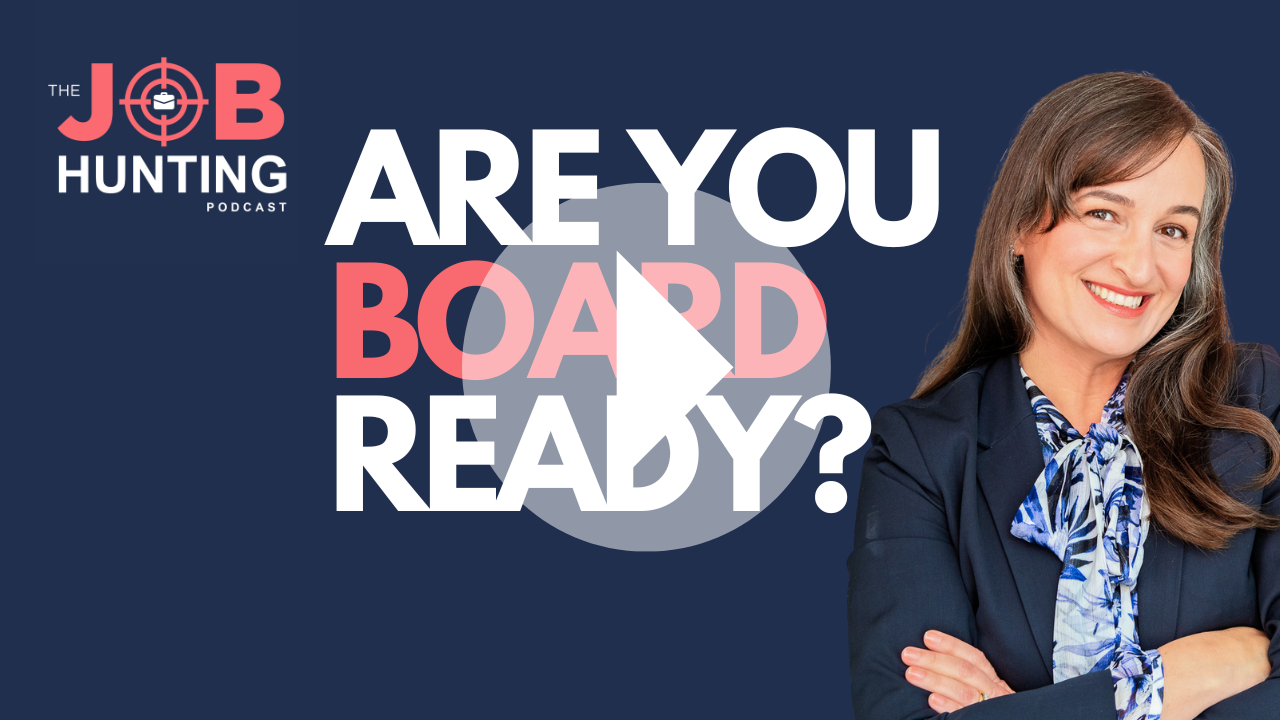
Aiming for a board seat? Listen to this week's episode:
Join me and discover the critical skills, strategies, and visibility you need to transition to the boardroom.
- Listen to the full episode on the podcast website
- Listen on Apple Podcasts
- Listen on Spotify
- Watch on YouTube
Give me a gift worth more than words
I recorded a 30-second video to show you how easy it is to show us some love on the Apple Podcast app. It will mean the world to me if you could please watch it, and then head to the app and give us your review!
Webinar Recording: The Layoff Recovery Masterclass
If you or someone you know has been laid off recently, the job seeker platform Callings.ai hosted a free Layoff Recovery Masterclass on Tuesday, August 19th. Over 900 people registered, and more than 200 attended in person, with the recording inside the callings.ai platform already having hundreds of views. It's also available on YouTube. I am on the panel, together with 3 experts, and I think it's worth a listen.

Time Out
- I've started reading The Heaven & Earth Grocery Store by James McBride because of the glowing reviews, and I'm so far really loving it.
- I saw some of Australia's greatest rock'n'roll musicians play Pink Floyd's "Dark Side of the Moon" album cover to cover, and it was magical. 2025 is the 50th anniversary of "Wish You Were Here" and "Dark Side of the Moon."
- I watched season 1 of the Netflix series Forever and loved it. Coming of age, young love, with great acting, in my favorite city of LA. If you know me well, you know I'll watch whatever is filmed in the city of angels, while googling all the hotspots and adding them to my Google Maps saved locations.
If you need extra help getting a job, a board role, or a career plan in place, visit my website for more information about my courses and coaching, which are designed to help you achieve your career goals.
Here's to your career success
RBX
Renata Bernarde | Career Coach | Host, The Job Hunting Podcast