Every leader and executive will eventually face moments when their reputation or career is on the line. Yet, few people take the time to prepare for these moments before they happen.
In this week's episode of The Job Hunting Podcast (315), I sat down with Edward Segal, a leading voice on crisis management and senior contributor at Forbes, who has spent decades advising Fortune 500 companies on leadership and crisis communication. Edward is also the author of The Crisis Casebook: Lessons in Crisis Management from the World’s Leading Brands and host of The Crisis Management Minute podcast.
Our conversation explored the realities of professional and organizational crises, how to anticipate them, and the concrete steps individuals can take to protect their careers and reputations. Whether you’re a senior executive, team leader, or mid-career professional, the insights from this discussion will help you navigate turbulent moments with confidence and strategy.
Understanding the Nature of a Crisis
Edward began by explaining that one of the most critical leadership skills is recognizing when a small issue is on the verge of becoming a crisis. As he shared, “My radar is very attuned to what can go wrong and what could morph into a major crisis situation.”
He illustrated this through an example from his tenure as CEO of the Greater Los Angeles Association of Realtors. Shortly after signing a contract with the Beverly Hills Hotel, the organization discovered that the hotel was owned by the Sultan of Brunei, a leader from a country known for anti-gay laws. With many LGBTQ+ members, holding the event there could have triggered a serious backlash.
Edward acted quickly to cancel the contract, despite resistance from the hotel. The decision proved wise: months later, Hollywood celebrities began boycotting the property, and public pressure mounted. His early awareness and decisive response prevented what could have been a reputational and ethical disaster for the organization.
According to Edward, how an organization or individual handles a crisis often depends on several key factors: leadership maturity, company culture, and situational awareness. Older, more established organizations may have greater experience managing crises, while startups often focus so heavily on growth that they overlook potential risks. Similarly, an experienced CEO might recognize early warning signs that a younger leader would dismiss. Geography and scale also matter: Multinational companies face more complex challenges than small local businesses.

Lessons from Real-World Crises
During our conversation, I shared my own experience working in governance when a Melbourne university faced a rare on-campus shooting. In a country with strict gun laws, this was an unimaginable event that forced the institution to rethink security, communication, and crisis response.
Edward emphasized the importance of conducting a thorough after-action review, analyzing what happened, how long it took to communicate with stakeholders, and what could be improved. “Communication is absolutely critical as a crisis unfolds,” he said. “Everyone who’s affected (students, faculty, the public) needs to know what’s happening, what to do, and when it’s safe again.”
Traditionally, crisis experts referred to the “golden hour” (the first 60 minutes after an incident) as the crucial period for response. Today, Edward says that the time frame has shrunk to the “golden minute.” With the speed of social media, organizations and individuals must act almost instantly to control the narrative.
“If you see something or hear something, do something,” he said. “Don’t let others control the story. Be the first to share accurate information and position yourself as the credible source.”
This principle applies not only to companies but also to individuals managing personal career setbacks. Whether facing a layoff, performance issue, or reputational misunderstanding, taking control of your story early can make all the difference.
The Importance of Media Training
I believe there is a critical need for media training, something many executives overlook. Inadequate responses can escalate a crisis. Executives often do well with their prepared statements but stumble during follow-up questions. As Edward pointed out in our conversation, what they get wrong is often what makes the news. He recommends that companies and leaders invest in regular media training and establish clear internal communication protocols. Employees should know who is authorized to speak publicly, and reporters should be directed to the appropriate spokesperson.
This advice is equally relevant to professionals representing themselves online. In the age of LinkedIn and digital transparency, understanding how to communicate effectively and responsibly has become a fundamental career skill.
Communicating During a Crisis: The Boeing Example
We also discussed Boeing’s high-profile challenges following a mid-air incident in 2024. The company’s response was slow, fragmented, and defensive, becoming a case study in what not to do.
Edward’s advice: never point fingers, and never wait too long to respond. Instead, issue a “holding statement” acknowledging the situation and promising updates as more information becomes available. “You don’t have to know everything to say something,” he explained.
He outlined the fundamental framework for crisis communication: the classic five W’s and one H: Who, what, when, where, why, and how. By keeping stakeholders informed as the facts emerge, organizations can maintain trust and credibility even amid uncertainty.
The same principle applies at a personal level. If a mistake happens at work, address it transparently rather than hoping it goes unnoticed. Visibility and honesty build credibility over time, while silence creates suspicion.
Crisis Management for Your Career
The core message extends beyond corporations: every professional should have a personal crisis management plan. “It’s not if, it’s when,” he reminded us. Individuals should consider every potential threat to their professional reputation, from performance issues to online behavior, and take preventive steps to mitigate risk. This means being cautious with what you post on social media, maintaining clear documentation of your work, and avoiding actions that could be misconstrued.
As I always tell my clients, it's important to keep detailed notes if you witness potential misconduct or risk within your organization. Write down what you knew, when you knew it, and who you told. That record could protect you from becoming a scapegoat later.
Finally, transparency matters. If you are involved in an issue, taking ownership of your role early can prevent the appearance of a cover-up.

Actionable Strategies for Job Seekers and Professionals
-
Develop Your Personal Crisis Playbook: Create a document that lists potential risks to your career, from layoffs to reputational harm. Outline steps to respond to each, including who to contact, what to communicate, and how to manage your emotions and next steps.
-
Control Your Narrative: When leaving a job or facing criticism, don’t delay communication. As Edward put it, “Don’t wait. Be as truthful as you can.” Prepare a concise, consistent explanation for your departure that focuses on growth and learning rather than blame.
-
Keep a Record of Wins and Contributions: Track your accomplishments regularly. This not only strengthens your resume but also provides protection if you need to defend your performance.
-
Invest in Media and Communication Skills: Learn to communicate clearly under pressure. This includes managing public speaking, handling tough questions, and articulating your professional story online.
-
Anticipate Emerging Risks: Edward highlighted artificial intelligence as a growing disruptor. Rather than fearing it, professionals should adopt what he calls “career jujitsu”, turning potential threats into opportunities. Learn new tools, adapt your skills, and use technology to enhance your relevance.
Are you in a crisis right now?
If you want expert support tailored to your situation, here are practical ways we can work together this month.
- Strategy consultation: A focused 60-minute session to diagnose your situation and map a 30-day plan of action. Reply to this email now if this is an emergency. Book here.
- LinkedIn profile audit: A detailed review that can be tailored to what is happening in your career right now, with specific recommendations for your headline, About, experience, skills, Featured assets, and searchability. Request an audit.
- On-demand courses: If you have been laid off, this is a great option. Move at your own pace with step-by-step guidance on resumes, LinkedIn, storytelling techniques, and job search strategy. Start here.
- Private coaching discovery session: Explore a customised coaching program to support you over an extended period of time and support your strategic career move. We will clarify goals, scope, and fit, and you will leave with a draft roadmap even if you decide not to proceed. Book a discovery session.
Learn More about Working With Me
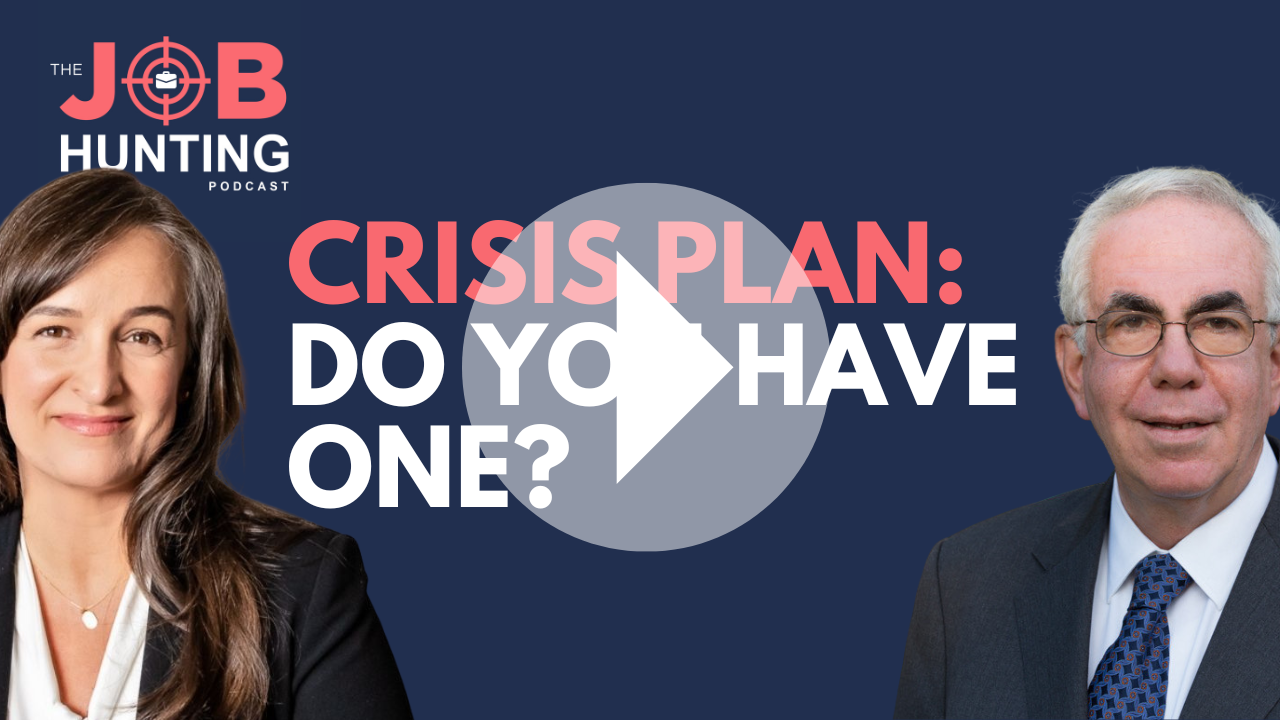
Considering a bold career move? Listen to this week's episode:
From controlling your narrative to mastering communication under pressure, anticipating and managing crises is now a core leadership skill. “If you’re not first out of the gate sharing information, others will fill the vacuum.” Whether in a boardroom or during a job search, being proactive and transparent is your best defense.
- Listen to the full episode on the podcast website
- Listen on Apple Podcasts
- Listen on Spotify
- Watch on YouTube

Time out
- What I'm listening to: Neural Frequency Sounds to help me sleep and relax, First Aid Kit, Sigur Rós.
- What I'm watching: The two very long Diary of a CEO episodes with 4 female health experts are an absolute treat. Worth every minute, and I have been recommending them to all my friends.
- Current Instagram obsession: The entire book launch from the secretive Fashion Critical has been very entertaining. The outfits and her headpieces are to die for. The book is on my Christmas wishlist.
- Andre and I have been going to the beach almost every day for a coffee mid-morning. Our plan is to start getting in the water this week as the weather gets warmer. If you want to keep me accountable, check out my Instagram Stories.
I hope you found this newsletter helpful. Please spread the word and let your friends know they can subscribe as well.
Sometimes people reply to this newsletter to ask if I know a coach who can help them. I get very confused, because I do so much self-promotion! Apparently not enough! Click here to learn more about my services.
Here's to your career success
RBX
Renata Bernarde | Career Coach | Host, The Job Hunting Podcast