When you lose a job or realise that the career you have built no longer fits you, the default reaction is usually fear, self-doubt, and frantic activity. You update your resume, scroll job boards late at night, and question every decision that led you here.
This week's episode of The Job Hunting Podcast (319) will inspire you to ask different questions. "Who am I when I am not my job title? What is my deeper calling? How can I stay generous, open-hearted, and kind to myself and others while I navigate this uncertainty?
To explore this, I spoke with Professor Stephen G Post. Stephen is a professor at the Renaissance School of Medicine at Stony Brook University in New York, where he works in family, population, and preventive medicine and in medical humanities, compassionate care, and bioethics. He is the founding president of the Institute for Research on Unlimited Love, and the author of several books, including Why Good Things Happen to Good People, and his most recent book, Pure Unlimited Love.
Stephen has spent more than four decades studying altruism, compassion, spirituality, and health. In our conversation, we connected that body of work directly to the experience of job loss, career transition, and midlife questions about meaning and purpose.
Below, I have summarised the key ideas from our discussion and translated them into practical strategies for executives and experienced professionals who want a more grounded, generous way to navigate their careers.

Thinking about working with me 1:1 during your job search?
If you’re a mid or senior professional navigating redundancy, a role change, or a planned move, you don’t have to do it alone.
- If you’ve been made redundant: Many employers offer coaching or outplacement support as part of your package. You can usually request to work with your preferred coach. If you’d like that to be me, I can work directly with your employer or HR so that my fees are covered as part of your benefits.
- If you’re self-funding: You can also invest in 1:1 coaching privately. For many professionals, this is treated as a work-related expense, but you should always confirm this with your financial advisor or accountant.
Working together, we will structure your search, refine your positioning, improve your applications and interviews, and prepare you to negotiate with confidence. My clients are experienced professionals who want a clear plan, a thinking partner, and a higher probability of landing a role that matches their skills, seniority, and salary expectations.
If you feel ready to explore whether we are the right fit to work together, book a discovery meeting with me.

Why Love And Purpose Matter Most When Your Career Feels Unsafe
A lot of the professionals I work with feel they must solve their “survival problems” first. Once they have a new job and their income is secure again, then they will make time for purpose, contribution, and generosity.
Stephen challenged this directly. Based on his research, practices of giving and kindness are not luxuries you add after you have solved your problems. They are part of how you build the resilience to face those problems in the first place.
Stephen uses the phrase “pure unlimited love” to describe the posture of recognising that the wellbeing and security of another person is as real as your own. That can be expressed through:
-
Compassion and emotional support
-
Practical help and problem-solving
-
Creativity and mentoring
-
“Care frontation” in his words, where you challenge someone because you genuinely want their good
For job seekers and professionals in transition, this matters because it reframes the question from “How do I protect myself at all costs” to “How can I keep my heart open while I make good decisions about my next step?”
Everyone Has A Calling, Even If You Lost Sight Of It
A big part of our conversation focused on calling. Stephen takes it as a principle that every person has a calling, though many lose touch with it due to schooling, organisational pressures, or family expectations.
He told the story of Thomas Edison, who was humiliated and dismissed from school as a child because his teachers decided he did not have the kind of mind they valued. Edison’s mother chose to see his curiosity and intensity as gifts. She made space for him to learn differently. That reframing changed the trajectory of his life.
I see a softer version of this all the time in corporate careers. People are subtly told for decades that their real talents are not valuable, or that they are “too much” or “not enough” of something. By the time they reach their 40s or 50s, they may have a successful CV that does not match their inner sense of who they are.
Stephen described programmes he has been involved in in which older employees, often in their late 50s, were given one day a week to volunteer in roles they found personally meaningful. The results were powerful. The participants reported freedom from depression, a reduction in suicidal thoughts, and a much more fulfilling transition into their next chapter. Many went on to do work that aligned much more closely with their core calling.
The lesson for mid- to late-career professionals is clear. You are not too old to realign. Your calling does not disappear just because your last role ended or because you have spent years in a profession that no longer feels right.
Losing A Job As An Invitation To “Expand The Canvas”
Job loss often feels like a violent narrowing of your possibilities. One moment, you have a role, income, colleagues, and structure. The next, your identity feels stripped back to a blank page.
Stephen introduced a different image. He talked about “expanding the canvas.” An artist had once painted over an old, messy canvas with new colours and lines until it was museum-worthy. The old marks never disappeared. They became part of a much richer picture.
When you lose a job or step away from a role that no longer fits, you have the chance to expand your canvas instead of simply recreating what you had before. Concrete examples of expansion might include:
-
Moving from a narrow technical role to a broader advisory or board portfolio
-
Rebalancing your time across paid work, mentoring, volunteering, and study
-
Shifting sectors so that your skills serve causes that matter more deeply to you
-
Designing a hybrid portfolio where you keep some consulting work while exploring new directions
Stephen shared his own story. At one point, he left a medical school position in Cleveland for a role at Stony Brook University. The move was not easy. It meant leaving familiar colleagues and routines. It also brought him closer to the work he felt born to do, teaching kindness, compassion, and empathy, and building programmes that have had a national impact.
For executives dealing with redundancy or feeling pushed out of an organisation, this is a helpful question to keep in mind. If this setback is an invitation to expand my canvas, what new elements do I want on it?
Daily Practices: Spirituality, Reflection, And Intention
One of the most powerful parts of our conversation was Stephen’s description of his daily practice. He wakes up very early, around five in the morning, and quietly thinks about the people he is likely to encounter that day.
For each person, he asks, “What expression of love do they need from me?” It might be listening, encouragement, honesty, challenge, or simple presence. This is his way of keeping himself aligned with his values before the demands of the day pull his attention in other directions.
He connects this with a long philosophical tradition. Aristotle, for example, wrote about the highest form of friendship as a relationship in which you actively will the good of the other person and help them become who they are meant to be.
You do not need to share Stephen’s theology to benefit from this discipline. You can adapt it in a secular way:
-
Take 10 minutes at the start of your day to reflect on key conversations or meetings.
-
For each one, write down the kind of presence you want to bring.
-
At the end of the day, briefly review where you lived up to that intention and where you fell short, without harsh self-judgement.
Over time, this kind of reflection can change how you show up in interviews, networking meetings, and leadership roles. It moves you from reactive habits to chosen responses.
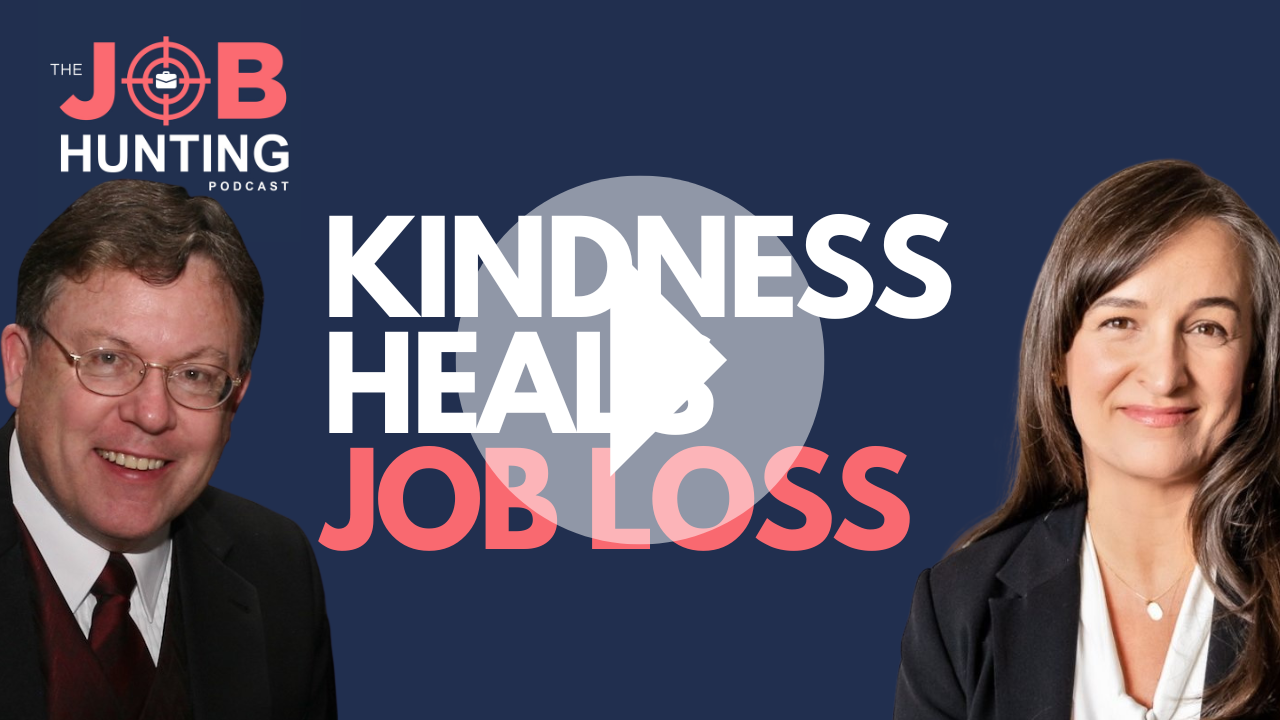
Anger, Grief, And Why Kindness Still Matters? Listen to This Week's Episode.
This conversation with Professor Stephen G Post reinforced something I see every week in my coaching practice. Technical skills, credentials, and experience are important, but they are not the full story. When people lose their jobs or feel misaligned in their careers, the path forward often opens up when they reconnect with love, service, and calling.
I invite you to listen to this great episode for the following takeaways:
-
Generosity and volunteering are not optional extras. They are core resilience tools that support your health, mindset, and sense of purpose.
-
You have a calling, even if you feel you have drifted away from it. Midlife and later career can be a powerful time to realign.
-
Job loss can be a chance to expand your canvas and design a richer, more meaningful professional life.
-
Kindness and “care frontation” help you navigate anger and grief without losing your integrity.
-
Daily practices of reflection, nature, and spirituality keep you grounded and better able to make wise career decisions.
- Listen to the full episode on the podcast website and read the blog
- Listen on Apple Podcasts
- Listen on Spotify
- Watch on YouTube

Time out
- What I'm listening to: I'm obsessing over Emma Dooley's videos on Instagram. During the pandemic, I tried to learn how to create sound as she does, but it lasted 2 days, and I gave up. This cover of Outkast's Hey Yeahh is a dream, and her own songs are also really good.
- Ok, why did it take me so long to start watching Stranger Things?! I have been very stubborn, as absolutely everyone who knows me well has said I would love it, and indeed I do. The soundtrack alone is a killer. And those boys. It's like E.T. on steroids. I can't stop watching it, but I'm still on season 2.
- I've been sick for almost 5 days now, but finally on the mend. Andre has been cooking in the slow cooker and spoiling me with home-cooked meals he's learning to make on YouTube. Yesterday we had ribs and veggies.
Do you want extra help with your next career move? Whether you want to start with a self-paced course or you’re ready for more hands-on support, I’ve built a range of programs, services, and tools specifically for experienced professionals in transition.
Click here to learn more about my services
Here's to your career success
RBX
Renata Bernarde | Career Coach | Host, The Job Hunting Podcast