The shift from doing the work to leading the work is one of the most important career transitions you will make.
A few weeks ago, I attended a webinar hosted by the Harvard Kennedy School about the transition from individual contributor to team leader. The session focused on how professionals can move into a new manager role and help their teams and organizations thrive in the process.
I see this transition play out so often in my coaching work. A client is excellent at their job. They are reliable, respected, technically strong, and trusted by senior leaders. They have built a career by being the person who gets things done. Then, at some point, they are promoted into a leadership role.
And suddenly, everything feels different.
The work changes. The relationships change. The expectations change. Even the way they measure a good day at work changes. I remember this happening to me, and I certainly wasn't prepared for it, even though in theory I wanted the promotion so much.
This is the part many organizations underestimate. They often promote someone because they are a strong performer, but they don’t always support that person to become a strong leader. The assumption seems to be that if someone is excellent at doing the work, they will naturally be excellent at leading the people who do the work.
But those are two very different things.
When you are an individual contributor, a lot of your confidence comes from your own output.
You know what good looks like. You know how to get things done. You can see the direct connection between your effort and the result. There is a lot of satisfaction in that.
When you become a manager, your work becomes less visible and, at times, less immediately satisfying.
Your job is no longer to be the best person at doing the work. Your job is to create the conditions for other people to do their best work. That can feel surprisingly uncomfortable, especially for high-achieving professionals.
You might feel slower. You might feel less useful. You might miss the satisfaction of finishing something yourself. You might worry that if you are not across every detail, standards will drop. You might feel guilty delegating something you know you could do faster. And you might find yourself stepping in too often, correcting too quickly, or quietly taking work back because it feels easier than watching someone else struggle through it.
That is how many good professionals accidentally become micromanagers.
Not because they are bad people. Not because they don’t care about their teams. Usually, it happens because they are trying to lead with the same habits that made them successful before.
And leadership asks for something different.
One of the biggest shifts is learning to stop being the person with all the answers. This can be very hard when your expertise has been central to your identity. You are used to being consulted. You are used to solving problems. You are used to knowing what to do.
But if everyone keeps coming to you for the answer, you become the bottleneck. More importantly, your team does not get the chance to develop their own judgment.
This does not mean you have to pretend you don’t know things. Your experience still matters. But part of your role is to help other people think more clearly. Before giving advice, you might ask, “What have you already considered?” or “What do you think is the best option?” or “What would you recommend if this decision were yours?”
Those questions may feel slower at first. But they teach people how to think, not just how to comply. Over time, that is what builds capability.
Another important shift is learning how to delegate properly.
Many managers think they are delegating when they hand over a list of tasks. But good delegation is not just about giving someone work to do. It is about giving them context, clarity, authority, and support.
If you simply say, “Can you prepare this report by Friday?” you may get something back that does not meet your expectations. But if you explain why the report matters, who will read it, what decision it needs to support, what level of detail is required, and when you would like to check progress, you give the person a much better chance of succeeding.
A lot of what looks like underperformance is actually a lack of clarity.
This is something I wish more managers understood. Before assuming someone has fallen short, it is worth asking: Did I explain what good looks like? Did I make the deadline clear? Did I explain the audience? Did I clarify what they could decide on their own and what needed to come back to me?
When those things are missing, managers often compensate by controlling the work more closely. But the better solution is usually not more control. It is better clarity.
There is also a difference between coaching someone and rescuing them.
Believe me, I know this problem very well!
Rescuing can feel kind in the moment. You fix the slide deck. You rewrite the paper. You take over the difficult conversation. You send the email yourself because it will only take five minutes.
I understand why this happens. Managers are busy. Deadlines are real. Standards matter. Sometimes stepping in is necessary.
But if you are always the one fixing things, your team learns that you will always catch the ball. They may become less confident, not more. And you may become exhausted, because you are carrying your own work as well as everyone else’s.
Coaching takes more patience. It asks you to stay with the person long enough for them to learn.
Instead of taking over, you might say, “Let’s look at what is not working here,” or “Talk me through your thinking,” or “What would make this stronger?”
That small pause can change the whole dynamic.
Feedback is another area where new managers often struggle. Many avoid it because they do not want to upset people. Others leave it too long and then the conversation becomes much bigger and more emotional than it needed to be.
The best managers I know make feedback part of the normal rhythm of work.
They don’t wait until something has become a serious issue. They give small, specific, timely feedback along the way.
They say things like, “The structure of this is strong, but the recommendation needs to be clearer,” or “You handled that stakeholder question well,” or “Next time, I’d like you to come to the meeting with a proposed solution, not just the problem.”
This kind of feedback is not dramatic. It is part of how good work gets done.
And it is important to remember that people need positive feedback too. Not vague praise, but specific feedback about what worked well and why. People need to know what to repeat, not only what to correct.
The other leadership skill that matters enormously is creating a team environment where people feel safe to speak honestly. I don’t mean a team where everyone agrees or where standards are low. I mean a team where people can raise concerns early, admit mistakes, ask questions, and challenge ideas without fear of being embarrassed or punished.
This matters because silence is expensive.
When people do not feel safe to speak up, they hide problems.
They nod in meetings and disagree afterwards. They avoid asking for help. They let small issues become larger ones.
Good leaders make it safe to tell the truth early. At the same time, they hold the standard. They can say, “I want you to raise risks early, and I also expect you to take ownership.” They can say, “You can challenge the idea, but we will do it respectfully.” They can say, “I would rather know about the problem now than discover it when it is too late.”
That combination of safety and accountability is where trust is built.
There is one more thing I want to say, especially to those of you who have been promoted because you were always the reliable one.
Please be careful not to become the hero manager.
You know the one. Always available. Always solving. Always absorbing pressure. Always stepping in before anything breaks. Always protecting the team from every discomfort.
It can look admirable from the outside. It can also become unsustainable very quickly.
Leadership is not about becoming indispensable. In many ways, it is about building a team that can function well because of your leadership, not because of your constant intervention.
That means allowing people to carry responsibility. It means letting them learn. It means giving them enough support, but not so much that they never have to build confidence. It means creating systems and expectations so that you are not the only thing holding everything together.
For many experienced professionals, this is the hardest part of the transition. You have spent years building your reputation on being capable. Then leadership asks you to create capability in others.
That can feel like a loss at first. But it is also where the deeper satisfaction of leadership begins.
There is something very rewarding about watching someone grow because you gave them space, guidance, and belief.
There is something meaningful about seeing a team become stronger, not because you did everything for them, but because you helped them trust themselves and each other.
That is leadership at its best.
Of course, I also want to acknowledge something that is not said often enough.
Some people move into leadership and eventually realize they do not want to keep managing people.
And that is okay.
It does not mean they failed. It does not mean they lack ambition. It does not mean they are not capable. Sometimes people are very good leaders and still decide that the work of leadership is no longer the work they want to do.
This can happen at any stage of a career, but I see it often with professionals in their 40s, 50s, and 60s. They have led teams. They have handled the politics, the performance issues, the meetings, the restructures, the emotional labour, and the constant responsibility for outcomes they do not fully control.
And at some point, they ask themselves, “Do I still want this?”
That is a very honest question.
Not everyone wants their next chapter to involve more direct reports, bigger teams, or more organizational complexity.
Some people want to return to deep expertise. Some want to advise. Some want to consult. Some want to mentor without formally managing. Some want to lead projects rather than people. Some want to contribute at a high level without carrying the full weight of people management.
There is nothing wrong with that. The important thing is to frame it properly. You are not going backwards. You are choosing the work where you can create the most value now.
You are bringing your leadership maturity into a different kind of contribution. You are trading formal people management for expertise, judgment, influence, and depth.
You might say something like:
“Over the past several years, I’ve led teams and developed strong commercial and stakeholder judgment. At this stage, I’m looking to apply that experience in a senior individual contributor or advisory role, where I can focus on complex work, mentor others informally, and contribute without carrying full people management responsibility.”
That is a thoughtful career decision.
I think we need to stop treating management as the only evidence of progression.
A career can be successful without constantly climbing into bigger leadership roles. You can lead through expertise. You can lead through influence. You can lead through mentoring. You can lead through judgment. You can lead through the quality of your work and the calmness of your presence.
And sometimes, choosing not to manage people anymore is one of the most mature decisions a professional can make.
So, if you are moving into leadership, give yourself time. You are not simply doing more of your old job. You are learning a new one. It is normal for that to feel awkward. It is normal to miss the certainty of your technical expertise. It is normal to feel exposed. The work takes practice.
And if you have been in leadership and are wondering whether you want to keep doing it, give yourself some grace. You do not need to keep pursuing a version of success that no longer fits.
The better question is not, “What title should I have by now?”
The better question is, “What kind of work allows me to contribute well, live well, and still respect the person I am becoming?”
That is a much more useful place to begin.
Investing in yourself is all about timing
if you have been thinking about getting support with your job search, career transition, LinkedIn profile, resume, interview preparation, or overall career strategy, this could be the right time to explore your options.
I am not a tax adviser, and this is not tax advice. Everyone’s situation is different. Depending on where you live, the type of work you do, and how career coaching relates to your current role or income-earning activities, some professional development expenses may be tax-deductible. Please check with your accountant, tax adviser, or relevant tax authority before making any decisions on that basis.
You do not need to wait until things become urgent. You can visit my website to book an introductory meeting if you would like to work with me privately. You can also look through the different services, programs, and courses available, and choose what feels aligned with your goals, your appetite for investment, and your budget.
If 2026 is the year you want to make a change, find a better role, reposition yourself, or simply feel more confident about your next career move, now is a good time to take that first step.
I would love to support you.
Ready for private coaching? Book a discovery meeting with me
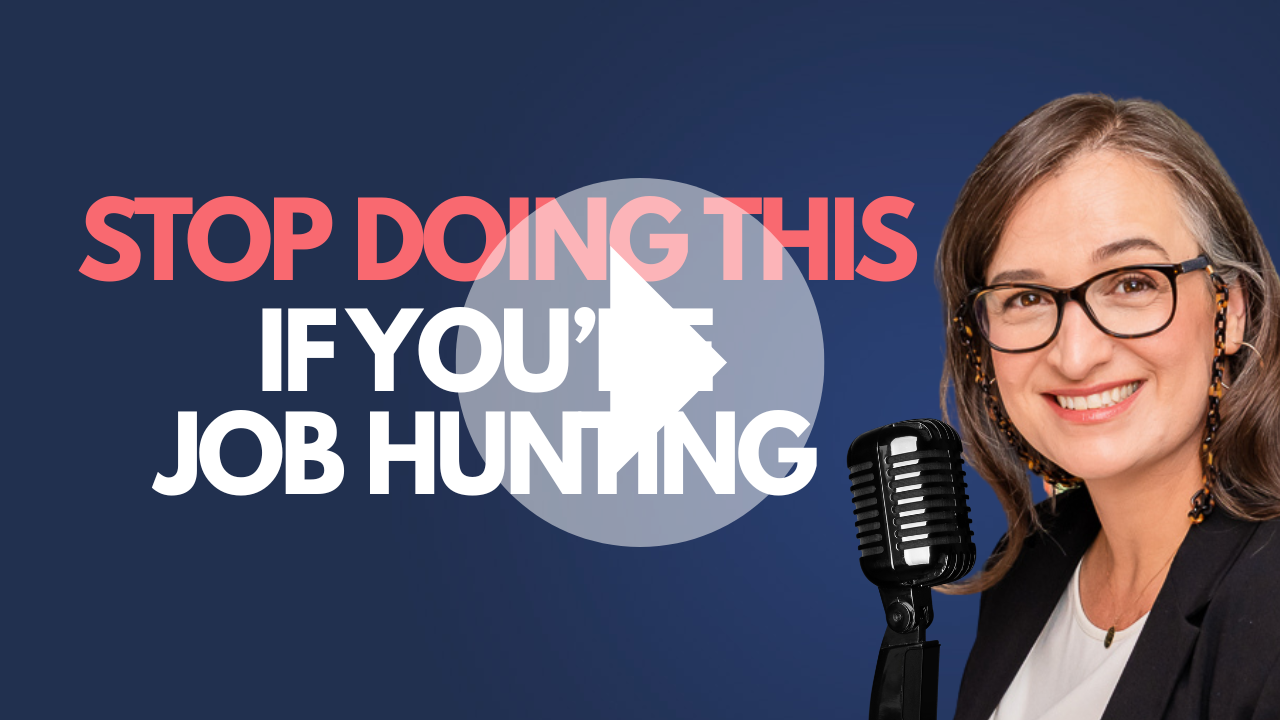
I Got Many Messages Following The Release of This Episode!
For some reason, last week's episode resonated with a lot of people. if you haven't listened yet, it may be a good investment of your time!
The Job Hunting Podcast Episode 336 - If I were job hunting now, I would not apply at scale, outsource my voice to AI, or wait until I was unemployed to build visibility. This article explains five common mistakes experienced professionals should avoid and how to make the job search more strategic.

Time Out
- We're finally watching The Other Bennet Sister, and I absolutely love it. It gives Mary a whole new angle and character development, which is really what we needed as in the original Jane Austen book there's no real time to develop her further.
- I'm listening to a lot of rainfall to make my grandson sleep. This one is my favorite because it's more gentle and natural. Some of them I think are too scary!
- Getting ready for the World Cup, I realized how out of touch I am with the teams, predictions etc. So I have watched this video to get a quick update and get ready for the watch parties.
Thanks once again for reading this newsletter. I hope you found it useful. And remember, you can always reply and reach out if you need extra help with your career.
Otherwise, I'll see you next week
RB