For executives and experienced professionals, strong communication skills can mean the difference between influencing key stakeholders and being overlooked. This episode of The Job Hunting Podcast features Ashleigh Paholek, a television journalist and confidence and communications coach. Ashleigh has spent over a decade reporting, producing, and presenting live on air. She now uses her experience to help professionals speak with clarity, authority, and impact.
Our conversation explores the skills and strategies executives need to present themselves effectively in high-stakes situations. We discuss practical tools for improving presence, building trust with your audience, and navigating moments when you feel unprepared or under pressure. Whether you are being interviewed for a job, presenting to a board, or attending a high-level meeting, the insights from this discussion will help you strengthen your executive presence and influence.
Understanding the Nature of Confidence
Ashleigh frames confidence in two dimensions: Internal and external. Internal confidence is about mindset: Your thoughts, beliefs, and self-perception. External confidence involves visible behaviors like body language, tone, and how you engage with others.
She points out that you can have strong external confidence without fully feeling it internally, and vice versa. In her own career, Ashleigh learned to project confidence even when she was nervous or unsure. This distinction is critical for professionals because it means confidence can be built and displayed deliberately, even in challenging situations.
One powerful example she shares is from covering breaking news during the Australian Open. With just minutes to prepare, she had to go live on national television with incomplete information. By controlling her tone, grounding her stance, and using intentional eye contact, she appeared composed to the audience while managing significant internal stress.

4 Key Communication Skills for Executives
- Control Your Pace and Tone - Many professionals overtalk when nervous, filling silences with unnecessary detail. It's important to practice concise communication, using pauses intentionally to add emphasis or allow your audience to absorb information. Speaking more slowly and slightly lowering your voice can convey authority and composure.
- Master Body Language - Nonverbal cues can build or erode trust in seconds. Pay attention to posture, hand positioning, and facial expressions. Keeping your shoulders open, maintaining steady eye contact, and showing your hands when speaking signals openness and credibility. Ashleigh recommends observing others to identify what confident body language looks like, then applying those insights to your own presence. Body language not only influences how others perceive you, it also reinforces how you feel about yourself in the moment.
- Avoid Over-Reliance on Filler Words - Filler words such as “um” or “you know” can dilute your message. Replace them with purposeful pauses, which give the impression of thoughtful consideration. This technique can be practiced in everyday conversations until it becomes second nature.
- Manage Your Voice - Your voice is a tool you can adjust to suit the situation. Ashleigh has developed vocal control over years of professional broadcasting, learning to use pitch, speed, and volume to create different effects. Executives can apply similar techniques by practicing speaking with a smile to add warmth or slowing down to signal seriousness. For women (and also men) who feel their voices sound too high or thin, this can be improved through training, and she encourages professionals to view voice development as a skill rather than a fixed trait.
Applying These Skills in High-Stakes Situations
- Job Interviews - Most interviews now take place on Zoom or Teams, making facial expressions and upper body language even more critical. Ensure your setup allows you to use hand gestures within frame and to make intentional eye contact with the camera.
- Board Presentations and Stakeholder Meetings - When presenting to senior decision-makers, concise messaging is essential. Identify two or three main points you want to convey and use conversational “threads” to offer multiple opportunities for engagement. This makes it easier for your audience to connect with your message and ask follow-up questions.
- Networking and First Impressions - Ashleigh uses a “highlights reel” approach when meeting new people, preparing several engaging points she can draw on depending on the other person’s interests. This keeps the conversation dynamic and memorable.
Other Strategic Considerations for Executive Presence
In our conversation, I brought up advice that extends beyond immediate communication techniques. For example, I caution my clients against changes that might unintentionally limit expressiveness, such as excessive Botox, particularly for those relying on facial cues in leadership or interview settings. Research shows that limited facial movement can affect how empathy is expressed and perceived. We also emphasized the value of the environment and equipment in virtual communication. Good lighting, a quality microphone, and reliable internet are relatively small investments that can have a significant impact on your professional image.

Actionable Strategies for Professionals
-
Audit Your Nonverbal Communication – Spend a week observing your own body language in meetings and comparing it to confident communicators you admire. Identify adjustments you can make.
-
Practice Intentional Pausing – Record yourself speaking on a topic for two minutes, then replay and note where you can replace filler words with pauses.
-
Refine Your Setup for Virtual Communication – Test your lighting, camera angle, and sound to ensure you present well on video.
-
Prepare a Versatile Highlights Reel – Have a set of short, engaging points ready for networking conversations or informal introductions.
-
Experiment with Vocal Variety – Practice delivering the same sentence with different tones to see how meaning and impact change.
The Future of Executive Communication
The shift toward hybrid and remote work means virtual communication skills will remain critical. Executives will increasingly need to project authority and connection through a screen. Additionally, the speed of business change will demand that leaders handle more unexpected, high-pressure situations with composure. Professionals who intentionally develop both internal and external confidence, as Ashleigh describes, will be better positioned to lead in this evolving environment.
It's important to remember that effective communication is a learned skill, not an innate gift. By understanding the mechanics of confidence and practicing deliberate strategies, executives can significantly improve their influence and impact. Ashleigh’s career as a journalist and coach demonstrates that even in the most high-pressure situations, preparation and awareness of your presence can change outcomes. To stay competitive, corporate professionals must continually refine their communication skills, adapt to virtual settings, and be ready to perform under pressure.
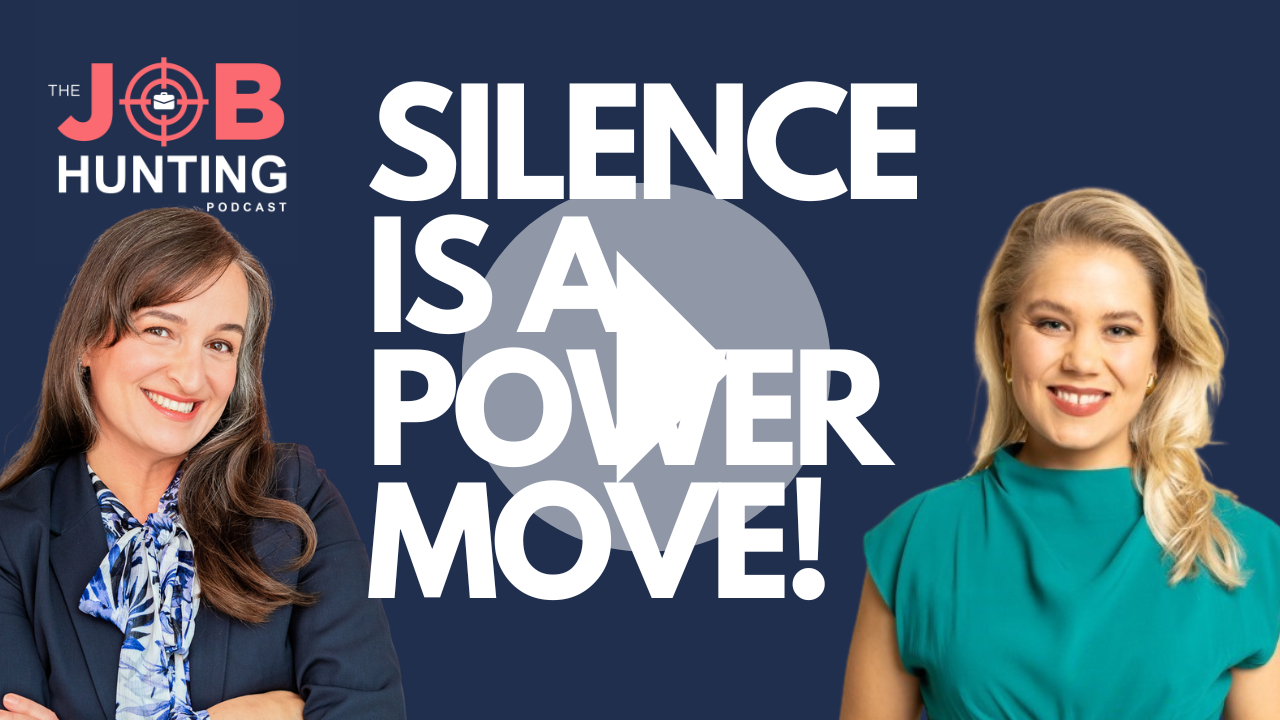
Want to improve your executive presence? Listen to this week's episode:
Listen to the full episode with Ashleigh Paholek and gain the complete context behind these strategies.
- Listen to the full episode on the podcast website
- Listen on Apple Podcasts
- Listen on Spotify
- Watch on YouTube

Webinar Invitation: The Layoff Recovery Masterclass is happening tomorrow!
If you or someone you know has been laid off recently, the job seeker platform Callings.ai is hosting a free Layoff Recovery Masterclass on Tuesday, August 19th, from 4–5 PM PT (That is 9-10 AM AEDT). I am on the panel, together with 3 experts, and we'd be delighted to see you there. This event is free. We are working really hard to make it as useful to you as possible.
Watch this Video: How to Give The Job Hunting Podcast a review on Apple Podcasts.
I recorded a 30-second video to show you how easy it is to show us some love on the Apple podcast app. It will mean the world to me if you could please watch it, and then head to the app and give us your review!

Time Out
- We watched Juror #2 about a family man who serves as a juror in a murder trial, and finds himself facing a very personal moral dilemma. Trivia fact: Nicholas Hoult (Juror#2) and Toni Collette (Prosecutor) are a mother and son in About a Boy, one of my favorite movies.
- I'm writing this newsletter while listening to "You Never Made It to the Big City". WYS' new album is a great low-fi listen for work or winding down at the end of the day. Note that at the beginning of the video, the musician has a message about not using AI. Interesting.
If you need extra help getting a job or a career plan in place, visit my website for more information about my courses and coaching, which are designed to help you achieve your career goals.
Here's to your career success
RBX
Renata Bernarde | Career Coach | Host, The Job Hunting Podcast