One of the most uncomfortable moments in a senior professional’s career comes when they realise that their reputation is not as portable as they thought.
Inside the organisation, people know what they have delivered.
They understand the political complexity they navigated, the stakeholders they influenced, the teams they developed and the decisions they made under pressure.
Outside the organisation, much of that context disappears.
A resume provides evidence, but only in compressed form. LinkedIn may show a series of titles, but titles rarely communicate judgment. A network may know the person, but not necessarily know how to describe or recommend them.
This is the gap I want to help you assess today.
In my conversation with Vanessa Errecarte for Episode 340 of The Job Hunting Podcast, we discussed why experienced professionals need to become easier to recognise, remember and recommend.
Vanessa described visibility as a step towards trust, rather than an end in itself. That distinction matters. Posting more is not the goal. The goal is to make your professional value easier for the right people to understand.
A Simple Test Of Career Portability
Imagine that your current role ended tomorrow.
Then ask yourself:
- Could five people outside your organisation clearly explain what you are particularly good at?
- Could they describe the business problems you solve?
- Would they know which types of roles, organisations or projects suit you?
- Could they introduce you to someone without needing to read your résumé first?
- Would your online profile reinforce what they say?
Many accomplished professionals answer no to at least three of those questions. That does not mean they lack value. It means their value is still too dependent on context.
Why General Positioning Creates Weak Referrals
When I work with experienced professionals, I often see positioning statements such as:
- “Strategic and commercially focused leader.”
- “Experienced transformation executive.”
- “Collaborative senior professional with a proven track record.”
None of these statements is wrong. The problem is that they could describe thousands of people.
When someone in your network hears about an opportunity, they do not mentally search through every competent professional they know. They recall the person whose expertise is easiest to match with the problem.
Specificity improves recall.
Compare:
“I’m a senior transformation leader.”
With:
“I help regulated organisations deliver complex transformation without losing stakeholder trust.”
The second statement gives the listener something to work with. It identifies an environment, a problem and an outcome. That is what makes a professional easier to recommend.
The Career Visibility Audit
Set aside 30 minutes this week and review the five areas below.
Score each one from one to five.
A score of one means the answer is unclear or inconsistent. A score of five means it is clear, supported by evidence and visible to other people.
1. Positioning
Can you explain your professional value in one or two sentences without relying on your job title?
Your explanation should identify:
-
The problems you solve
-
The people or organisations you help
-
The outcomes you create
-
The perspective or experience that makes your approach distinctive
Avoid starting with adjectives.
Words such as strategic, innovative and collaborative are supporting qualities, not positioning.
2. Evidence
Can someone find proof of your expertise beyond your own claims?
Evidence might include:
-
Specific career outcomes
-
Recommendations
-
Presentations
-
Articles
-
Case studies
-
Interviews
-
Project examples
-
Board or association work
-
Thoughtful LinkedIn contributions
-
Testimonials from clients, peers or stakeholders
You do not need to publish constantly. You need enough evidence to make your positioning credible.
3. Network Understanding
Do the people in your network know what you want to do next?
This is different from telling them that you are looking for a job.
A useful network message gives people a clear pattern to recognise.
For example:
“I’m exploring senior roles where I can lead operational improvement in complex service organisations, particularly where customer experience and organisational performance need to improve together.”
That message gives the recipient a role level, an operating context and a business problem.
“Please let me know if you hear of anything” does not.
4. Online Consistency
Do your LinkedIn profile, resume, biography and conversations tell the same professional story?
They do not need to use identical language. They should, however, point towards the same areas of authority.
A common mistake is presenting one identity on LinkedIn, another in the resume and a third in networking conversations. This creates unnecessary doubt.
People should be able to move from one professional asset to another and recognise the same person.
5. Market Relevance
Does your positioning connect your previous experience with the problems organisations are dealing with now?
Experience alone is not a market proposition. The market needs to understand why that experience remains relevant.
For example, a long career in higher education becomes more portable when connected to current capabilities such as digital transformation, stakeholder complexity, regulation, workforce redesign or large-scale service delivery.
Your history provides credibility. Your relevance determines whether people can imagine you in the next role.
Where AI Can Help
AI can help you test clarity, identify gaps, and generate questions.
It should not decide what makes you distinctive.
A useful prompt might be:
“Here is how I currently describe my professional value. What is vague, generic, or difficult to verify? Ask me ten questions that would help make this positioning more specific.”
Then answer the questions yourself. Your examples, decisions and insights must come from your experience.
AI can help you organise them. It cannot manufacture the judgment you have built over 20 or 30 years.
When A Strategic Coaching Session With Me Can Help
Professionals often know that their positioning is too broad but struggle to narrow it without making themselves feel less employable.
Others have strong experience but cannot decide which parts should lead their next career chapter.
This is where an external perspective can be useful.
In a one-hour consultation, I can help you assess:
-
How clearly your experience translates to the current market
-
Which capabilities should lead your positioning
-
Why your LinkedIn profile or résumé may not be creating enough interest
-
How to explain a career transition, redundancy or sector change
-
What visibility strategy is realistic for you
-
Which actions are most likely to improve your results now
Here are emails I received from consultation clients this week alone:
"Your assessment of my situation was incredible. Thank you so much!"
"I am slowly going through in my head all the things we discussed. Every time I do this reflection, things make more and more sense to me. I think I was quiet during the session because I was stunned at how accurately you were reading my situation!"
"I'm writing to let you know I will soon be booking another session. I just need to give it another week or two to apply what I learned from you last week, and come back to review the results with you."
"I did what you recommended and took a week off. My mentor agreed it was the right thing to do. I will book a session next month to review my next steps. Thank you so much for your candid advice. You were right, I'm not fit for the competition just yet. But I will be!"
You will leave with a clearer view of what is getting in the way and what to prioritise next.
Your work may already be excellent. The next step is making sure the right people understand where it can create value.
Book a 1-hour consultation with me here
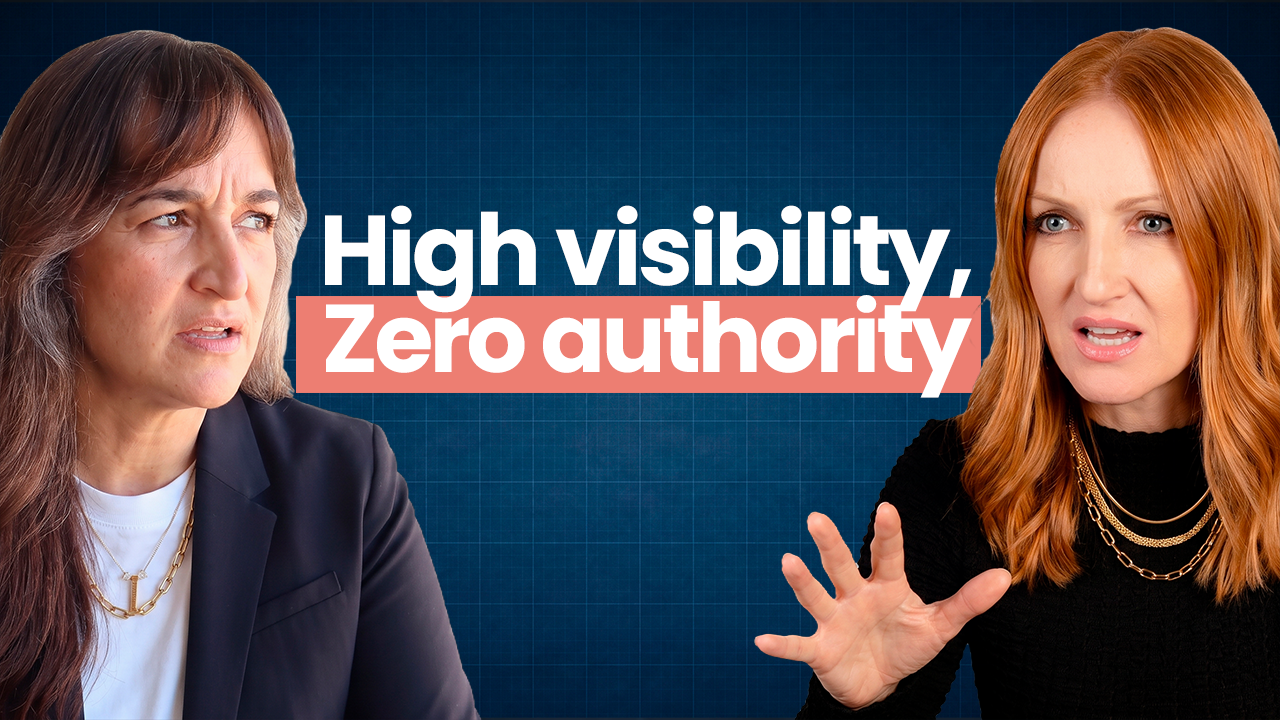
Listen to Episode 340 of The Job Hunting Podcast with Vanessa Errecarte
In this episode, we discuss personal branding, career visibility, AI-generated sameness, and how experienced professionals can become easier to recognise, remember and recommend.

A New Chapter on YouTube
I’ve made a new YouTube video explaining the three changes I’m seeing in executive hiring in 2026, and what I think senior professionals should be doing differently as a result.
I have launched a new series of videos created exclusively for YouTube, with a new video released every Thursday at 8 a.m. Eastern Time.
These videos are designed specifically for experienced professionals navigating job search, career change, and senior-level career decisions.
The second video is now live. I would love you to watch, subscribe to the channel, and let me know what topics or questions you would like me to cover next. Your support will help this new project reach the professionals who will benefit most from it.
Time Out:
- I watched The Odyssey yesterday, and it's everything I expected and more. But if you have sensitive ears and plan to watch it in the cinema, bring your earplugs. It's very loud! I wrote a post on Linkedin explaining why everyone should watch it.
- Turns out nepo babies are my favorite musicians. Following Willow Smith, who I believe is a genius, and Scout and Rumer Willis' beautiful voices, now we have Magnus Ferrell releasing a catchy R&B single that is perfectly executed; it's been playing in my head for the last 24 hours.
- We are staying on the Gold Coast for the next few days. If you want to see some whales, follow me on Instagram. I've been trying to capture them on camera, but it's not so easy from the balcony of the apartment! We have seen lots of humpbacks, but I'm also pretty sure we've seen orcas as well. They have been spotted here this season, and there could be around 250 of them! Plus the humpbacks!
Reach out if I can help you today. Otherwise, thank you for reading, and I will be back next week with another newsletter.
Warm wishes
RBX