In this week's podcast episode, there was a moment in my conversation with Natalie Moore that stayed with me long after we finished recording. We were talking about professionals who look successful on paper but feel flat, tense, or oddly disconnected from their work. That description will sound familiar to many, especially those who have built serious careers, carried significant responsibility, and, in many cases, performed at a high level for years.
What struck me in this conversation was not the usual language of performance, achievement, or productivity. It was the quieter language underneath all of that: wellbeing, self-awareness, emotional intelligence, and courage. Natalie has spent years working at the intersection of leadership and wellbeing, and in this episode, we discussed what happens when high-achieving professionals stop asking only, “What should I do next?” and begin asking a more revealing question: “How am I, really?”
That is not a small shift. It changes the way we think about career planning, job search, leadership, and success itself.
For many of the clients I work with, career decisions are rarely just about ambition. They are also about health, identity, confidence, changing family demands, changing work expectations, and a growing awareness that the professional life that once seemed sustainable no longer feels that way. This is one reason I wanted Natalie back on the podcast. Her work has moved into a broader conversation about business, leadership, and wellbeing, and that feels exactly right for the moment we are in.
In this newsletter, I want to unpack the ideas from our discussion in a way that can stand on its own. If you do not have time to listen to the episode today, this will give you the substance. And if these themes resonate, I think you will want to hear the full conversation.
When success on paper stops feeling like success in real life
Many people are capable and accomplished yet feel unmotivated or strangely flat. If that's you, Natalie suggests a simple three-question exercise to help you start making sense of what is going on: What is going well? What are you struggling with? What do you need?
I like these questions because they are both straightforward and difficult. They require honesty, and that honesty is often exactly what busy professionals have not allowed themselves. It is easy to stay in motion. It is easy to keep delivering, keep attending meetings, keep answering messages, and keep postponing reflection. What is harder is to stop long enough to notice that something has changed.
Sometimes what has changed is the organisation. Sometimes it is the role. Sometimes it is the leader above you. Sometimes it is your own stage of life. And sometimes the issue is not that anything is wrong in a dramatic sense. It is that you have outgrown a version of success that once suited you.
I see this often in my coaching practice. A client comes to me because they think they need to update their LinkedIn profile, reposition their resume, or prepare for interviews. Usually, we do need to do those things. But before any of that, there is often a more important piece of work to do. We need to understand what is happening beneath the surface. Why now? Why this role and not another? Why are they so tired? Why are they drawn to change but also resisting it? Why does a perfectly respectable opportunity feel deeply unappealing?
Those answers do not usually appear when you are rushing. They appear when you reflect. That is why I encourage clients to write things down, not just think about them. Internal rumination is rarely as clarifying as people hope. Putting words on paper or saying them aloud to someone who listens well often reveals patterns that have been sitting in plain sight.
Burnout is not a personal weakness
We also talked about burnout, and I asked Natalie one of those true-or-false questions that often leads to the most interesting answers: Does resilience training fix burnout? Her answer was an immediate no. It can support individuals, she said, but it does not necessarily change the environment or the system they are working in.
That distinction matters a great deal.
Many of the professionals I work with are highly resilient people. In fact, their resilience is often part of the problem. They are capable of keeping going long after others would have stopped. They adapt, absorb pressure, and continue to deliver. From the outside, this looks admirable. Inside, it can be corrosive.
Over time, organisations can come to rely on that resilience in unhealthy ways. The person who always copes becomes the person who is always given more. The one who remains calm under pressure is expected to continue doing so, no matter how chaotic the environment becomes. At some point, what is praised as resilience starts to look a lot like chronic overfunctioning.
This is why I think conversations about burnout need to mature. Wellbeing initiatives have their place, but if a workplace is badly designed, no amount of inspirational messaging is going to fix it. If people are trapped in constant meetings, working with poor leadership, dealing with vague expectations, or navigating restructures and instability without support, the issue is not simply that they need more resilience. The issue is that the system is demanding too much.
For leaders, that means wellbeing cannot remain a surface-level exercise. Natalie said very clearly that wellbeing is still often treated as a nice-to-have or a tick-the-box activity rather than something embedded into culture. I think she is right.
For professionals considering a move, this matters too. One of the hardest things for experienced workers is realising that the environment, not just their mindset, may be contributing to their exhaustion. That is not an excuse. It is information. And good career planning depends on being willing to interpret that information honestly.
Your body usually notices before your mind does
This part of the conversation felt especially important to me because it touches on something I have become much more aware of in recent years: The physical signals that show up before we consciously admit we are under strain.
Natalie spoke about the importance of returning to the body, asking what we are feeling, and noticing how stress is expressed physically. I shared some of my own more unusual stress triggers, including the way my hearing becomes more sensitive when I am under pressure. And I know many readers will have their own version of this.
Some people get headaches. Others get gut symptoms, racing thoughts, insomnia, jaw tension, breathlessness, or a sense of dread that appears before a meeting with a certain person. Some clients find that long-managed ADHD symptoms become harder to manage in toxic workplaces. Others begin to notice brain fog, irritability, or an inability to focus that they once would have pushed through without question.
I think one of the challenges for experienced corporate professionals is that we become very skilled at living from the neck up. We are paid to think, solve, manage, forecast, influence, and respond. The body becomes secondary until it starts interrupting us loudly enough to demand attention.
Natalie’s suggestion was simple: ask yourself regularly, “What am I feeling?” not just once, but over time, so you can notice a pattern.
That is useful not just for personal wellbeing, but for career planning. If a particular role, culture, or type of leadership repeatedly puts your body into a stress response, that is worth examining. It does not automatically mean you need to resign tomorrow, but it does mean you are collecting data. And good decisions come from good data.
Career pivots are usually quieter than people expect
Another topic we discussed was career change, and again I asked a true-or-false question: Do career pivots require a big leap? Natalie said no, and I agree. She spoke about making change incrementally, taking small steps, and allowing a shift to unfold with intention rather than drama. She even shared her own story of setting a year-long intention to change careers, only to take longer than expected to actually get there.
That is a much healthier story than the ones we often hear online.
There is a cultural tendency to glamorise drastic change. We hear about bold exits, reinventions, and fresh starts. And yes, sometimes a dramatic move is necessary. But in my experience, most career transitions for experienced professionals happen more thoughtfully than that. They begin with dissatisfaction, then curiosity, then reflection, then experimentation, and only later action that others can see.
This is one reason I am such a believer in preparation. In the episode, I talked about the importance of pre-work before going to market. I do not see that as hesitation. I see it as wisdom. Before you start applying, networking aggressively, or repositioning yourself publicly, it helps to understand yourself clearly. It helps to know what kind of work you want more of, what you are moving away from, what your strengths really are, and where your market value sits.
Many professionals who are drawn to change feel an urge to move fast because the discomfort is so strong. But urgency can create its own problems. A thoughtful pivot is often more successful than a rushed one. The change may still feel significant, especially internally, but it does not need to look dramatic from the outside to be real.
The future of work needs better leadership, not nostalgia
One of my own headline wishes for the end of 2026, which I mentioned in the episode, is that we finally stop pretending hybrid and remote work are temporary detours and start acknowledging that they are part of how work now functions. I said that many return-to-office demands appear to come from leaders who do not yet know how to build high-performing teams in flexible work environments. I still stand by that view.
This matters because many of the people who come to me for coaching are not looking for flexibility because they are disengaged. They are looking for it because they want to work well and sustainably. They want to reduce pointless commuting, protect time for deep work, manage health or family realities, and create careers that can last.
Natalie’s response to this was to talk about a possibility mindset. I think that phrase is useful because it captures something broader than policy. The future of leadership, in my view, depends on leaders being willing to imagine that effective work might look different from the systems they inherited. It requires curiosity, not nostalgia.
That openness matters not only for where we work, but also for how we structure work. Natalie raised the mismatch between the traditional working day and the realities of modern life, especially for knowledge workers and parents. She also pointed to examples in Australia of organisations experimenting successfully with different working arrangements.
For professionals advancing their careers, this raises an important question: When you assess an employer, are you evaluating only the role, or also the quality of its thinking? Two organisations may offer similar titles and salary bands while representing completely different futures. One may be trying to drag people back into an outdated model. The other may be trying to build something more adaptive, more humane, and, frankly, more intelligent.
High performance needs white space
One of my favourite ideas from this conversation was Natalie’s emphasis on white space. When I asked her which high-performing habit she would retire, she spoke about constant meetings and how they create endless tasks with no time left to do the actual work. Her solution was not simply fewer meetings, though that would help. It was the larger idea that performance requires white space: time to think, reflect, recover, and focus.
This resonates strongly with me, both in leadership and in job search.
There is a tendency among ambitious people to assume that more is always better. More activity. More effort. More responsiveness. More output. More information. More training. More exposure. But more is not always better. Sometimes it is just more.
We also discussed how professional development and training can unintentionally contribute to burnout when there is too much content, too much pressure to absorb it all, and not enough room for reflection or implementation. Natalie’s point was that people do not need an endless stream of information. They need space to turn insight into action, in ways that suit how they actually work.
I see a similar pattern when clients begin job search. Many want to move immediately into applications, networking outreach, personal branding, and interview preparation all at once. I understand the instinct. But often the better path is slower and more strategic. There needs to be room to think. Room to assess the market. Room to decide what kind of role is worth pursuing rather than simply what is available.
White space is not wasted time. It is often where the best decisions are made.
In an AI-shaped world, courage matters more than confidence
Near the end of the episode, I asked Natalie to choose between confidence, courage, and clarity as the most important capability for knowledge workers this year. She chose courage. So did I.
I have long believed that courage is more useful than confidence, especially in job search and career development. Confidence is often unstable. It rises and falls depending on recent feedback, success, rejection, or comparison. Courage is different. Courage allows you to act before you feel fully ready. It lets you learn something new, become more visible, ask for more, and make a move while still feeling uncertain.
That matters even more now because AI is changing the way people work and hire. Natalie made the point that AI is a tool, not a substitute for the person. It can support thinking, efficiency, and messaging, but it does not replace the human behind the work.
I think that is exactly right. Professionals do not need to become technologists overnight, but they do need the willingness to engage with these tools rather than retreat into nostalgia. The market is not going to preserve comfortable old roles simply because some people would rather avoid change. As I said in the episode, those roles are becoming rare.
At the same time, the rise of AI makes the human side of work more valuable, not less. Natalie ended our discussion by highlighting emotional intelligence and mindfulness as two capabilities worth strengthening. I would add judgment, discernment, and the ability to build trust. These are not decorative traits. They are part of what will continue to differentiate good leaders and strong professionals as technology reshapes the work around us.
What I hope you take from this conversation
What I appreciated most about this episode is that it never drifted into false certainty. Neither Natalie nor I were trying to offer neat answers to complex problems. Instead, the conversation kept returning to a few ideas that feel increasingly important:
- That career change can be thoughtful rather than dramatic.
- That high performance without recovery is not sustainable.
- That burnout is often a sign that something larger needs attention.
- That the body may know before the mind admits what is wrong.
- That leaders need to design work with more imagination and more humanity.
- And that courage remains one of the most useful qualities any professional can develop.
If you are currently in a stage of career reflection, or if you are leading others while also trying to make sense of your own next chapter, I hope this gives you something steady to work with. Not pressure. Not urgency. Just a clearer way to think about what is happening and what might need to come next.
And if this newsletter feels uncomfortably close to home, that may be useful in itself.
Sometimes discomfort is simply stress.
Sometimes it is grief.
Sometimes it is fatigue.
And sometimes it is the beginning of a more honest kind of career planning.
That is often where the best work begins.
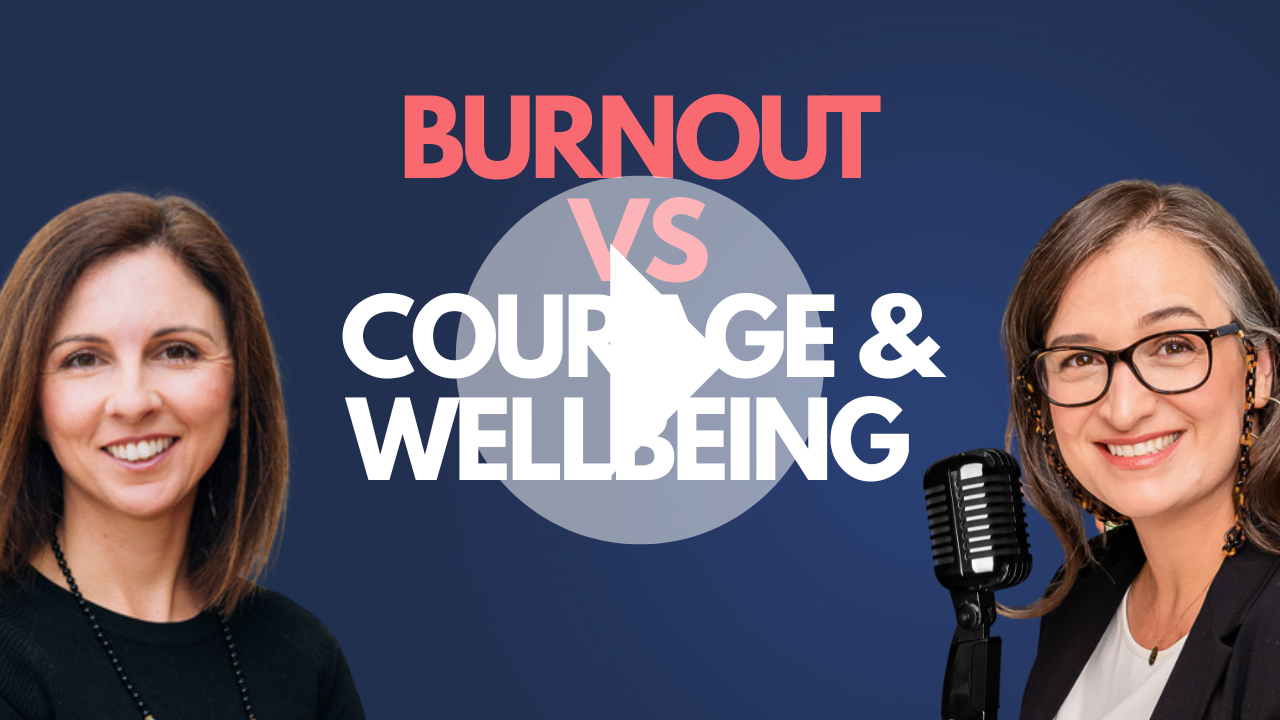
Natalie Moore joins me to explore what leaders and professionals need most in 2026: courage, self-awareness, emotional intelligence, and space to think. We also discuss burnout, work design, hybrid work, and how career pivots can happen through small, intentional steps.
Time Out
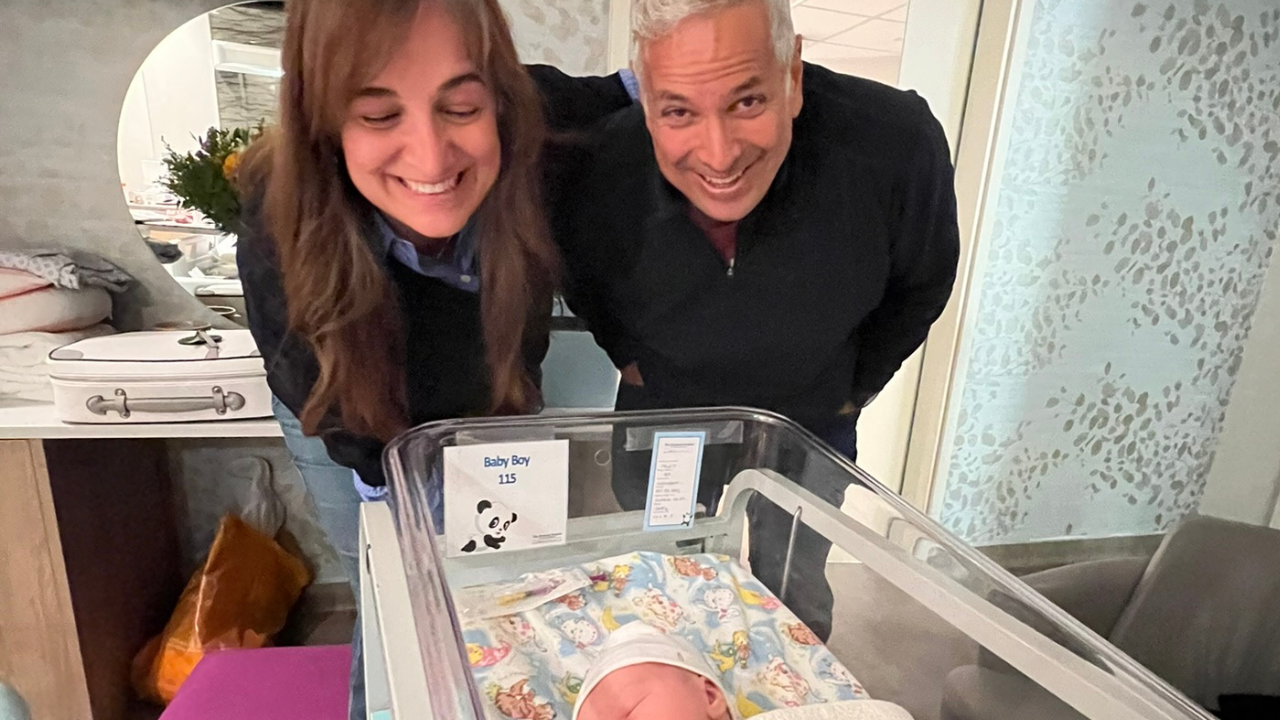
On the 2nd of April, a few days ahead of schedule, Theodore was born. Our first grandchild, and as you can see from our faces, we are completely besotted. He is such a cutie, and we have fallen in love and are doing whatever we can to help, as well as getting out of the way when we're not needed. Which leads me to the following adventures while in London:
- We watched Project Hail Mary, and I'm annoyed that I didn't read the book before watching the movie. Having said that, there was no way I could have waited. The movie is right up my alley. Science fiction done right. Ryan Gosling - known for his ability to convey emotions through his facial expressions - is perfect for a story told 50% without words, only through his face and music. Then there's the musical score; both the original and the chosen soundtrack are perfection. Both Gosling and Rocky deserve Oscar nominations.
- I never cared much for art from the 18th century. There was this long period after the Renaissance and modernism that I thought was a bit meh. Then I went to The Wallace Museum. Twice. Together with the very detailed Outlander books, which are set in the 18th century (and because they're so long and there are so many books, I will probably be reading them all year!), I'm growing more interested in both the English landscapes and nobility scenes, and the exuberant French garden scenes, the European fruits, monkeys, and peacocks. If you're ever in London, I say skip all other Museums and go here first. So beautiful, well curated, and free!
Next week, I will finally address an important area that experienced professionals often neglect: How to step back from the anxiety of job search (or the daily grind of your busy workload) to set long-term goals for your career.
So keep connected, and until then, wishing you all the best
RB