I want to share an exercise I have returned to many times during periods of change, uncertainty, and career reflection.
Think about one of the best working days you have had in the past year.
It does not need to have been dramatic. You may not have received a promotion, delivered a major presentation, or reached an important milestone.
It may have been a fairly ordinary day.
But something about it felt right.
You had energy. Your work held your attention. You spent time with people you liked. You solved an interesting problem. You finished the day feeling satisfied rather than depleted.
That day contains useful information.
Your best days reveal what you need from work
When professionals feel dissatisfied, they often start by looking at job titles.
They ask themselves whether they should change industries, pursue a more senior role, become a consultant, or leave corporate life altogether.
Those are valid questions, but they can come too early.
Before deciding what role comes next, it helps to understand the conditions in which you do your best work.
Your best days can show you that.
Perhaps you enjoy advising senior leaders but no longer want to manage a large team. Perhaps you feel most engaged when you are solving difficult problems independently. You may enjoy writing, presenting, mentoring, researching, facilitating, negotiating, or building something from scratch.
You may also discover that flexibility matters more now than status. Or that you miss being surrounded by capable colleagues. Or that you want more autonomy, more purpose, fewer meetings, or a clearer connection between your work and its impact.
A job description tells you what an organisation wants.
Your best days remind you what you need.
Look for patterns
No role will give you a perfect day every day.
Every job includes administration, difficult conversations, competing priorities, and work we would rather avoid.
The point is not to design an unrealistic career. The point is to notice patterns.
Some types of work give you energy. Others drain it.
Some environments help you think clearly. Others make you second-guess yourself.
Some relationships bring out your best work. Others make even simple tasks harder.
These patterns become more valuable as your career progresses because you have more evidence to work with.
By your 40s, 50s, or 60s, you have experienced different managers, cultures, workloads, sectors, and stages of life. You know more about what suits you, even if you have not yet put that knowledge into words.
That history can help you make better decisions now.
Turn reflection into criteria
Once you have identified a day that felt particularly good, look closely at what made it work.
Be specific.
“Good people” is too broad. You may mean a manager who gives you autonomy, colleagues who are capable and generous, or a team that can disagree without becoming political.
“Interesting work” can also mean many things. You may be most engaged when turning ambiguity into a plan, helping a team through change, improving an inefficient process, or communicating complex information clearly.
“Flexibility” needs definition too. It might mean working from home two days a week, having control over your calendar, reducing travel, avoiding a long commute, or having more space to manage family responsibilities.
Once you are clear about these conditions, they become practical criteria for assessing opportunities.
They also help you ask better questions during interviews.
You can ask how decisions are made, how much autonomy the role has, what a typical week looks like, why people stay, and what usually makes someone successful in the team.
The quality of your career decisions depends partly on the quality of the information you gather before accepting a role.
Do not wait for a crisis
Many people only reconsider their careers after something goes wrong.
A redundancy.
A restructure.
A new manager.
A period of burnout.
A disappointing performance review.
A job search that lasts much longer than expected.
These events often force reflection, but they do not need to be the starting point.
A quieter pause can be just as useful.
Mid-year is a good time to review the past six months and notice what has been working, what has become harder, and what you want more of before the year ends.
You may not need a completely new career.
You may need a different role, a better manager, more support, a clearer boundary, or a more deliberate way of using your time.
Sometimes, you may need to leave.
The decision becomes easier when you understand what you are moving toward.
A simple exercise for this week
Set aside twenty minutes and write down one working day from the past year that felt especially good.
Then identify three things:
-
What gave you energy
-
What conditions helped you work well
-
What would need to change for you to experience more days like that
You do not need to make an immediate decision.
Start by collecting evidence.
A career is built across years, roles, promotions, setbacks, and transitions.
But our experience of work is built one day at a time.
A New Chapter on YouTube
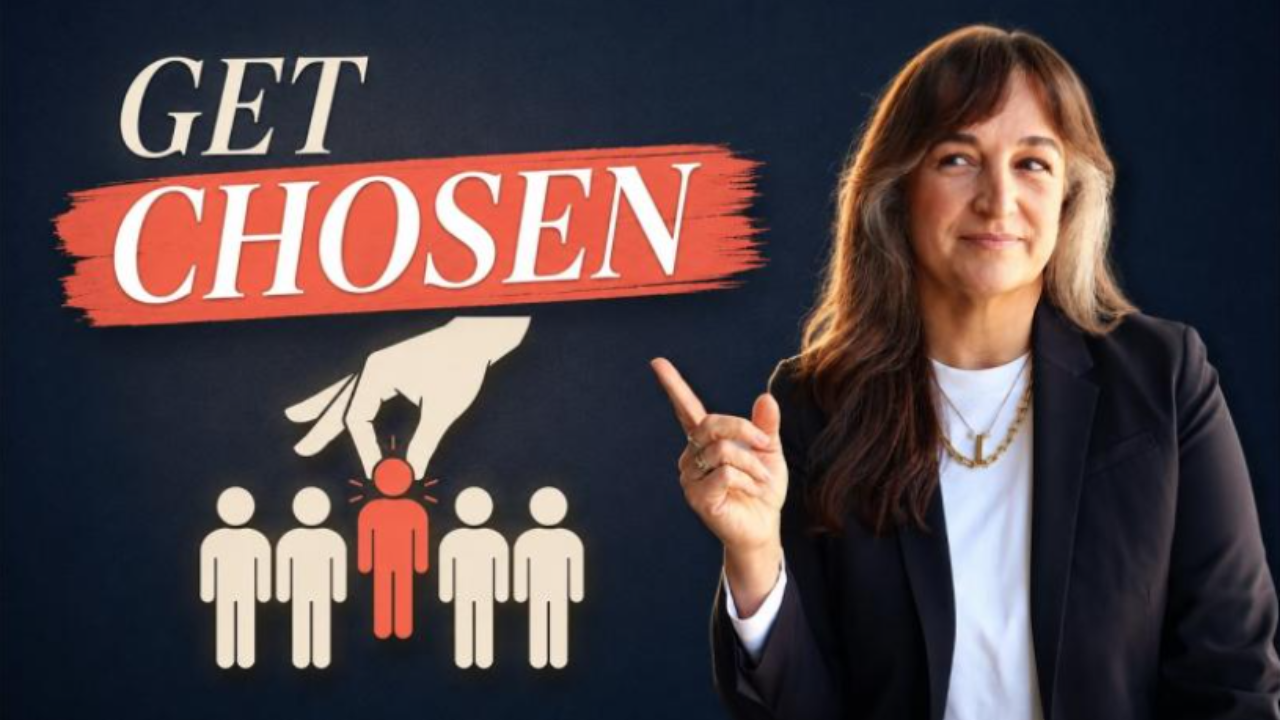
I have launched a new series of videos created exclusively for YouTube, with a new video released every Thursday at 8 a.m. Eastern Time.
These videos are designed specifically for experienced professionals navigating job search, career change, and senior-level career decisions.
The first episode, How Senior Leaders Land Roles in 2026, is now live. I would love you to watch, subscribe to the channel, and let me know what topics or questions you would like me to cover next. Your support will help this new project reach the professionals who will benefit most from it.

The Job Hunting Podcast Episode 339
In this episode I addess the 7 LinkedIn Questions my clients ask me most often. And of course I provide a few tips and advice about each ont.
I hope this episode and the blog help you review your profile with fresh eyes, especially if you have been wondering why LinkedIn is not producing the results you expected.

A note about private coaching
Work one on one with me is a great way to accelerate results in your job search or career transition. In a challenging job market, my clients are doing very well - having interviews and being offered roles in the middle of July is no easy feat!
Working together means we will review your experience, strengths, professional reputation, preferred working conditions, financial needs, and the type of contribution you want to make in the years ahead.
From there, we develop a practical strategy for positioning, networking, applications, interviews, and career decision-making.
I currently have a small number of private coaching places available.
You can learn more and book an introductory meeting by replying to this email,or you can click below to book an introductory meeting.
Book a complimentaty private coaching introductory meeting
Learn more about all my services to find one that's right for you

Time Out:
- I watched the Netflix documentary about Martin Short, and recommend it, as well as the one about Steve Martin. They are such a great duo, and it's so interesting to be a fly on the wall of these amazing actors and understand a little bit more about how their talents, their challenges, and their wisdom.
- I absolutely adore Willow Smith's voice and musical style. She's my favorite musician of her generation, by a long long mile. Her new single, She's My Religion, has a adorable Brazilian beat to it, as well as Willow's unique eclectic and dissonant sound.
- Going for a cold dip has become a routine now for Andre and me. It's crazy how we get used to things, as hard as they may seem. But we both feel the benefits to our mood and for me in particular, in reducing my chronic pain. Water temperature is around 13 degree celsius (55F) at this time of the year in Melbourne.
Reach out if I can help you today. Otherwise, thank you for reading and I will be back next week with another newsletter.
Warm wishes
RBX