Before we talk about today's topic, I'd like to reiterate my invitation for you to join me this week:
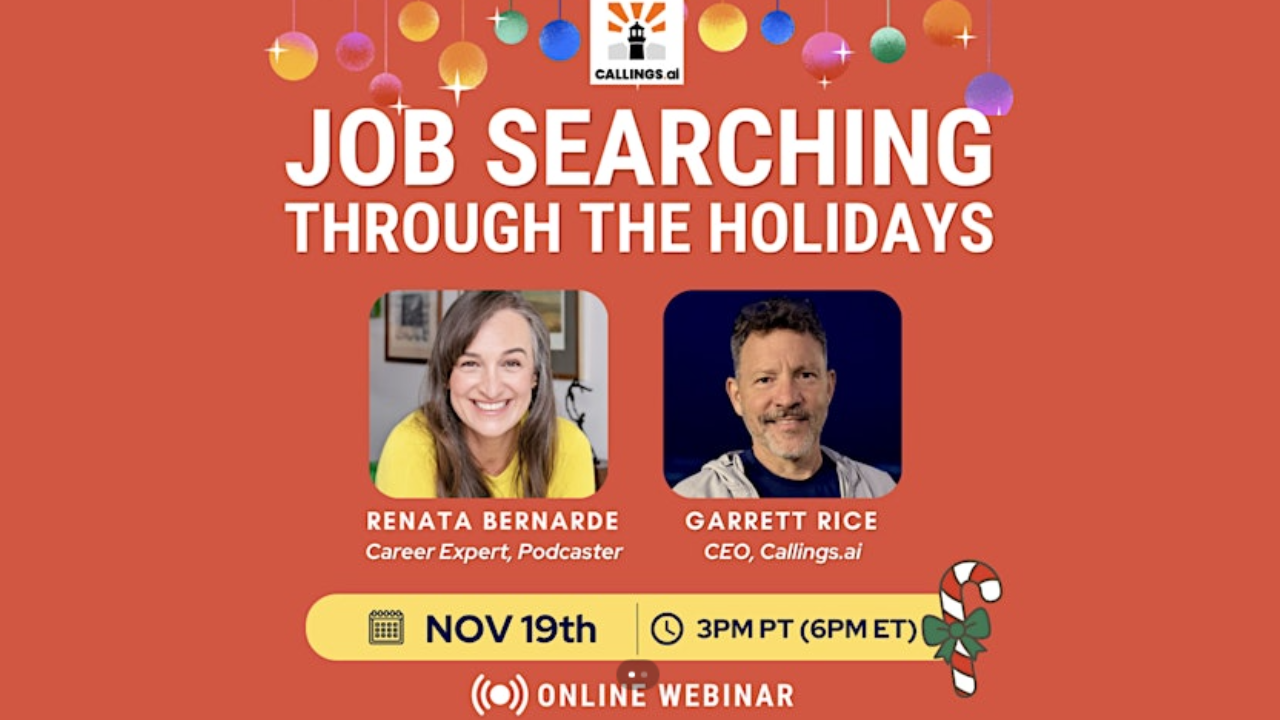
Webinar: Job Searching Through the Holidays
I'm partnering with Garrett Rice, the CEO of job search platform Callings.ai, for a live workshop on November 20th. We'll build your personalized 6-week holiday job search plan, from handling conversations at the dinner table with your family and friends, to landing January interviews. This webinar is designed for professionals who refuse to waste time - or can't afford to - and want guidance, tools, and expert advice so they can job search during the holiday season.
Webinar Date & Time:
- Melbourne & Sydney, Australia – Thu, 20 Nov, 10–11 AM AEDT (GMT+11)
- US Eastern – Wed, 19 Nov, 6–7 PM ET (GMT–5)
- US Central – Wed, 19 Nov, 5–6 PM CT (GMT–6)
- US Mountain – Wed, 19 Nov, 4–5 PM MT (GMT–7)
- US Pacific – Wed, 19 Nov, 3–4 PM PT (GMT–8)
- UK (London) – Wed, 19 Nov, 11 PM–12 AM (midnight) GMT
We'll cover:
- The psychology of holiday job searching (and how to stay motivated)
- Scripts for family gatherings and networking events
- How to identify companies in Q1 planning mode
- Your week-by-week action plan through January
Why you should attend:
Instead of pausing in December and scrambling in January, be the professional who strategically uses December to land a role in January. Register now. Let's make December your competitive advantage.

The Problem: A Job Search Run By Survival Mode
Here is what many mid to late career searches look like right now:
-
A restructure or difficult exit pushes you out of a big role.
-
You are exhausted from years of over-functioning.
-
The market is slower and more conservative than you expected.
-
Applications disappear into portals.
-
Silence feels personal.
From the outside, you look “fine”. From the inside, your system is on high alert. You notice some familiar signs:
-
Sleep is patchy.
-
You oscillate between frantic activity and total avoidance.
-
Every interview feels like a referendum on your worth.
Most people respond by pushing harder. More job boards. More late-night applications. More self-criticism. The intention is good. The strategy is not.
Survival mode is perfect for physical danger. It is a poor operating system for complex decision-making, negotiation, and self-presentation at the senior level.
Actionable Strategies To Move From Survival Mode to Thriving
Drawing on this week's episode and my work as a coach working with professionals just like you, here are practical steps you can start using right away. You do not need to implement all of them at once. Even one or two will start to shift your experience.
1. Name your state honestly
Ask yourself each day: “Am I mostly in survival mode or in a more thriving state right now?”
Survival mode often feels:
-
Tight, urgent, and narrow
-
Dominated by worst-case thinking
-
Exhausting, even when you are not doing much
Thriving feels:
-
More spacious, even if challenges exist
-
Curious about options
-
Physically steadier
There is no self blame here. The point is to notice, not to judge.
2. Give your nervous system what it needs before key career moments
When clients come to me to prepare for interviews, they often expect an hour packed with behavioural questions. One of the first things I ask instead is about sleep, movement, and caffeine.
Ahead of a high stakes interview, consider:
-
Sleep: Prioritise consistent bedtimes in the days leading up to the conversation.
-
Movement: If you are a runner or enjoy another form of exercise, use it to discharge some of the accumulated survival energy.
-
Caffeine: If your interview is at an unusual time, experiment with your coffee routine at that exact hour for a few days so your body is familiar with it.
You can add a light rehearsal, ideally at the same time of day as the interview, focusing less on perfect answers and more on how your body feels in that time slot.
3. Use the AIR method in interviews
This comes straight from this week's podcast guest, Jon Rosemberg. Before an interview:
-
Awareness: Notice how your body feels. Name the sensations. Where are you tight, where are you relaxed?
-
Inquiry: Ask what else could be true. Is this only fear, or is there also a desire to do well, to contribute?
-
Reframing: Choose a perspective that helps. For example, “This is practice. Whatever happens, I will learn something that will help with the next opportunity.”
During the interview, keep a small part of your attention on the other person. Observe what lights them up, what they lean in to, and what they write down. That ongoing inquiry allows you to adjust your stories and examples in real time.
5. Capture learning immediately after each interview
Memory is much more fragile than we think, especially when we are overwhelmed. Our podcast guest Jon Rosemberg shared a striking story about visiting a concentration camp as a young man and then completely forgetting the experience for more than twenty years because his system filed it away as too much to process.
In a job search, something similar can happen on a smaller scale. A few hours after an interview, many clients cannot recall the questions they were asked or what they said.
Build a simple debrief ritual:
-
Within an hour of the conversation, write down every question you remember
-
Note your answers in bullet form
-
Capture what seemed to engage the panel and what seemed to land flat
-
Write one or two things you would do differently next time
This creates a personal case study library that will make you more confident and compelling over time.
5. Balance productive and relational value at work
If you are currently employed but thinking ahead, ask yourself:
-
How much of my time goes to productive value tasks versus relational value activities?
-
Who are the people across the organisation I help connect or coordinate?
-
How visible is that relational work, without turning it into self-promotion?
Look for small, genuine ways to increase your relational value: supporting cross-functional projects, mentoring colleagues, or becoming the person others can trust to bring diverse stakeholders together. This strengthens your leadership brand and your internal network.
6. Build a network and a reputation that belongs to you (not your employer!)
Do not wait until you leave a role to realise that your relationships were tied to your company email address. Start now:
-
Maintain contact with former colleagues and managers
-
Connect with peers in other organisations and sectors
-
Share ideas and reflections in public forums that feel aligned with your style
You do not have to become a full-time content creator (that's me!). Regular, thoughtful engagement on LinkedIn, occasional articles, or speaking at industry events are all ways to exercise agency over your professional identity.
7. Redefine your success metrics
Take some time to write two lists:
- First, list the traditional success markers you have pursued: promotions, titles, salary levels, and awards.
- Second, list experiences that have felt most meaningful and energising, regardless of external recognition: mentoring someone, turning around a struggling team, contributing to a social cause, deep friendships, or family moments.
Use those lists to craft a more balanced definition of success that includes:
-
Agency: Where do I feel I have meaningful choices?
-
Meaning: Where do I feel most aligned and alive?
-
Social connection: Who are my people, and how am I investing in them?
Let that definition inform the roles you pursue and the organisations you choose to join.
8. Make one small agentic choice each day
Agency grows through practice. Identify one small choice each day that nudges you toward thriving:
-
Reaching out to someone instead of isolating
-
Saying no to a request that drains you
-
Allocating an hour to deep thinking about your next chapter rather than scrolling job boards
-
Booking a conversation with a coach, mentor, or trusted peer
Over time, these small choices compound. They change how you see yourself and how others experience you.
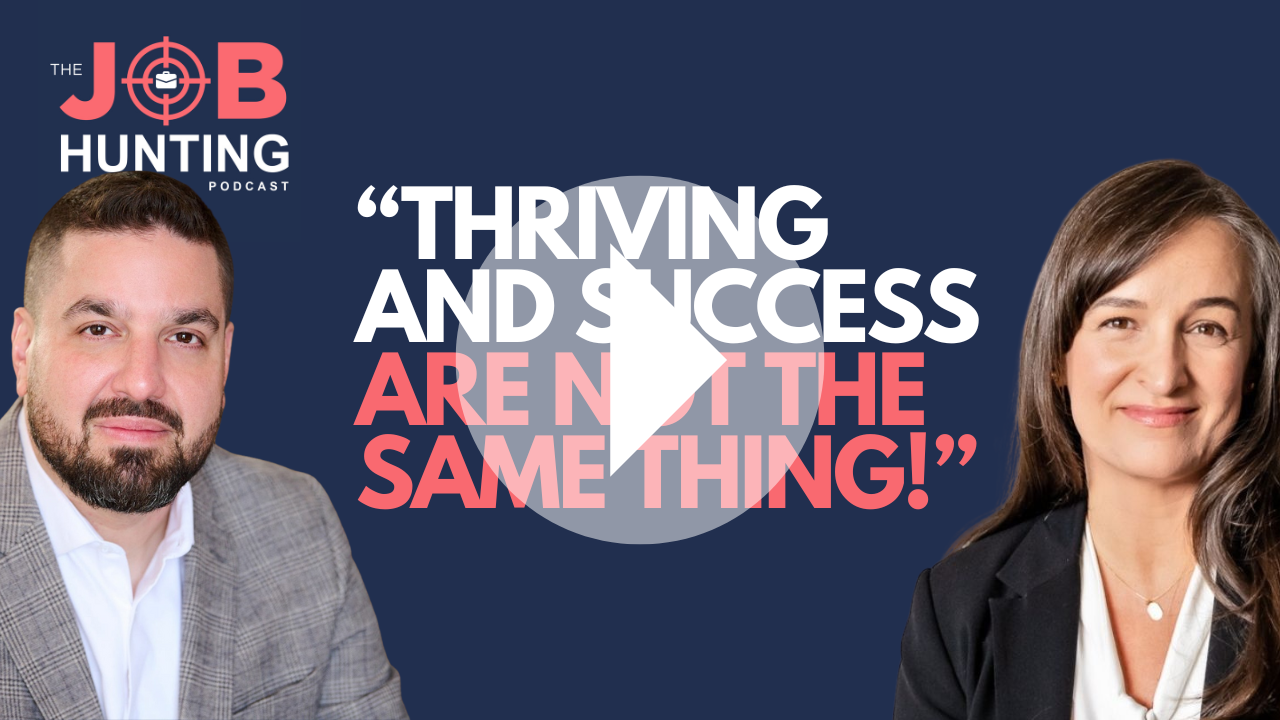
Want to go from surviving to thriving? Listen to this week's episode:
This week on The Job Hunting Podcast, I spoke with Jon Rosemberg, a former COO who now works with clients applying positive psychology to boost agency and performance. Our conversation was about the shift from survival mode to thriving in the context of job search and career progression.
- Listen to the full episode on the podcast website
- Listen on Apple Podcasts
- Listen on Spotify
- Watch on YouTube

Time out
- What I'm listening to: I was driving a lot this week, to and from Monash University, where I teach, so I listened to a lot of favorite albums: Tapestry, from Carole King, Time (The Revelator), by Gillian Welch, and The Bird and the Bee, by the Bird and the Bee, are some of my favorites.
- What I'm watching: It rained all weekend, so I caught up on all the series I am following right now: The Morning Show (this last episode was really good), Down Cemetery Road (loving it!), All's Fair (yes, I will hate-watch it. The problem is in the writing room, by the way, and not Kim K), and High Potential. As you can tell, I am comfortable with the full spectrum of rotten tomatoes reviews!
- Current Instagram obsession: Kara Mehrmann is a very talented pianist, and her dog, Bradford, is her biggest fan. While you're there, click to follow me too.
- What I'm reading: I'm reading Jon Rosemberg's book, A Guide to Thriving. Click here to pre-order your copy. Singer-songwriter and BRAT girl Charli XCX wrote her first Substack, reflecting on her creative drive and her experience composing songs for the upcoming Wuthering Heights movie.
I hope you found this newsletter helpful. Please spread the word and let your friends know they can subscribe as well.
Sometimes people reply to this newsletter to ask if I know a coach who can help them. I get very confused, because I do so much self-promotion! Apparently not enough! Click here to learn more about my services.
Here's to your career success
RBX
Renata Bernarde | Career Coach | Host, The Job Hunting Podcast