Job searching is not random, even when it feels that way.
This week on The Job Hunting Podcast, I’m speaking with Kyle Austin Young, author of Success Is a Numbers Game: Achieve Bigger Goals by Changing the Odds.
I loved this conversation because Kyle gave language to something I have been teaching my clients for years:
A job search can feel random. But it is not.
There are patterns.
There are stages.
There are weak points.
There are ways to improve your odds.
And once you understand that, you stop treating your job search like a volume game and start treating it like a strategy problem.
That mindset shift matters because many professionals are exhausted right now. They are applying for jobs, waiting for responses, getting ghosted, rewriting resumes, trying to understand what happened after interviews, and wondering whether the problem is the market, the resume, their age, their salary expectations, or something else entirely.
Sometimes it is the market.
But sometimes there is a weak link in the strategy that can be fixed.
The question I want you to ask this week
Instead of asking:
“How many jobs should I apply for?”
Ask:
“What would improve my odds of getting the right job?”
Those are very different questions.
The first question leads to volume.
The second question leads to better decisions.
Try this exercise
Take one role you are interested in and map the steps between where you are now and getting the offer.
For example:
- I need to decide whether this role is worth pursuing.
- I need to tailor my resume.
- I need to get noticed by the recruiter or hiring manager.
- I need to secure an interview.
- I need to show I understand the employer’s problem.
- I need to prove I can solve that problem.
- I need to reduce any concerns they may have about me.
- I need to negotiate an offer that makes sense.
Now ask yourself:
Where is this most likely to break down?
That is where your attention should go.
For some people, the weak point is role selection. They are applying for roles they would not actually accept, or roles where the match is too weak.
For others, it is positioning. Their resume is accurate, but it does not explain why they are the right person for the role.
For some, the issue is visibility. Nobody inside the organisation knows them, and their application is sitting in a large pile of equally polished resumes.
For others, the problem is the interview. They answer questions well, but they do not show enough commercial understanding, confidence, or future focus.
And for some, the issue is career direction. They are trying to make a pivot, but have not yet built enough evidence to make it believable.
One idea from Kyle that stayed with me
Kyle talked about his own career and how he was laid off twice early on.
What he realised was that job security was not only about his individual performance. It also depended on the financial health of the organisation, leadership decisions, timing, and factors outside his control.
That is something many professionals learn the hard way.
You can be good at your job and still be made redundant.
You can be respected and still be affected by a restructure.
You can perform well and still find yourself in a market that has shifted.
That is why career planning matters before you need it.
And it is why I keep encouraging professionals to build assets around their careers.
- A strong LinkedIn profile.
- A warm network.
- A clear point of view.
- A few public examples of your expertise.
- A resume that reflects where you are going, not only where you have been.
- A job search strategy that does not rely only on online applications.
These assets improve your odds before you even need to use them.
The “do I need another qualification?” trap
One of my favorite parts of the conversation was when Kyle and I talked about upskilling.
Many job seekers assume that if they are not getting traction, they need another qualification.
Sometimes they do.
But often, they don’t.
Before you commit to an MBA, certification, or expensive course, ask:
“What problem am I trying to solve?”
Do you need the qualification because the market requires it?
Or are you hoping it will make you feel more confident?
Do you need a formal credential?
Or do you need to demonstrate that you understand a new topic?
Do you need to spend money?
Or could you use free resources, publish a short article, take a small project, or update your positioning?
One of my clients spent months learning AI using free resources before working with me. He did not spend thousands of dollars. He built enough fluency to reposition himself, and shortly after we started working together, he received two job offers.
Sometimes the simple step is the strategic step.
What to do after an interview rejection
In the podcast episode you will notice that Kyle uses the word “repurpose.” I often use the word “recycle.” It's the same concept.
When something does not work in your job search, don’t throw everything away.
Look for what can be reused.
Ask yourself:
- What worked?
- What got me to the next stage?
- What question did I answer well?
- What story landed?
- What connection did I make?
- What did I learn about the market?
- What did I learn about myself?
- What would I change next time?
This is how job search becomes less emotional and more useful.
You are not starting from zero every time. You are building a sample size. You are looking for patterns. You are improving the next attempt.
This week’s practical task
Choose one job opportunity and answer these five questions before you apply:
- What problem is this employer trying to solve?
- What evidence do I have that I can solve it?
- What might make them doubt me?
- How can I reduce that doubt in my resume, LinkedIn profile, cover letter, or networking approach?
- Is this opportunity strong enough to deserve my time?
That last question is important.
Not every job deserves a high-effort application.
But when a role does matter, you need to treat it differently.
That may mean speaking to someone in the organisation. It may mean rewriting your professional summary, preparing examples that directly address the employer’s risks, and going into an interview with the mindset of a future team member, not a hopeful candidate.
A final thought
The job market is harder than it was a few years ago. I don’t want to pretend otherwise. But harder does not mean impossible. There will still be people who get the interviews, offers, and make successful transitions. The goal is to improve your odds of being one of them.
That is the work I do with my clients every week.
If you need help with your job search, career planning, LinkedIn profile, interview preparation, or positioning for your next role, you can learn more about working with me at: renatabernarde.com
Ready for private coaching? Book a discovery meeting with me
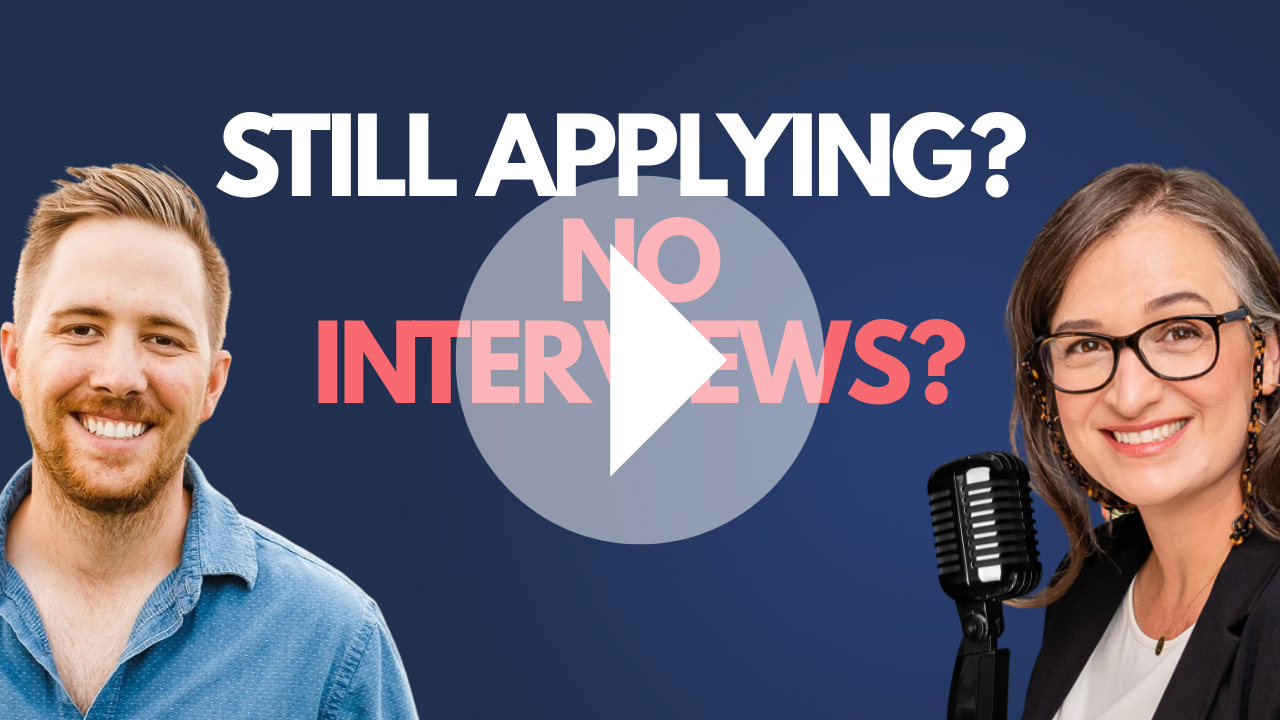
Job Searching Is a Numbers Game. Here’s How to Improve Your Odds
Episode 335 - Most job seekers focus on applying more. But in a tougher market, volume alone is not enough. Kyle Austin Young explains how “probability hacking” can help professionals improve their odds, de-risk career change, prepare better for interviews, and make smarter career decisions.

Time Out
- The upside of being a remote worker is that I can work from anywhere. And when I'm in the UK and so close to Europe, it's tempting not to make the most of it. This week we're off to Munich, and than exploring the Black Forest regiona and possibly Burgundy as well. You can follow along by following my Stories on Instagram.
- I'm making a list of TV series and movies to watch when I get back home. Rivals season 2 is right up there. One of my favorite series from 2024 has returned with a 100% rotten tomatoe score, always a good sign. It's filmed in Cotswold and I'll try my best to visit this beautiful region before returning home next month.
- Andre introduced me to Steph Strings and I am absolutely in love with this Melbournian singer songwriter. Her guitar skills are so good, and I'm enjoying both her instrumental pieces as well as the more poppy ballads.
Thanks once again for reading this newsletter. I hope you found it useful. And remember, you can always reply back and reach out if you need extra help with your career.
Otherwise, I'll see you next week
RB