My guest, Leanne Brannigan, is an internal recruiter who was made redundant and then rebuilt her job search using the same systems she used to assess candidates on the other side of the table. In this deep dive, I unpack the conversation and translate it into a field manual for you.
The topic is relevant because hiring has become more selective, application volumes are high, and many teams are doing more with fewer resources. That mix demands clarity of value, tight targeting, and consistent execution. Leanne explains how she structured her week, optimized her CV and LinkedIn presence, and created momentum even when the market was slow. This newsletter includes specific steps you can apply immediately.
How a recruiter rebuilt her search
Leanne moved from internal recruiter to candidate and applied her insider lens to every step. She tightened her target roles instead of widening them. She created a small list of priority employers and mapped decision makers and adjacent stakeholders. She rephrased responsibilities in terms of business outcomes, included context on team size and budgets, and embedded keywords that an in-house recruiter would likely search for. She also posted consistently on LinkedIn to showcase her domain expertise and to create shareable proof that she understands the problems employers need solved.
Basically, she did everything I always tell my podcast listeners to do. She did everything I teach my clients to do, step by step.
An important detail in her story is sequencing. Again, a key feature of my proprietary coaching framework. She did not try to do everything at once. She built a weekly routine that allocated specific days to research, pipeline building, applications, follow-up, and networking. She also used a simple tracker to remove guesswork. When you know the status of each lead and the next action, you move faster and avoid repeating work.
Another useful example is how she reduced friction for referees and advocates. Rather than asking for a generic recommendation, she provided a concise summary of the role she was pursuing, along with two or three bullet points that highlighted the outcomes they had witnessed. That made it easier for supporters to write specific and credible notes that aligned with her value proposition. Every time I tell my clients to do this, which is every time I coach someone looking for work, they question me on the need for sharing this level of detail with referees. Well, well, well. Here is the proof of the pudding.
Evidence that persuades
Leanne reinforced what we see from hiring teams on a daily basis. Numbers cut through. If you claim transformation or turnaround without a data point, it feels like marketing. If you show margin improvement, cost avoidance, or operational throughput gains, it feels like leadership. Your evidence does not need to be perfect. It needs to be directionally clear and attributable to your decisions.
Case studies also help. A one-page write-up that frames the problem, outlines the constraints, describes the actions taken, and reports the results can be repurposed for use in interviews, networking messages, and LinkedIn posts. You can anonymize the employer and still demonstrate thought process and impact. Keep the structure simple so it is easy to tell under pressure.
Finally, recruiters look for consistency between your CV, LinkedIn profile, and the way you describe your work. If the numbers do not match or the story shifts, confidence drops. Audit your materials to ensure the story is aligned and up to date.

A weekly operating system that works
Below is a practical schedule you can adopt or adapt. The aim is to reduce decision fatigue, increase output quality, and keep your pipeline full without burning out.
Monday
Plan the week in 30 minutes. Confirm target roles, two priority sectors, and a short list of hiring managers and peers to contact. Research three companies in depth. Update your tracker with next actions. Draft one LinkedIn post that demonstrates domain expertise and one comment plan for interactions with leaders in your space.
Tuesday
Pipeline day. Identify 10 roles that are a strong match and qualify them using a simple score out of 10 for fit and interest. For the top five, tailor your CV and cover note to reflect the problem statements you see in the job description. Submit with care and log each application. Send two warm outreach messages to insiders to request insight rather than a referral. Insight first builds trust.
Wednesday
Relationship day. Book two virtual coffees with former colleagues or industry peers. Prepare a one-minute value proposition and two questions that will make the conversation useful for both you and them. Offer a helpful introduction whenever possible. Post your LinkedIn content and engage meaningfully with five posts from your target companies and leaders. Comment with substance, not fluff.
Thursday
Follow-up day. Review your tracker. Send succinct follow-ups on applications that have been silent for a week or more. Share a relevant case study or insight if it adds value. Continue your research on companies that show momentum. If a lead is stale and non-responsive after two follow-ups, archive it and replace it with a new one. A clean pipeline is a productive pipeline.
Friday
Interview prep and reflection. Pick one target role and build a 30-60-90 outline focused on diagnostics, relationships, and early wins. Write concise STAR stories for three achievements that match the role. Close the week with a short retrospective. What created momentum? What stalled? What to change next week?
Saturday or Sunday
Reset your materials. Tighten your CV bullet points. Review your LinkedIn About section. Draft next week’s content. Rest without guilt.
Leanne landed a new job in six weeks because she was focused, hungry, and, of course, extremely knowledgeable about how recruitment and selection work. You can also become as knowledgeable as Leanne:

Tools and templates you can use
Value proposition statement
I help [target companies] achieve [business outcome] by [how you do it]. Recent results include [metric or case study] and [metric or case study]. I am now focused on roles where I can [strategic interest].
Case study template
Problem: brief description of the business challenge and constraints
Action: what you did and how you led others
Result: the measurable outcome and what changed for customers or the business
Learning: one insight that will help you in this new context
Follow-up message
Thanks for considering my application for [role]. I am particularly interested in [specific initiative or KPI from the JD or recent news]. In my last role I [relevant result] which delivered [business impact]. I'd be happy to share a brief case study if it's useful.
LinkedIn weekly cadence
One original post on a target problem
One short case study
Five substantive comments on posts by target companies or leaders
Two new conversations booked with peers, hiring managers, or recruiters
Interview preparation checklist
Three STAR stories aligned to the role
A 30 60 90 outline with hypotheses
Questions that show business acumen and stakeholder awareness
A clear closing summary of your value and next steps
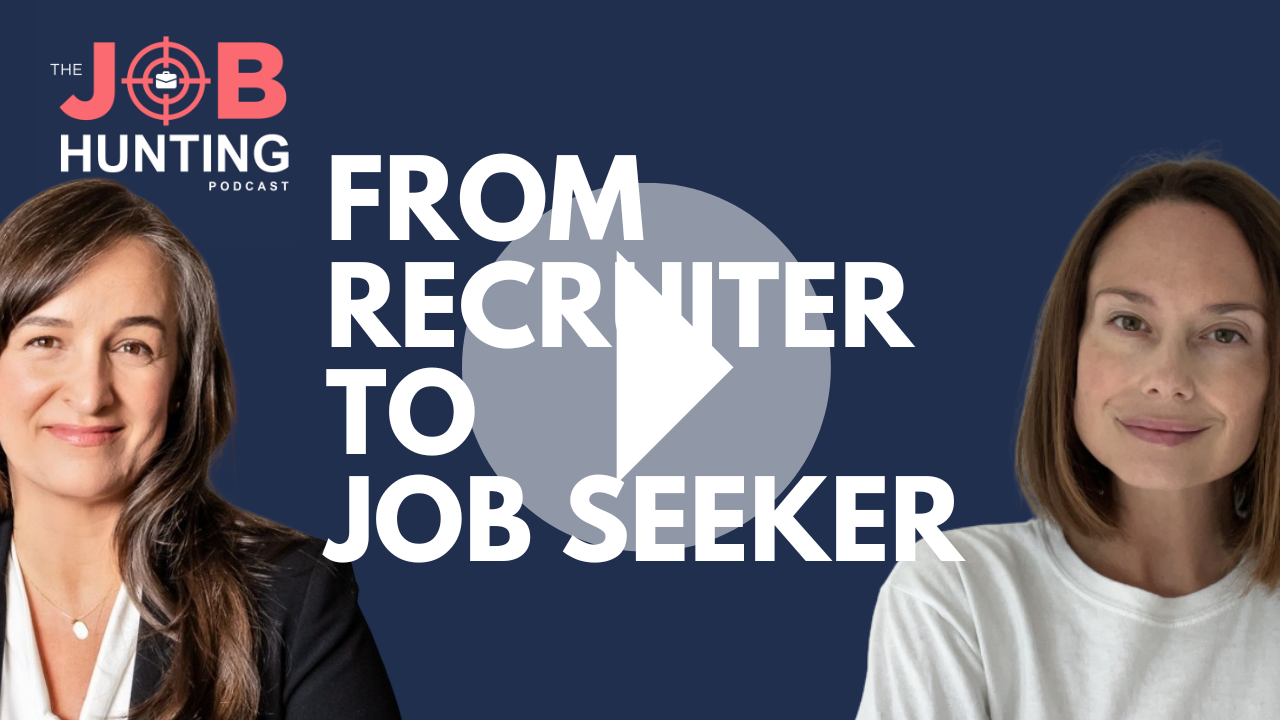
What happens when a recruiter is looking for work? To find out, listen to this week's episode:
This week’s episode features internal recruiter-turned-candidate Leanne Brannigan. She went from redundancy to two job offers by running her search like an operating role. The patterns in her story match and validate how I coach my clients.
- Listen to the full episode on the podcast website
- Listen on Apple Podcasts
- Listen on Spotify
- Watch on YouTube

An Invitation to Join the RB Lnkdn Club
Leanne and I discussed this in our interview: I don't believe she optimized her LinkedIn presence for a job search. That didn't seem to slow her down, and it was most likely counter-balanced by her extensive recruiter network and knowledge of the recruitment process. However, for most professionals, a strong LinkedIn presence is essential when seeking a job. LinkedIn content provides proof of expertise. It's not supposed to be a personal branding theater.
If LinkedIn is a challenge for you, I invite you to take the next step and join the RB Lnkdn Club. This is a private, unlisted LinkedIn group I created exclusively for experienced professionals who want to build a strong, consistent presence on LinkedIn without second-guessing themselves.
Inside the Club, you will:
-
Receive weekly step-by-step tasks to strengthen your LinkedIn activity
-
Access practical templates and examples you can adapt immediately
-
Learn how to post with confidence, comment with intention, and grow visibility
-
Get direct feedback from me on your posts and engagement strategies
-
Connect with other senior professionals who share your career ambitions
Membership is private and unlisted. This creates a safe space for learning, experimenting, and refining your professional voice. If you’re serious about advancing your career, safeguarding against unexpected change, and positioning yourself as a visible leader in your field, this is the place to do it.

Time Out
- I binge-watched Netflix's new series, Madam. Like all New Zealand shows and movies, it's wonderful. Why is it that New Zealand produces so much great stuff? Think Boy, Whale Rider, Hunt for the Wilder People, The World's Fastest Indian, The Piano,... and now this cheeky drama-comedy series. Don't miss it.
- Check out Leanne's TikTok, @Work.Life.Career. Start on the day her role was made redundant, and watch all episodes. It's really good. While you're there, please follow me too!
I hope you found this newsletter helpful. Please spread the word and let your friends know they can subscribe as well.
Sometimes people reply to this newsletter to ask if I know a coach who can help them. I get very confused, because I do so much self-promotion! Apparently not enough!
Click here to learn more about my services.
Here's to your career success
RBX
Renata Bernarde | Career Coach | Host, The Job Hunting Podcast