The personal and professional lives of leaders are constantly under scrutiny. The line between personal choices and professional consequences has never been thinner. We’ve seen high-profile CEOs forced to step down after relationships with colleagues became public knowledge, leaving behind a trail of reputational damage, organizational upheaval, and lessons for anyone navigating leadership roles.
In this week's episode of The Job Hunting Podcast, I unpack real-world cases where CEOs and senior leaders faced public scandals and explore what these stories teach us about governance, disclosure, accountability, and career recovery. The goal is not to sensationalize headlines but to translate these cautionary tales into actionable strategies that can help professionals safeguard their careers and, if needed, rebuild after missteps.
Shifts in Leadership Expectations
Executives today operate in an environment where transparency is expected and values-driven leadership is non-negotiable. Boards, investors, employees, and the public all demand accountability from leaders. Scandals involving personal relationships in the workplace, once quietly managed internally, are now amplified through media and social platforms.
Recent examples include:
-
The resignation of Astronomer’s CEO following a relationship with an HR executive.
-
Public scrutiny of Nestlé’s leadership amid disclosure concerns.
-
The sudden exit of Super Retail’s CEO after failing to disclose a consensual relationship with an employee.
These incidents underscore a major shift: Leaders are judged not only on financial performance but also on how they uphold organizational values and ethical standards.
Governance and Disclosure Failures
One of the recurring themes in these cases is disclosure. It’s not the relationship itself that often forces a leader out, but the failure to be transparent with the board or follow company policy. Policies exist for a reason, and disclosure, while uncomfortable, can prevent reputational fallout. Boards and HR departments view transparency as a marker of integrity, and covering up or delaying disclosure is seen as a breach of trust.
The Cost of Reputation
Reputation is currency. A misstep can erase decades of hard-earned credibility. Beyond personal consequences, scandals can affect stock prices, employee morale, and brand perception. Leaders are expected to embody the values of their organizations, and when actions contradict those values, the damage extends far beyond the individual.
This highlights the need for professionals at all levels to invest in reputation management proactively. Building a consistent track record of integrity, thought leadership, and positive stakeholder relationships creates a cushion of goodwill that can help weather crises.

Actionable Strategies for Job Seekers
- Understand Organizational Policies: Familiarize yourself with your company’s governance and HR policies. If you are in a leadership role, model compliance by treating policies as non-negotiable. This demonstrates respect for the rules and reassures others that accountability applies equally at every level.
- Invest in Your Reputation Daily: Reputation isn’t only tested during crises. It is built through daily interactions, ethical decision-making, and consistency. Publish thought leadership, contribute to industry conversations, and cultivate strong professional networks that vouch for your integrity.
- Disclose Early and Proactively: If a potential conflict of interest arises, be the first to disclose it. By taking ownership, you demonstrate integrity and respect for governance. Boards and senior colleagues value honesty, even when the news is difficult.
- Plan for Crisis Communication: Executives should prepare for the possibility of reputational challenges. This includes having a trusted inner circle of advisors, a crisis communication plan, and an understanding of how to engage with media, employees, and stakeholders during difficult times.
- Reframe and Rebuild After a Misstep: If you’ve experienced a career setback, focus on reframing the narrative. Emphasize lessons learned, demonstrate personal growth, and find opportunities to contribute in meaningful ways. Many leaders have successfully rebuilt their careers by leaning into transparency and showing resilience.
The Future of Leadership Standards
Looking ahead, corporate governance and workplace dynamics will only demand more accountability. Generational shifts in the workforce mean employees expect leaders to embody fairness, inclusivity, and authenticity. Regulators and boards will tighten disclosure policies, making non-compliance harder to overlook.
For ambitious professionals, this means that soft skills like integrity, self-awareness, and transparency will be as important as technical expertise. Those who embrace these evolving expectations will not only safeguard their careers but also position themselves as trusted leaders in an era where credibility is paramount.
The stories of CEOs forced to resign over personal choices are reminders that leadership is about delivering results, but it's also about living the values you represent. Adaptability and integrity are the new cornerstones of career advancement. By internalizing these lessons, professionals can safeguard their career trajectories and thrive in leadership roles, even in times of heightened scrutiny.
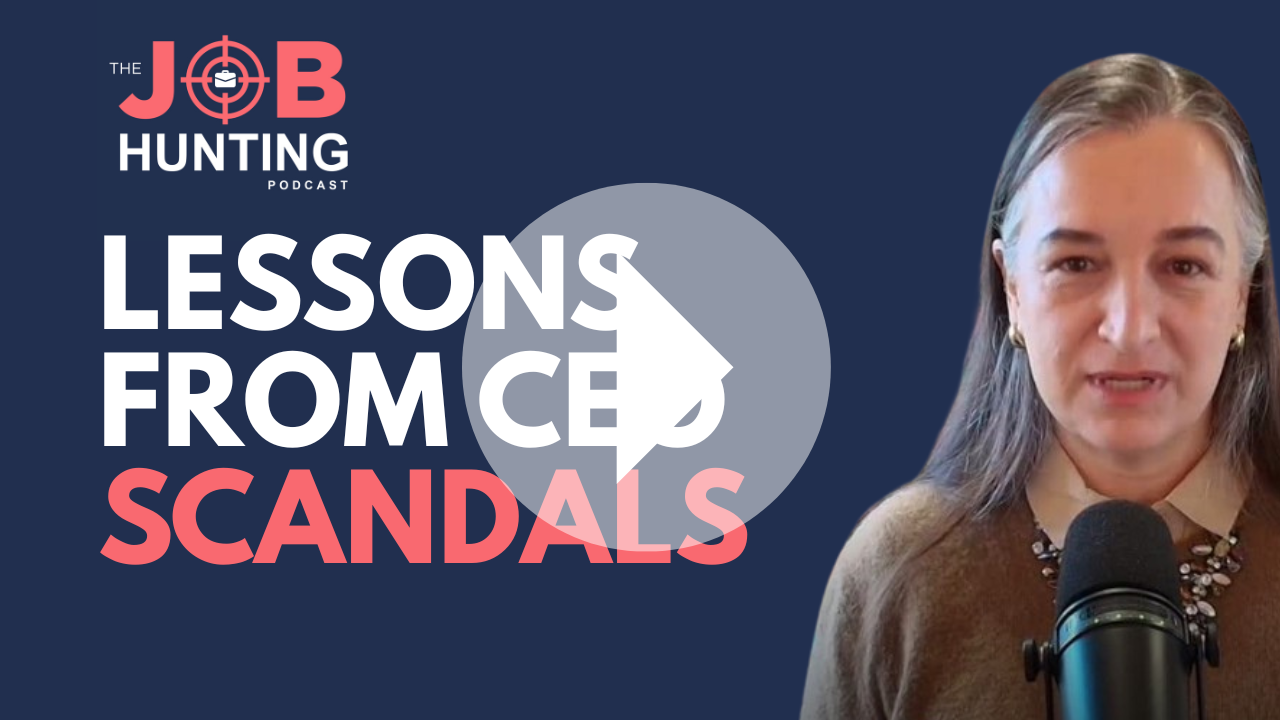
Interested in career crisis management? Listen to this week's episode:
If you found these insights valuable, I encourage you to watch or listen to the full episode of The Job Hunting Podcast to hear the complete discussion and examples.
- Listen to the full episode on the podcast website
- Listen on Apple Podcasts
- Listen on Spotify
- Watch on YouTube

An update on the RB Lnkdn Club
Over the past two weeks, we’ve officially kicked off the RB Lnkdn Club, and it has been inspiring to watch members take their first steps toward building a more consistent and confident presence on LinkedIn. In week one, the focus was on breaking the ice, with tasks designed to spark visibility and connection. In week two, we’re expanding on that by focusing on giving back, because LinkedIn isn’t just about showcasing yourself; it’s about giving back and supporting your network.
The group is already buzzing with energy. Members come from different industries and levels of LinkedIn experience, and from different parts of the world. Yet everyone is finding value in the weekly tasks, the done-for-you templates, and the conversations that are starting to build inside our private space. I’m providing weekly feedback, and this week we also have our Q&A webinar happening tomorrow. So no one feels left to figure things out alone.
If you’ve been meaning to get more active on LinkedIn but aren’t sure how to start or how to sustain it, this might be the structure and accountability you’ve been looking for.

Time Out
- We have our 1st born and daughter-in-law visiting from the UK, so we are enjoying their company, going out for dinners, and cooking at home. We also have a wedding on Thursday (the reason why they're visiting). So I have read nothing and listened to nothing except the chit-chat around the house. I love a full house!
- We re-watched Freaky Friday so we can watch the new movie in the cinemas this coming weekend. I have also enjoyed bits of old Slow Horses episodes, as the kids are catching up so we can watch the new series together.
- If you want to see a bit of my life, I share bits and pieces on my Instagram Stories. Click here to follow.
I hope you found this newsletter helpful. Please spread the word and let your friends know they can subscribe as well.
Sometimes people reply to this newsletter to ask if I know a coach who can help them. I get very confused, because I do so much self-promotion! Apparently not enough!
Click here to learn more about my services.
If you have any questions about my services, please reply to this email and I will get back to you.
Here's to your career success
RBX
Renata Bernarde | Career Coach | Host, The Job Hunting Podcast