For executives and senior professionals working in toxic workplaces, the stakes are high. Your compensation is tied to performance and brand. Your reputation travels quickly across sectors. And when cultures sour, the boundary between professional challenge and personal wellbeing can blur. We are also in a market where restructures, shifting strategies, and tighter budgets collide with rising expectations for psychological safety. That combination creates ambiguity. You need clear decision rules and practical tools to protect your position and momentum.
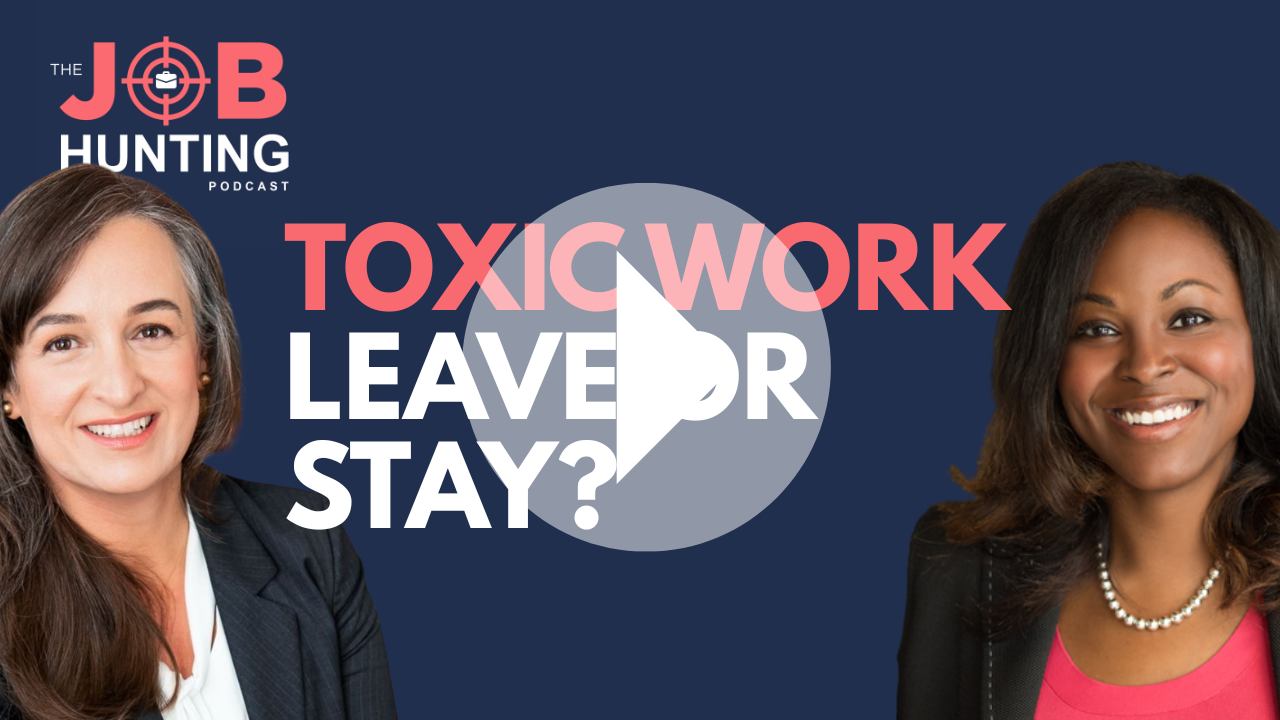
Ou guest on the podcast this week is Jessica Childress is a US employment attorney who represents employees navigating harassment, discrimination, retaliation, and toxic culture. She brings both legal rigor and pragmatic advice for situations that may not cross a legal line but still do damage to your career.
She helps as answer the big question: How do you protect your career and health in a toxic environment when much of the behavior you are experiencing is not technically unlawful? Let's review some of the points we discussed on the show as a actionable strategy you can implement today.

Actionable strategies for professionals in toxic workplaces
1. Diagnose your situation using three tests
- Legal test: Ask whether your experience involves a protected class or protected activity and an adverse action. Examples include demotion after reporting harassment, termination following a complaint of discrimination, or pay disparity tied to a protected characteristic. If yes, you are in legal territory. If no, the behavior may still be unacceptable, but your strategy is different. You may need to consult with a lawyer.
- Business test: Identify how the behavior affects revenue, risk, compliance, or team performance. Executives get traction when they translate harm into business terms. Examples include project delays resulting from cross-functional sabotage, client churn due to leadership instability, or regulatory exposure from unaddressed procedures.
- Energy test: Track the toll on your focus, sleep, and confidence. If your energy deficit persists beyond a few weeks despite boundary setting and support, you may be in a pattern that requires an exit plan. Contact a coach for support is needed.
2. Build your record like a pro
Maintain a private log with dates, events, and direct language. Save emails, calendar invites, and instructions that demonstrate shifting goals, contradictory directives, or punitive assignments. After significant conversations, send a brief recap email that neutrally reflects agreements and next steps. If you report potential misconduct to HR or your manager, do so in writing and stick to the facts. This is not about theatrics. It is about clarity and accuracy.
3. Use HR strategically
Prepare talking points before any HR conversation. Lead with the business impact. State what you want, such as an investigation, a facilitated conversation, or a change in reporting lines. Assume your statements may be shared. Avoid speculating about motives. Focus on specific behaviors and outcomes. If you anticipate retaliation, be sure to note this explicitly and continue to document any adverse changes in responsibilities, performance ratings, or opportunities.
4. Set crisp boundaries and test for change
Name the pattern. I have noticed deadlines shifting after approvals are given. State impact. This creates rework that delays delivery and increases costs. Make a request. From next month, can we freeze requirements after sign-off and manage changes through a formal change log? If the pattern is tone-related, try a simple correction. When feedback is delivered in front of the team, I find it reduces my effectiveness. I would appreciate direct feedback after the meeting. Track whether the behavior changes over the next 30 to 45 days. Improvement means you can stay and rebuild trust. No change means you escalate or plan your exit.
5. Calibrate your communication
Audit your language for absolutes and conclusions. Replace 'always' and 'never' with specific examples. Ask clarifying questions rather than assuming intent. Signal openness. Here is what I heard. Is that your intent? If not, how would you prefer we approach it? These small shifts can prevent misunderstandings and reduce defensiveness, which is especially important when you are trying to de-escalate conflict.
6. Decide whether to stay or go using a simple matrix
List the next six months of projects and outcomes you control. For each, note whether the environment will enable or block success. If more than half sit in the blocked column and cannot be moved with the boundary and escalation steps above, you have your answer. Your brand depends on delivering results. Do not tie your reputation to a system that will not allow you to perform.
7. If you choose to exit, protect cash, brand, and options
Review your employment agreement. Note non-compete, non-solicit, and confidentiality obligations. Understand duration, geography, and scope. In many jurisdictions, overly broad restrictions are weakened or unenforceable. Do not assume. Get advice. Engage a coach to help you navigate your severance negotiation, control your narrative, protect your reputation, and plan your exit, both while you're still working and after you leave.
Toxic environments erode confidence and clarity. Work with a trusted coach and/or therapist to process stress and recalibrate boundaries. Reset your daily routines for sleep, movement, and focused work. Re-engage in communities where your brand is strong. Momentum matters. You want muscle memory for confidence when the next interview or leadership challenge arrives.
Learn More about Working With Me
Working in a toxic workplace? Listen to this week's episode:
In this episode, attorney Jessica Childress, author of Peace: Leaving a Toxic Workplace on Your Own Terms, joins me to share how to recognize toxicity, protect your rights, and leave with dignity. We discuss the hidden costs of staying too long, when to seek legal advice, and why walking away can be the most empowering career decision you’ll ever make.
- Listen to the full episode on the podcast website
- Listen on Apple Podcasts
- Listen on Spotify
- Watch on YouTube
Podcast help: If you have 30 seconds
Hit reply with the single biggest obstacle in your search or next career step. I will use the aggregate themes to shape upcoming solo episodes I am recording before the end of the year.

An invitation to join the RB Lnkdn Club
If you’re serious about advancing your career, safeguarding against unexpected change, and positioning yourself as a visible leader in your field, this is the place to do it.
I invite you to take the next step and join the RB Lnkdn Club, a monthly membership program designed exclusively for experienced professionals seeking to establish a strong, consistent presence on LinkedIn without second-guessing their approach.
-
Membership in our LinkedIn group is private and unlisted, creating a safe space for learning, experimenting, and refining your professional voice
-
Weekly step-by-step tasks to strengthen your LinkedIn activity
-
Access practical templates and examples you can adapt immediately
-
Learn how to post with confidence, comment with intention, and grow visibility
-
Get direct feedback from me on your posts and engagement strategies
-
Connect with other senior professionals who share your career ambitions
Most importantly, I want you to see the results quickly in the form of new connections, job opportunities, and an elevated executive and professional presence.

Time out
- Pardon my ignorance, but I didn't know Wolf Hall, one of my favorite books, was a trilogy! I have 2 new (to me!) books to read, before I watch season 2 of Wolf Hall, the TV series.
- I watched the Diary of a CEO interview with Louis Tomlinson, former member of One Direction, from start to finish, without even blinking. Such a wonderful person, what a great interview, and I don't even know one One Direction song, or anything else about the other members, besides Harry Styles.
- I believe I've watched every single video of this cute little boy cooking and baking with his mum. I'm hoping I can do the same recipes with my grandson in a couple of years!
I hope you found this newsletter helpful. Please spread the word and let your friends know they can subscribe as well.
Sometimes people reply to this newsletter to ask if I know a coach who can help them. I get very confused, because I do so much self-promotion! Apparently not enough! Click here to learn more about my services.
Here's to your career success
RBX
Renata Bernarde | Career Coach | Host, The Job Hunting Podcast