I have been thinking a lot about executive presence this week, partly because of the new YouTube video I recorded on the subject, and partly because it has been such a recurring theme in my own career.
When I started working in Brazil, I was 14 years old. I worked for a small company that built bespoke Danish-style furniture and cabinetry, and everyone around me was much older than I was. Strangely, I do not remember feeling intimidated. I think I was too young and too naïve to understand that I was supposed to be intimidated. I had courage, grit, and a willingness to learn, and that was enough to get me through.
As I got older, things became more complicated. When I opened my travel business in Brazil, I was again the youngest person in the room, and I was far more conscious of it. The business struggled in its first few months, and I started questioning whether clients would trust me with expensive holidays and corporate travel.
Looking back, some of the reasons were obvious. I was young, inexperienced as a business owner, and turning up to work in Bermuda shorts, a T-shirt, and Teva sandals (I called it my Silicon Valley uniform!). I was asking people to hand me very large amounts of money while looking like I might be heading to the beach afterward.
So I adjusted.
I bought my first suit. I became much more conscious of how I presented myself. Later in Australia, I had a manager who taught me something I still remember: clothes and makeup can sometimes act as a kind of professional armor. Not because you need to disguise yourself, but because they can help you feel more prepared for the environment you are entering.
I am still grateful to her for that.
Executive presence is not about becoming someone else
The older I get, the less I believe executive presence is about fitting some perfect model of what a senior leader is supposed to look or sound like.
Former Deputy Prime Minister Tim Fischer taught me a great deal about that. I knew Tim when I was CEO of an organization named after his hero, Sir John Monash, and we became close over time. He had an unmistakable way of speaking and interacting with people. Later in life, after his son’s diagnosis, he spoke publicly about recognizing characteristics in himself that made him believe he may also have been on the autism spectrum, although he had never been formally diagnosed.
He remained completely himself. He did not resemble some generic political leader. He had quirks, warmth, intelligence, conviction, and a very distinctive presence. And yet he could operate at the highest levels of public life.
I learned from him that being senior does not mean becoming more polished until all the interesting parts disappear. It means understanding the requirements of the environment you are entering while still allowing people to see who you are.
That balance is much harder than it sounds.
It is also something I work on often with clients. Sometimes the issue is communication. Sometimes it is confidence. Sometimes a client has spent 15 years in one organization where everybody already knows how good they are, and then they walk into an interview where nobody has that context. Habits that were completely harmless internally suddenly become much more visible.
The person may talk too much, speak too little, use too much jargon, fill every silence, or struggle to explain the commercial side of their work. None of this means they are not senior enough. It may simply mean that the way they are showing up is not yet reinforcing the level they have already reached.
Every career transition asks us to renegotiate who we are
I experienced this again when I left my executive career and became a coach.
I had spent years building a very clear professional identity. I had been a CEO, a director, and a senior executive. Then suddenly I was introducing myself as a career coach.
I found myself wondering what former colleagues would think. Would people such as Jon Whittle (this week's guest on the podcast), whom I knew from senior professional circles, still value what I did? Would changing direction somehow make my previous career look less serious? Would people think it was strange that someone who had operated at that level had decided to coach instead?
Those questions were much more powerful in my own head than they ever were in reality.
People I respected continued to stay in touch. Some became podcast guests. Some referred people to me. Some became clients or supporters of my work. The professional community did not disappear because I had changed the way I was contributing to it.
My conversation with Jon Whittle this week reminded me of this again. Jon left a very senior role at CSIRO and has since built a portfolio that includes executive education at Melbourne Business School and his own AI consultancy. He spoke about the importance of communication, relationships, and being willing to reinvent yourself as technology changes the way work gets done.
He also made a point that connects directly to executive presence: organizations still rely enormously on people influencing one another, building consensus, and communicating effectively, even as AI becomes more capable.
That gives me some comfort.
The technology may change. Our roles may change. Our careers may become less linear. But the ability to make people trust us, understand us, and want to work with us will continue to matter.
Executive presence changes with you
I do not show up today the way I did at 15, or 25, or 35.
Thank goodness.
I have learned what helps me feel prepared. I understand much more about how I communicate under pressure. I know when I need to slow down, when I need to leave more white space, and when I am trying too hard to prove something that probably does not need proving.
I have also learned that there will always be people I cannot please.
That is part of professional life too. What matters is finding the right balance between adapting to the environment and preserving enough of yourself that people can actually know who they are working with.
And if you are going through a career transition, that balance may need to be negotiated all over again.
For you this Friday
Think about the last time you moved into a new professional environment.
What changed about the way you presented yourself?
Did you become more cautious? More formal? Quieter? More eager to prove yourself?
Then ask yourself whether those changes actually helped people understand your capability, or whether they made it harder for people to see you clearly.
Executive presence is not a costume. It is the way your experience, communication, confidence, judgment, and personality come together so that other people can trust what they are seeing.
Watch and listen
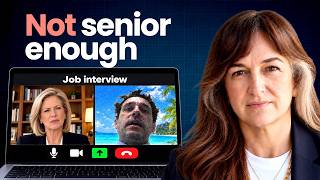
This week on YouTube: Communication mistakes that can undermine executive presence
In the new video, I look at the communication habits that can make an experienced professional appear less senior than they really are. I cover everything from online setup and communication style to what happens when pressure makes you flood, go flat, or freeze. The central idea is simple: executive presence should still look and sound like you. It should simply make it easier for other people to trust the capability that is already there.
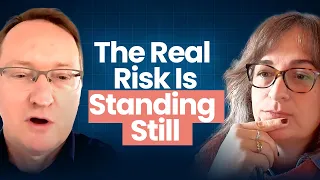
On The Job Hunting Podcast: Jon Whittle on AI, careers, and staying relevant
Jon Whittle has spent more than 30 years working in AI and now advises boards and executive teams on adoption. We talk about why senior professionals need to build AI capability without panicking, why human communication still matters so much inside organizations, and why career reinvention is likely to become even more important over the next decade.
How I help
A large part of my work with clients is helping them understand how they are being experienced by other people.
Sometimes that means interview preparation. Sometimes it means communication style, confidence, positioning, or the way they show up in senior rooms. Often, the capability is already there. The work is about making that capability easier for other people to recognize.
If you are working on your executive presence, preparing for a more senior role, or trying to feel more at ease in rooms where you know you belong but do not always feel it, I would love to help.
Time Out
- I wrote a post today on LinkedIn with my top science fiction recommendations to celebrate this week's podcast episode about AI. Check it out if you're interested.
- I need to finish Atmosphere tonight, then finish Writers & Lovers this weekend, so I'm ready for the new ACOTAR book when it's released on Monday. Andre made a dismissive sound when I said the ACOTAR book was about fairies. I had to remind him he loves Lord of the Rings!
- I watched The Love of Your Life last night, and it did not do it for me. 80% on Rotten Tomatoes, though, so maybe you'll like it. We are watching Moonstruck tonight, and I'm excited to rewatch this masterpiece with my son and his partner. Haven't seen Moonstruck? Watch this clip and tell me Nicholas Cage is not the GOAT.
- What's playing on my YouTube Music right now: Lost Time (Troye Sivan), Heartland (Owen Pallett), Total Eclipse of the Heart (Bonnie Tyler)
- Playing on YouTube: Tiny Desk Concert with Cardi B. I love when artists over-prepare and over-deliver at Tiny Desk.
One thing I keep coming back to is how many versions of ourselves we become over the course of a career. The 15-year-old me would probably find the current version far too serious, but I hope she would be proud and think me cool. The current version would definitely tell the 21-year-old entrepreneur to put on some shoes!
Somewhere between all our versions, I think we found a reasonable compromise.
Until next week,
RBX