It is only the beginning of November, and I can already feel that familiar end-of-year pressure starting to arrive.
There are things I wanted to finish this year. Things I wanted to improve. Projects that should be further along. Personal plans I imagined would have happened by now. And then there are all the things I have decided, apparently with no consultation with the actual number of hours available to me, that I could still squeeze into November and December.
I suspect I am not alone.
There is something about this point in the year that makes us mentally fast-forward to December 31 and start auditing ourselves. What did I achieve? What is unfinished? What did I say I would do in January? How much can I still fit in before Christmas?
The interesting thing is that our brains are not particularly reliable when answering those questions.
We are surprisingly bad at predicting our own capacity
There is a well-established psychological phenomenon called the planning fallacy. Researchers have found that people repeatedly underestimate how long their own tasks will take, even when they have plenty of evidence from previous experience that similar tasks took longer than expected.
One reason seems to be that when we imagine the future, we focus on the plan. We picture the clean version in which everything happens as intended. We give less weight to all the ordinary interruptions, complications, competing priorities, low-energy days, unexpected problems, and other pieces of life that will inevitably appear.
There is another finding I find even more interesting. Research found that people tend to believe they will have more spare time in the future than they have today.
Next month will somehow be quieter.
Next week I will have more time.
Once I finish this project, things will settle down.
After Christmas, everything will be easier.
Except when next month becomes this month, our lives tend to fill up again. Different commitments appear, but the amount of available time does not magically expand.
This explains quite a lot about my calendar.
It also explains something I see frequently in career coaching. People create plans based on their theoretical capacity rather than their actual capacity. They will update the resume, reconnect with twenty people, complete a course, apply for six roles, improve LinkedIn, start posting, prepare for interviews, research a career change, and perhaps launch a consulting business on the side.
All perfectly reasonable ideas.
Just perhaps not all this week.
Why December 31 suddenly feels so important
There is also something interesting about the date itself. Researchers studying what they call the fresh start effect have found that certain dates become psychological landmarks. A new year is an obvious one, but the same thing can happen with birthdays, Mondays, the beginning of a month, or the start of a semester. These markers help us divide our lives into chapters, separating the person we were before from the person we hope to become next.
I think that is partly why November and December can feel so charged.
We know another chapter is about to close. That can be wonderfully motivating. It can make us reflect, reconsider our priorities, and decide what we want to change. But I think we sometimes turn a useful psychological landmark into an unnecessary personal deadline.
Some things genuinely must be completed by December 31. Financial years, reporting cycles, contracts, application dates and organizational deadlines are real. But many of the deadlines we place on ourselves are not.
You do not have to have found the new job by Christmas.
You do not have to have worked out your entire career direction before January.
You do not have to finish every project you started this year.
You do not have to become fitter, more organized, more visible, better networked, more productive, better read and professionally transformed during the eight weeks when everyone is also trying to finish work, attend Christmas functions, buy presents, travel and see their families.
January 1 will arrive whether the list is finished or not.
You cannot live every possible version of your life at once
I recently read something that described a feeling I know very well: the mind can create far more possibilities than one human life has the capacity to execute.
We can redesign our careers in our heads. Imagine businesses. Plan books we could write. Think through trips, projects, hobbies, courses, renovations, health routines and entirely different versions of our lives.
The imagination has enormous capacity.
A Tuesday afternoon does not.
This becomes particularly important for experienced professionals because by this stage of life we usually have many things competing for the same finite resources. Work, family, relationships, health, finances, ageing parents, children, friends, community, learning and our own ambitions all want some portion of our attention.
Research into multiple goals recognizes exactly this problem. We pursue many objectives at once, but the resources available to pursue them are limited. Sometimes progress requires persistence. Sometimes it requires deciding that one goal will wait while another matters more.
That is not failure.
It is prioritization.
Do the next thing
I recently finished reading Atmosphere, and I've been thinking about this scene a lot. Vanessa is alone in space and has to get the spacecraft back to Earth. The enormity of that task could easily become overwhelming. Instead of thinking about the entire journey home, she concentrates on what needs to happen next.
Then the next thing.
Then the next.
I loved that because it describes something I think many of us need in November.
You do not need to land the spacecraft today.
You need to work out the next procedure.
This principle turns up in research on goal achievement too. Broad intentions are more useful when we translate them into specific actions: what will I do, when will I do it, and under what circumstances? Research on these implementation intentions has found that this kind of specificity significantly improves the likelihood that people actually act on their goals.
So instead of saying, “I need to sort out my career before the end of the year,” the next step might be to call one person.
Instead of “I need to find a job,” perhaps it is to identify five organizations you genuinely want to work for.
Instead of “I need to become more visible,” perhaps you write one thoughtful LinkedIn post.
Instead of “I really need to work out what I want to do with the next ten years,” perhaps you give yourself an hour on Saturday morning to write down what you no longer want.
Small steps can look unimpressive when compared with the enormous plans our brains are capable of producing.
But small steps have one considerable advantage.
We can actually do them.
For you this Friday
Before November gathers momentum, look at what you are currently telling yourself you need to finish before the end of the year.
Then separate it into three categories.
What genuinely has a December deadline?
What would be good to progress, but could continue into next year?
And what have you arbitrarily decided must happen this year simply because December 31 exists?
I would be particularly interested in that third category.
Then choose one thing that matters and identify the next physical action required to move it forward.
Not the entire plan.
The next step.
I am going to try to do the same.
Because one of my recurring mistakes is trying to create a December that is so productive that I arrive at Christmas exhausted, only to decide that January will finally be the month when life becomes calm.
Perhaps this year I can try something different.
I would like to enjoy the weeks before Christmas rather than race through them. I would also like to arrive in January without needing January to rescue me from December.
There will be time for new plans.
There will be another Monday, another month, another birthday, another January 1.
The calendar gives us many opportunities to begin again.
We do not need to force everything through the one immediately in front of us.
How I help
Career transitions can create exactly this kind of urgency. Once someone decides they need a new job or a different career, there is an understandable desire to fix everything immediately.
Often my role is to help bring some order to that process. We decide what matters now, what can wait, where the real bottleneck is, and what the next useful action should be.
A good career strategy should create momentum without making your life feel like one continuous emergency.
If you are thinking about what you want from the next stage of your career, you can learn more about working with me here:
If you need help right now, and you're in a hurry:
Book a 1-hour consultation with me
YouTube Video of the Week
If you use ChatGPT or Claude in your job search, this video is for you. I explain which parts of a job search professionals should keep for themselves and when they should use AI. I'm drawing on her experience coaching senior professionals and hope that you find it useful.
Watch it now on my YouTube Channel
Podcast of the Week
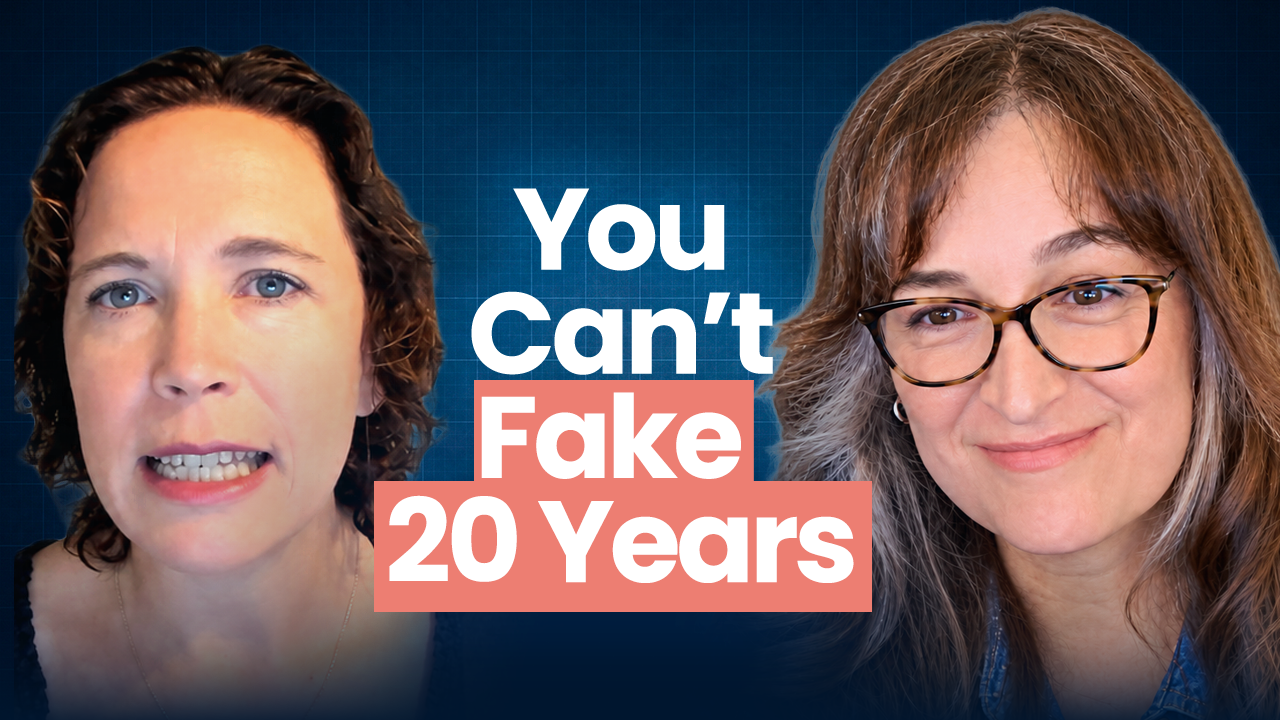
You can be very good at your job and still lower your status in an interviewer's eyes without realizing it. Communication and vocal coach Helen von Dadelszen has worked in HR and recruitment, so she has seen interviews from both sides of the table. In this conversation, she explains why strong candidates lose ground, and has a very important message: communication is a skill you can build, but twenty years of experience is something you cannot fake.
Watch or listen now on our website
Watch or listen now on YouTube
Watch or listen now on Spotify
Watch or listen now on Apple Podcasts
Time Out
- We watched The Diplomat, and it's rare that subsequent seasons get better and better. I think this new season 4 is binge-worthy.
- I'm watching Nobody Wants This and finding that the first season is still my favorite. Not sure if I'll continue, to be honest.
- I'm rereading Persuasion, getting ready for the movie coming out soon. And The Washwoman at the River's End, already regretting it, as once again, struggling with the Scottish English, but hoping to be inspired to spend 2 weeks in Scotland during Christmas and New Year. Hoping to start A Short Story of England by Simon Jenkins before heading to the UK.
- I've been listening to Brahms Symphony number 4, because I am devastated I won't be able to see it live. It's the second time I've missed seeing an orchestra play because of scheduling issues. But it's on my bucket list. By far, my favorite piece of music, hands down. One of my earliest memories is holding the album while it played, sitting on the floor, and it was very hard to hold because it was so big for my tiny hands.
Over the next two months, life will get busy. I start teaching again on Monday, and December is always a busy month for coaching. So the secret will be to take one thing at a time.
Until next week,
RBX